
Best and latest
1270 is Riley’s strongest full test and their most recent result.
Digital SAT® test prep
A score is a starting point. The thinking behind it is where the plan begins.
What did your student highlight? Why did Math feel harder this time? Which questions used the most time? Our digital testing platform gives your student’s tutors a closer look, from the first module to the last answer.
From a baseline exam to a mock test four weeks later, see how the same evidence guides what to practice next.
01 · See the whole picture
The profile brings the baseline exam, mock tests and homework together. Tutors can see where Riley started, how things have changed and where there is still room to grow.
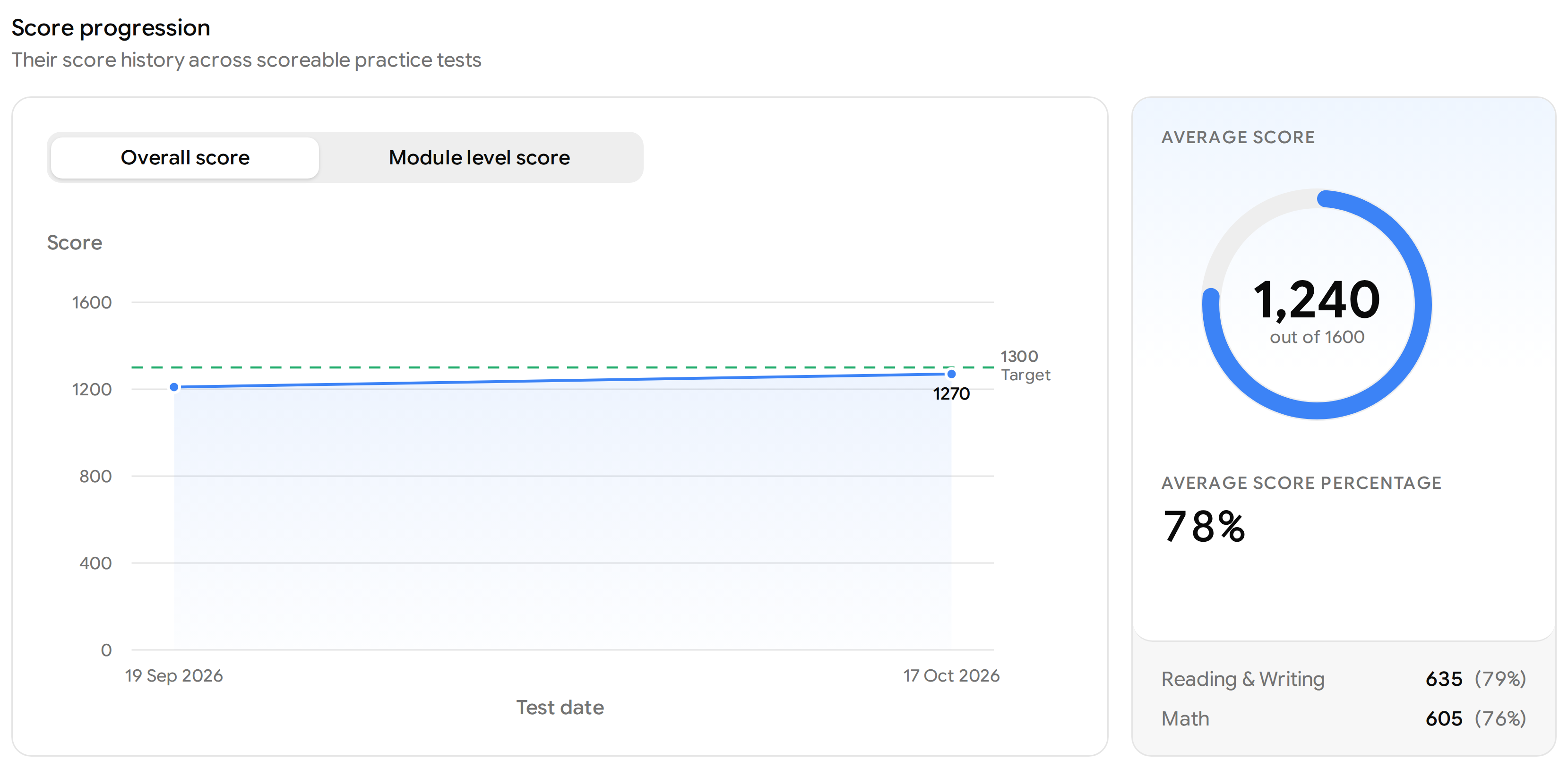
Riley starts at 1210 and reaches 1270 four weeks later. The best, latest and superscore sit together, with a target of 1300.
1270 is Riley’s strongest full test and their most recent result.
The best Reading and Writing score plus the best Math score across tests. Here, both come from the mock test.
Many colleges consider superscores; each college sets its own rules. College Board explains superscoring.
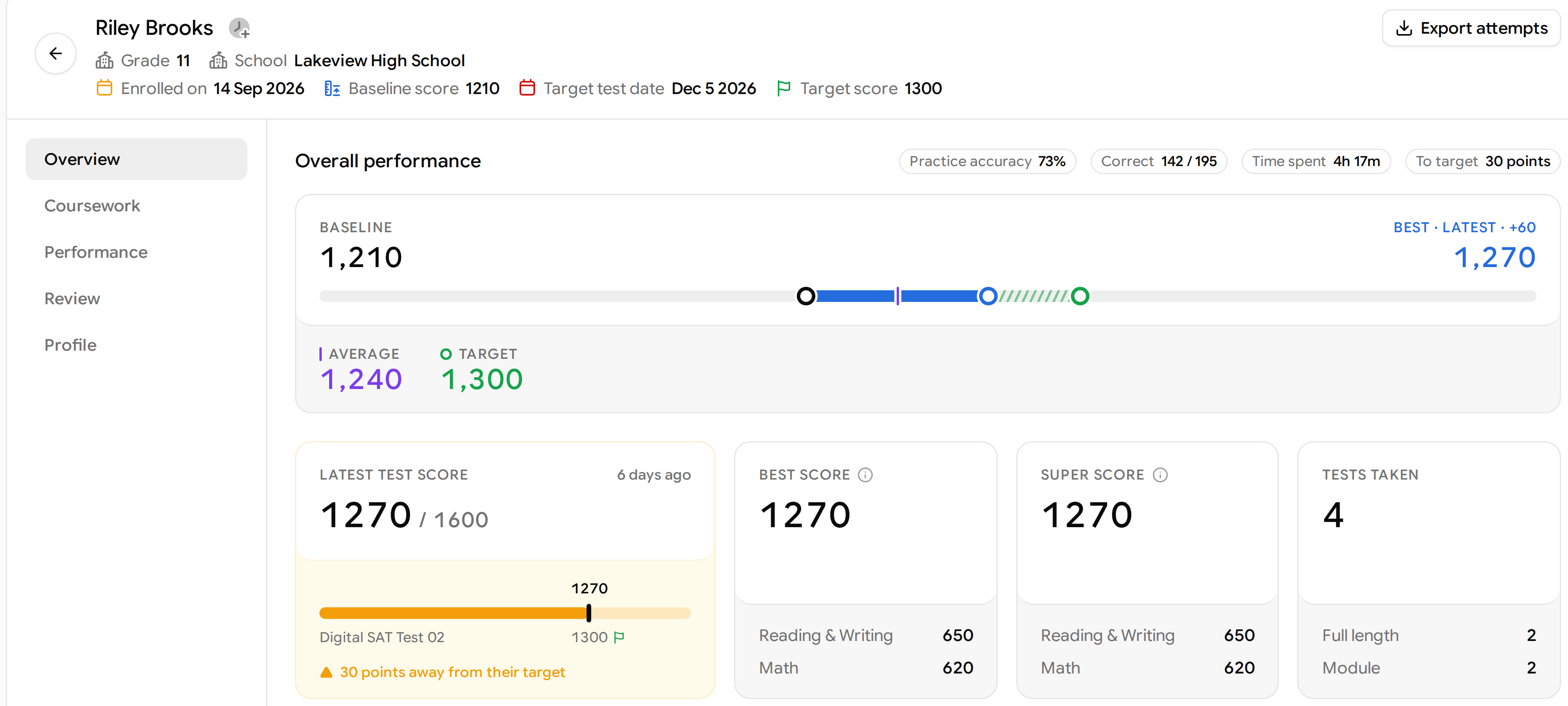
4 hours 17 minutes of full-length testing, alongside the results.
73% means 142 right of the 195 questions Riley answered across both full tests.
Thirty points remain between the latest example score and Riley’s goal.
Riley takes two Reading and Writing modules, a break, then two Math modules. The report keeps the result and the conditions together.


The session log records module starts, answers, breaks and other testing events. Riley’s example includes a 10 minute 5 second break, no tab switches and one brief exit from full screen.
These details help tutors assess the conditions before comparing one test with another.

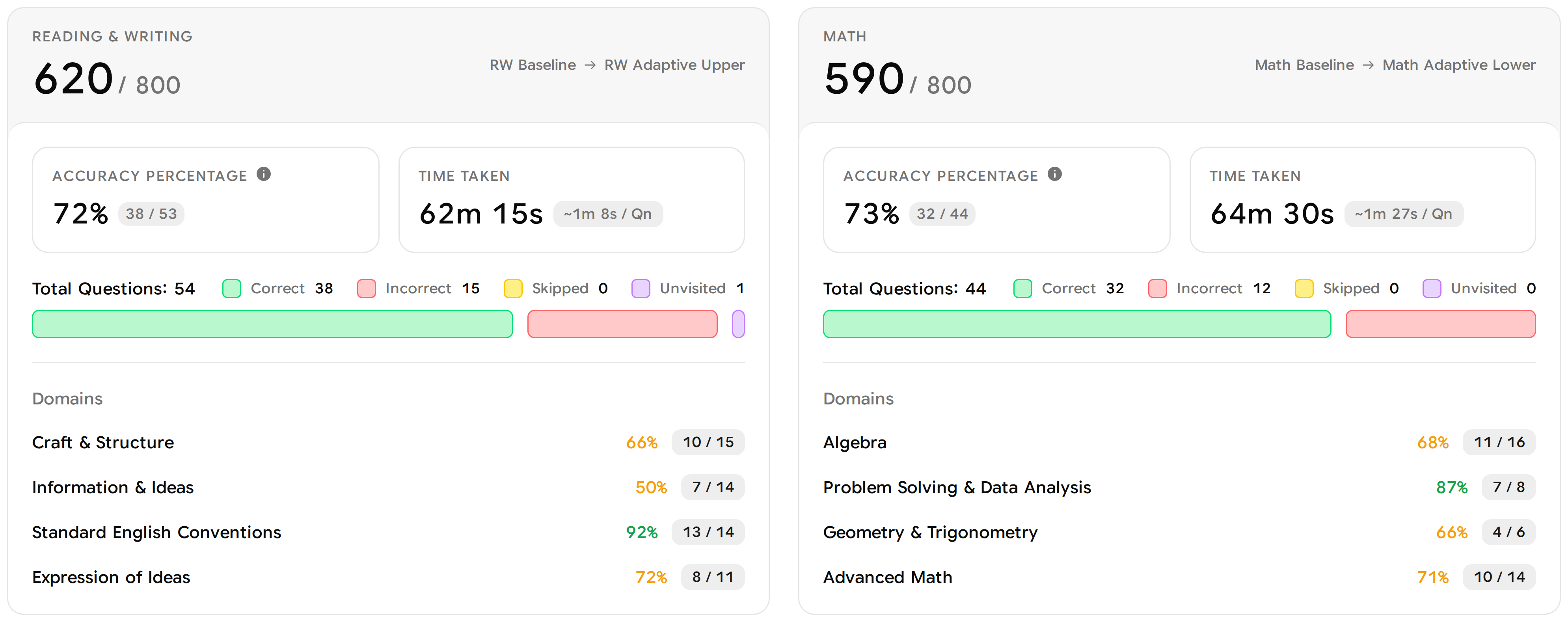
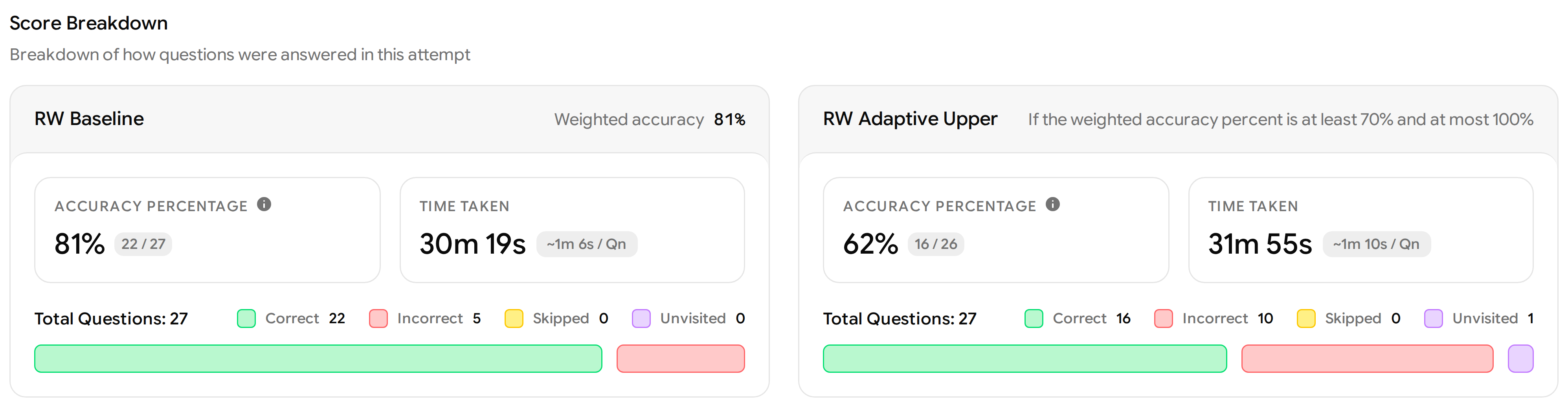
Reading and Writing reaches the harder second module; Math reaches the easier one. The section cards show the score, the route and the underlying skill groups together.
02 · Find what matters
A stronger first module can lead to a harder second one. Fewer correct answers can then feel like a setback, even while the score rises. Riley’s Math results show why the route matters.
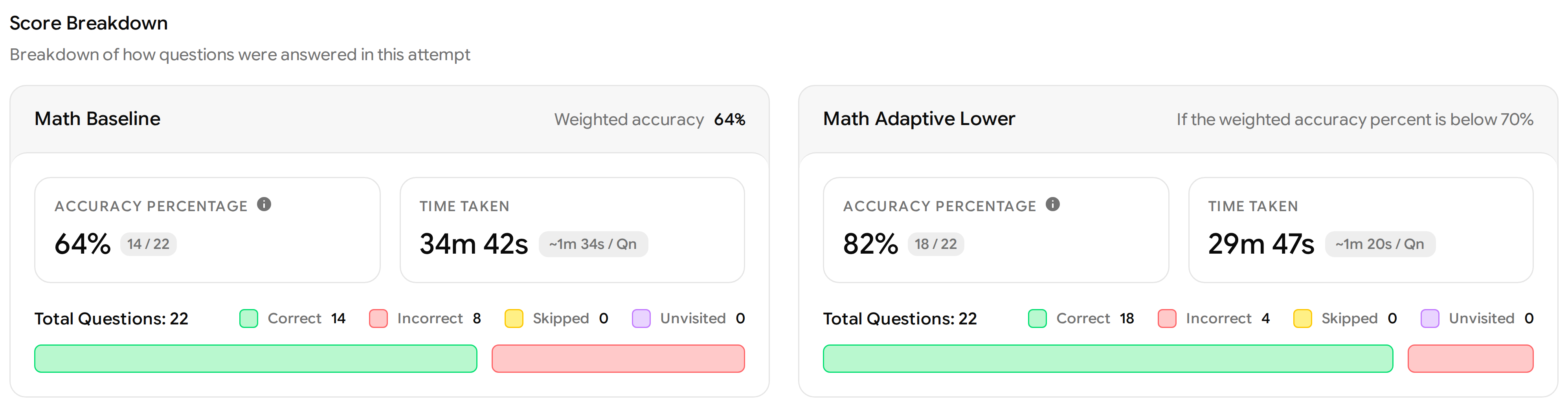
Below the platform’s 70% rule
18 of 22 correct
32 correct across both modules
Above the platform’s 70% rule
14 of 22 correct
31 correct across both modules
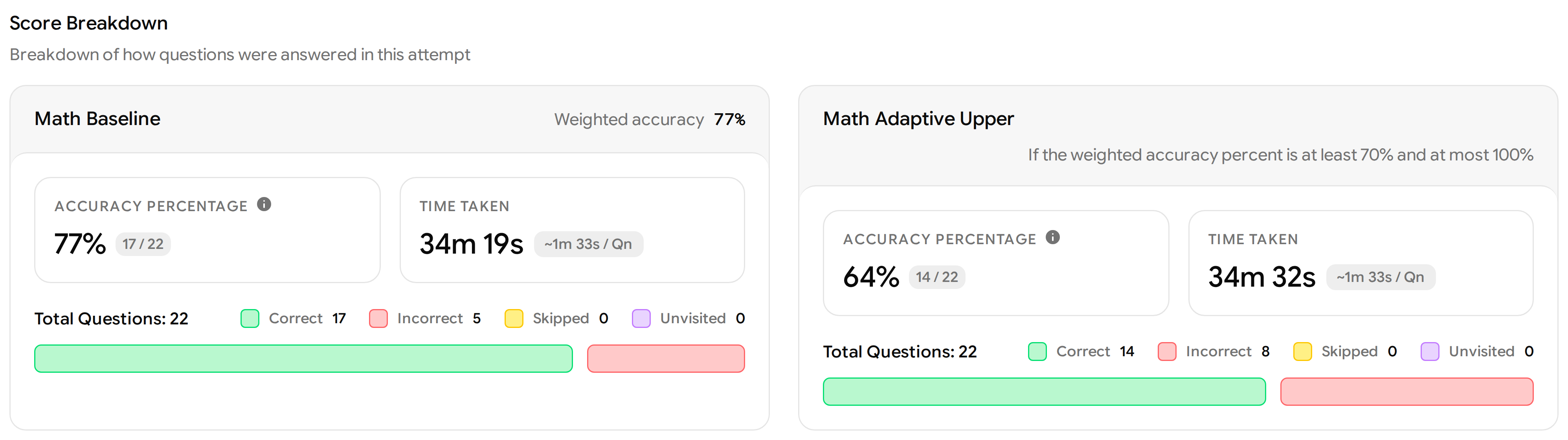
Riley goes from 18 of 22 to 14 of 22 in the second Math module. The harder route helps explain why the estimated Math score still rises by 30 points.
If fewer answers are right on questions of the same difficulty, tutors look for the skill or habit behind the change. The route and the question details belong in the same conversation.
Each section has two separately timed modules. On our platform, at least 70% on the first module leads to the harder second module. The report calls this first-module score “weighted accuracy.”
College Board’s explanation of digital SAT® adaptive testing describes the official two-module structure.
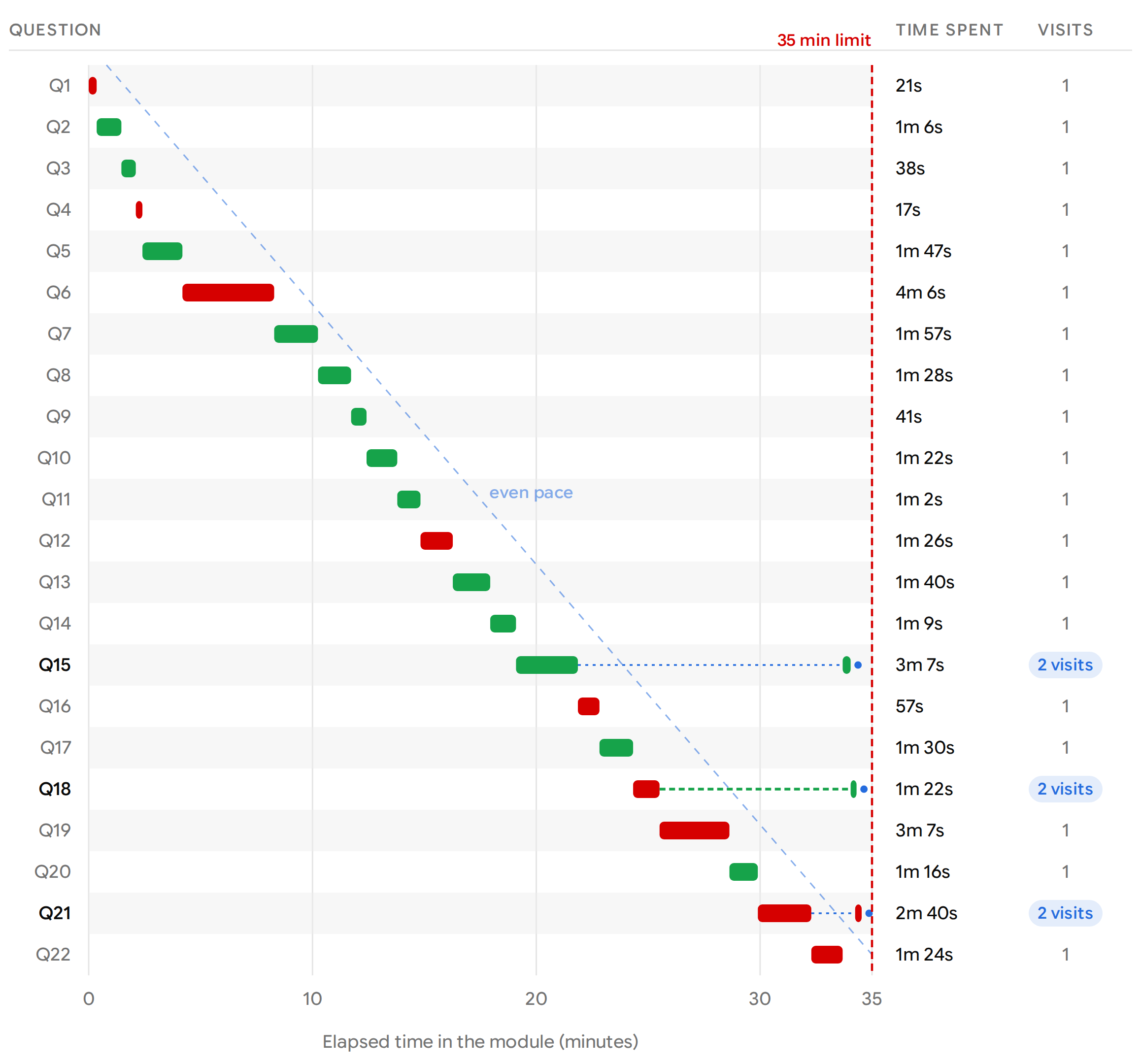
Question 1 takes 21 seconds; Question 4 takes 17. Both are easy linear equations, and both are wrong. Riley needs 16 of 22 to route up on this platform, but gets 14.
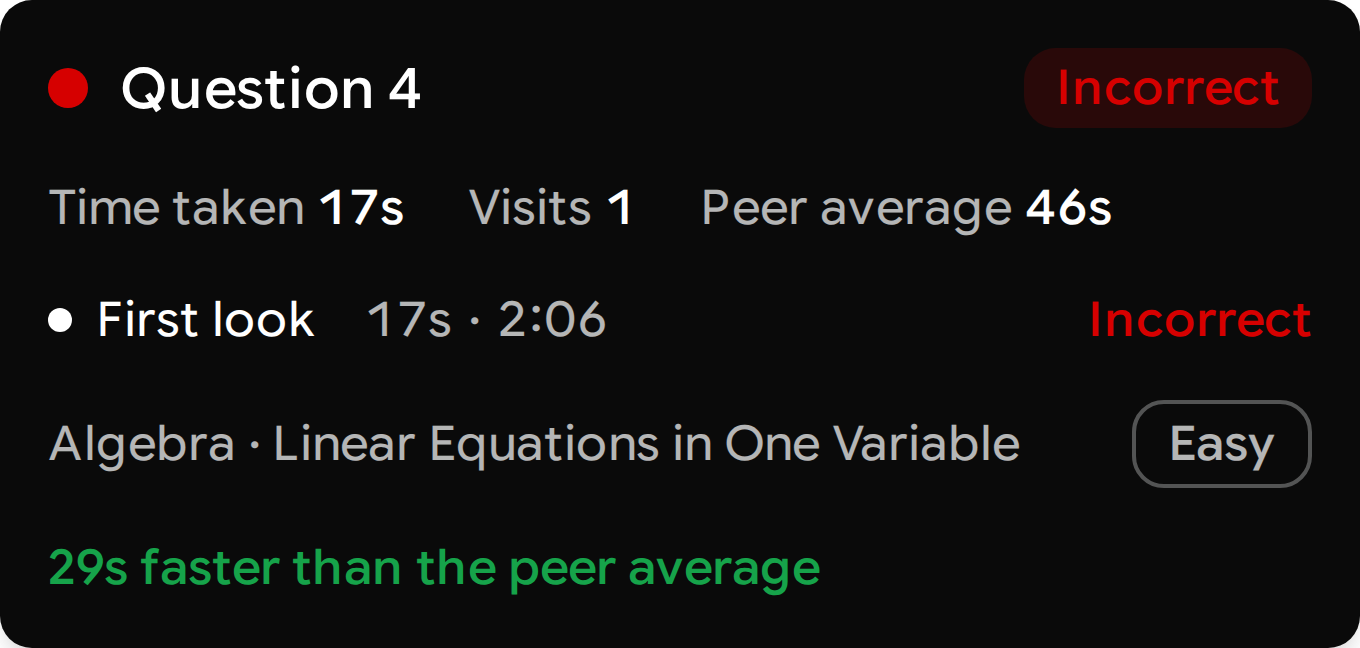
A brief accuracy check may protect points before the harder work begins.
The skill map shows 1 of 3 on linear equations in one variable. Tutors can check the method directly.
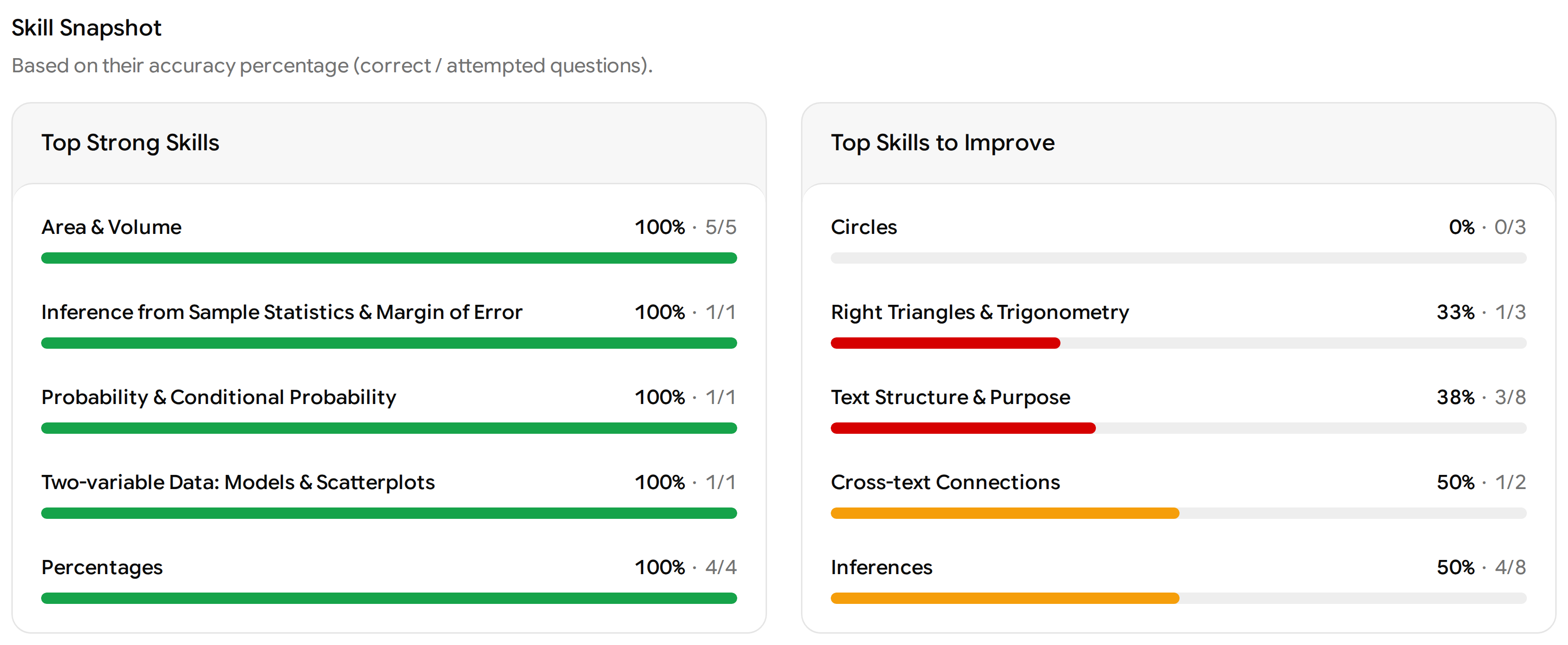
A low percentage begins a question; the counts, difficulty and actual attempts help answer it. Riley’s grammar is strong, while text structure and hard algebra deserve a closer look.
Text Structure & Purpose is 1 of 4, including 0 of 3 on hard questions. Command of Evidence with quantitative data is 0 of 3, all hard. Standard English Conventions is 13 of 14.
Those are different needs: interpreting a text’s structure, matching a claim to data and maintaining an existing grammar strength.
See how Riley’s own note reveals a misread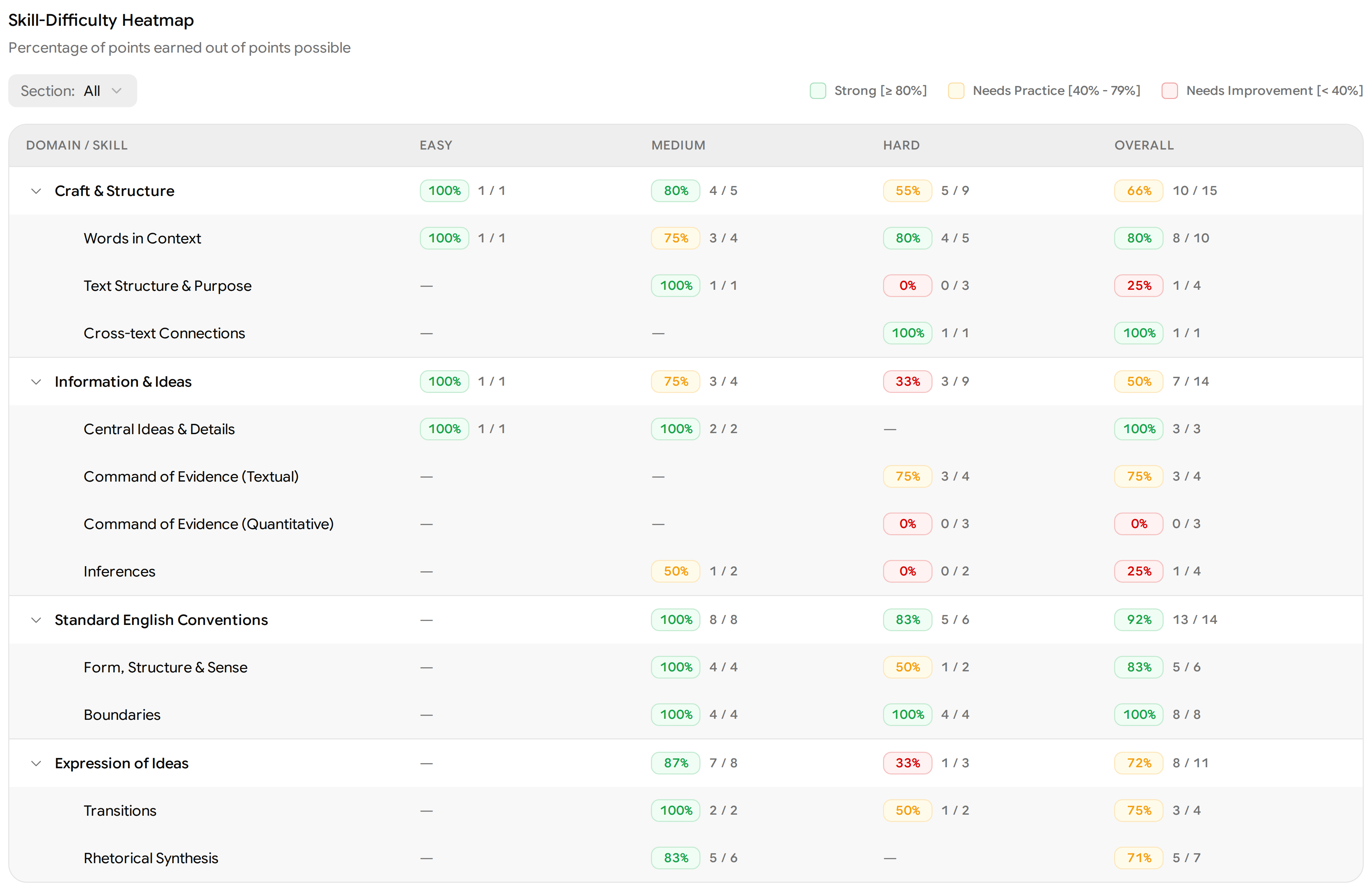
Linear Equations in One Variable is 1 of 3, all easy. Linear Equations in Two Variables is 0 of 3 on hard questions. Across hard Math, Riley is 0 of 8.
Accuracy drills can address the quick opening misses. A new method and focused instruction can address the harder systems questions.
Follow one typed Math answer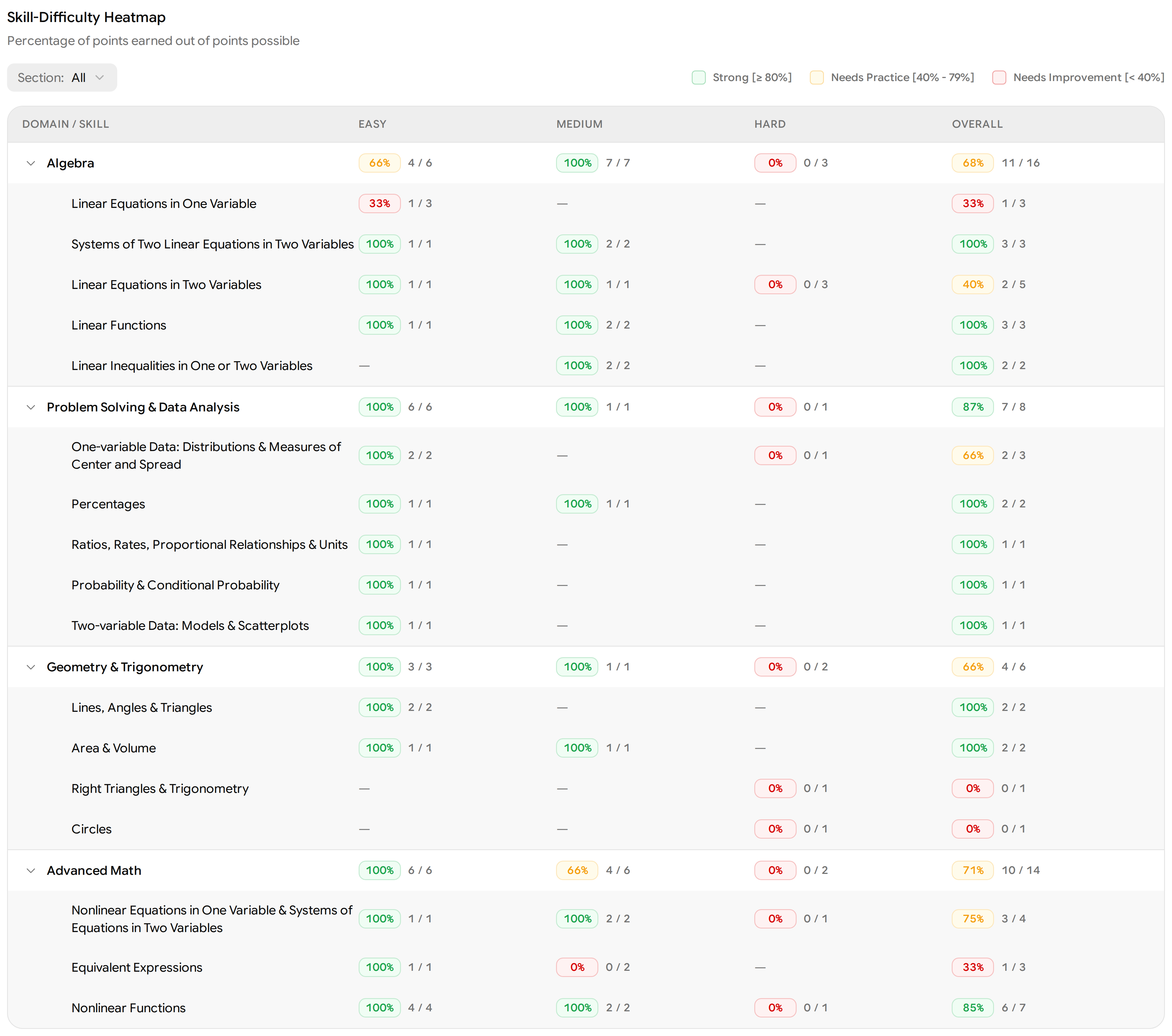
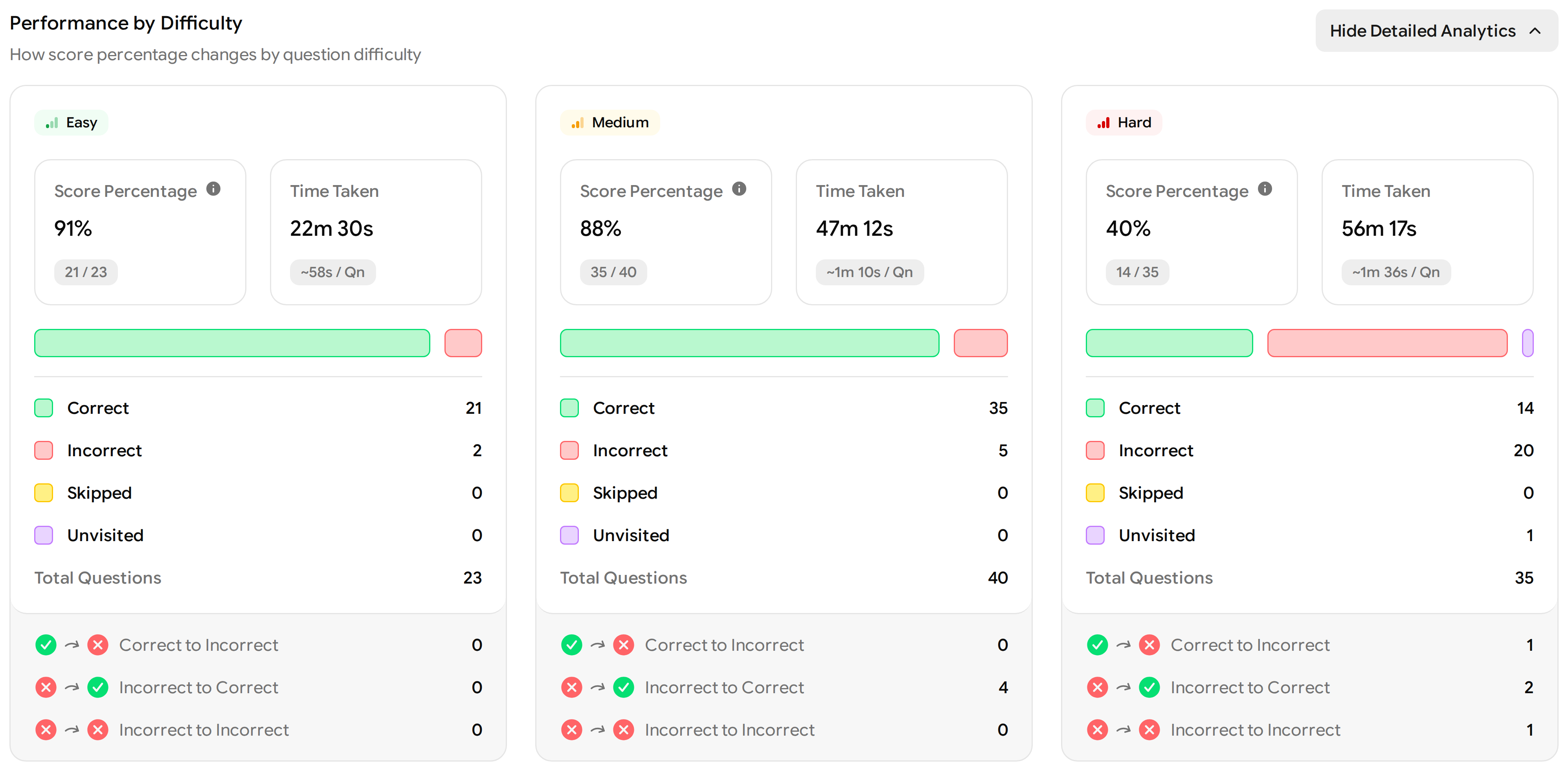
Riley gets 14 of 35 hard questions right. Twenty are wrong and one is never reached. Answer changes on medium questions only help; on hard questions they help twice, hurt once and leave one answer wrong.
The count, timing and direction of an answer change are more useful together than any of them alone.
Follow the clock
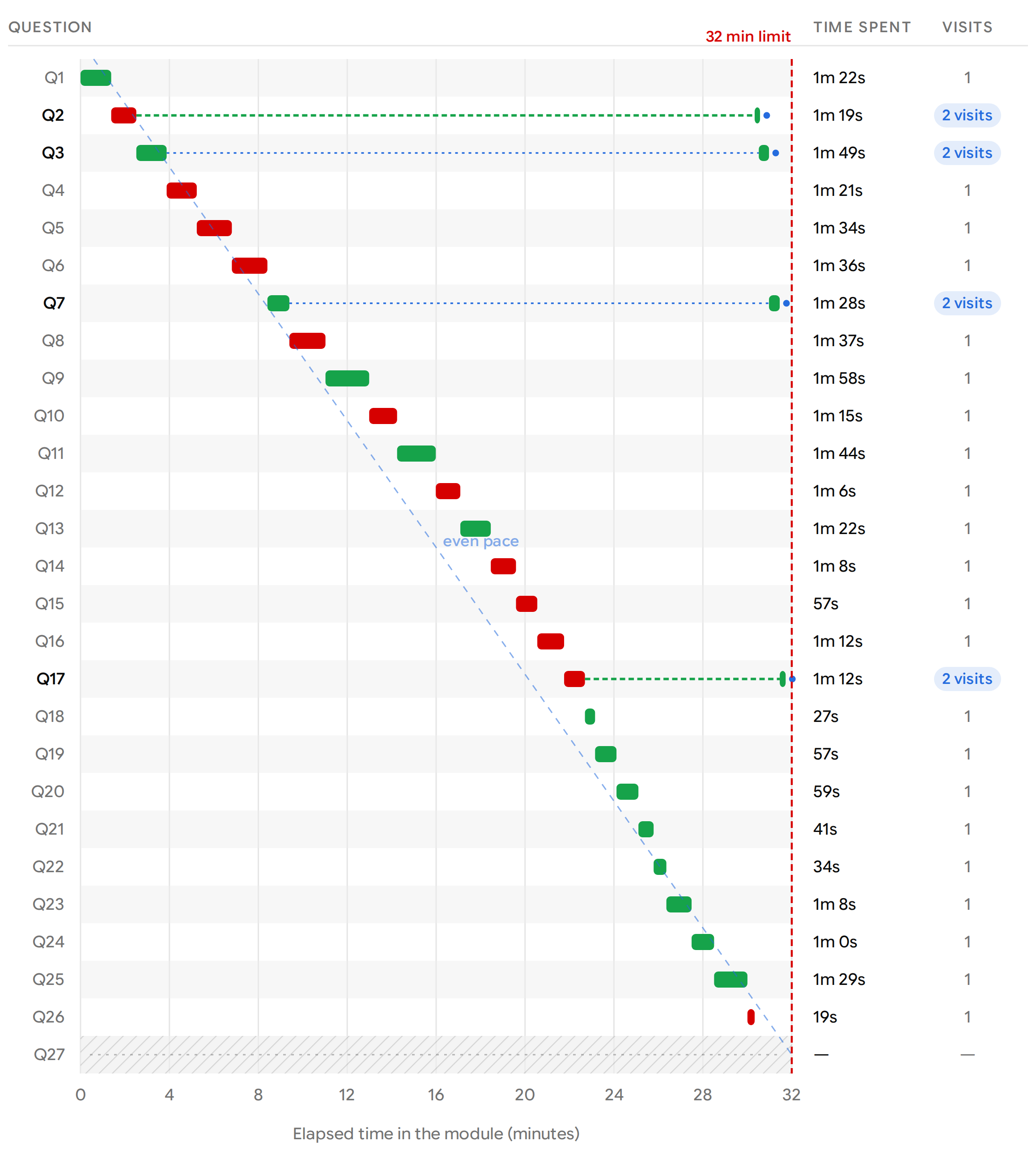
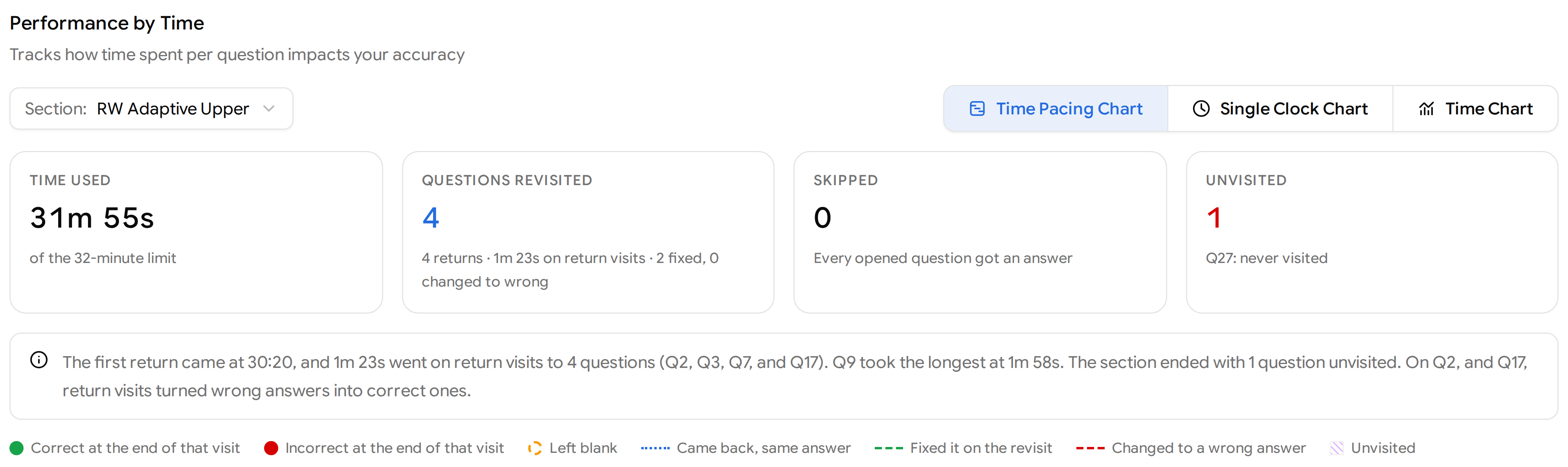
The pacing chart preserves each visit and return. Tutors can see when time ran short, which second looks helped and whether every question got a first look.
Each row follows one question through time. These larger indicators explain the marks in the chart below.
Select a detail
The platform groups questions by time used. Riley gets 12 of 17 right in the 91-to-150-second band, but only 1 of 6 right beyond two and a half minutes. A blanket instruction to speed up would miss that difference.
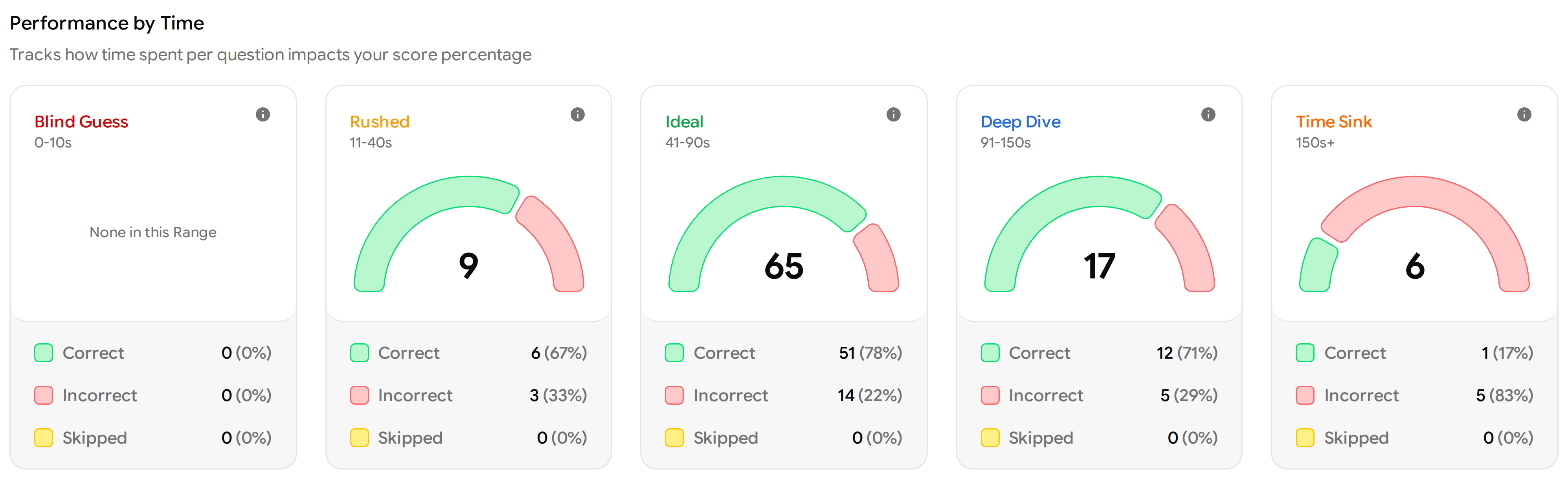
A longer solution can be worthwhile when the method works and the module clock allows it.
A stuck student may need a stopping rule, a best guess and a return later. The underlying skill may need teaching as well.
Each section has its own time view, so a habit in one section need not become advice for every section.
The thinking behind the answer
An answer key shows the result. The review can also show Riley’s note, first choice, return visit, typed answer and tools. That gives tutors a specific place to begin.
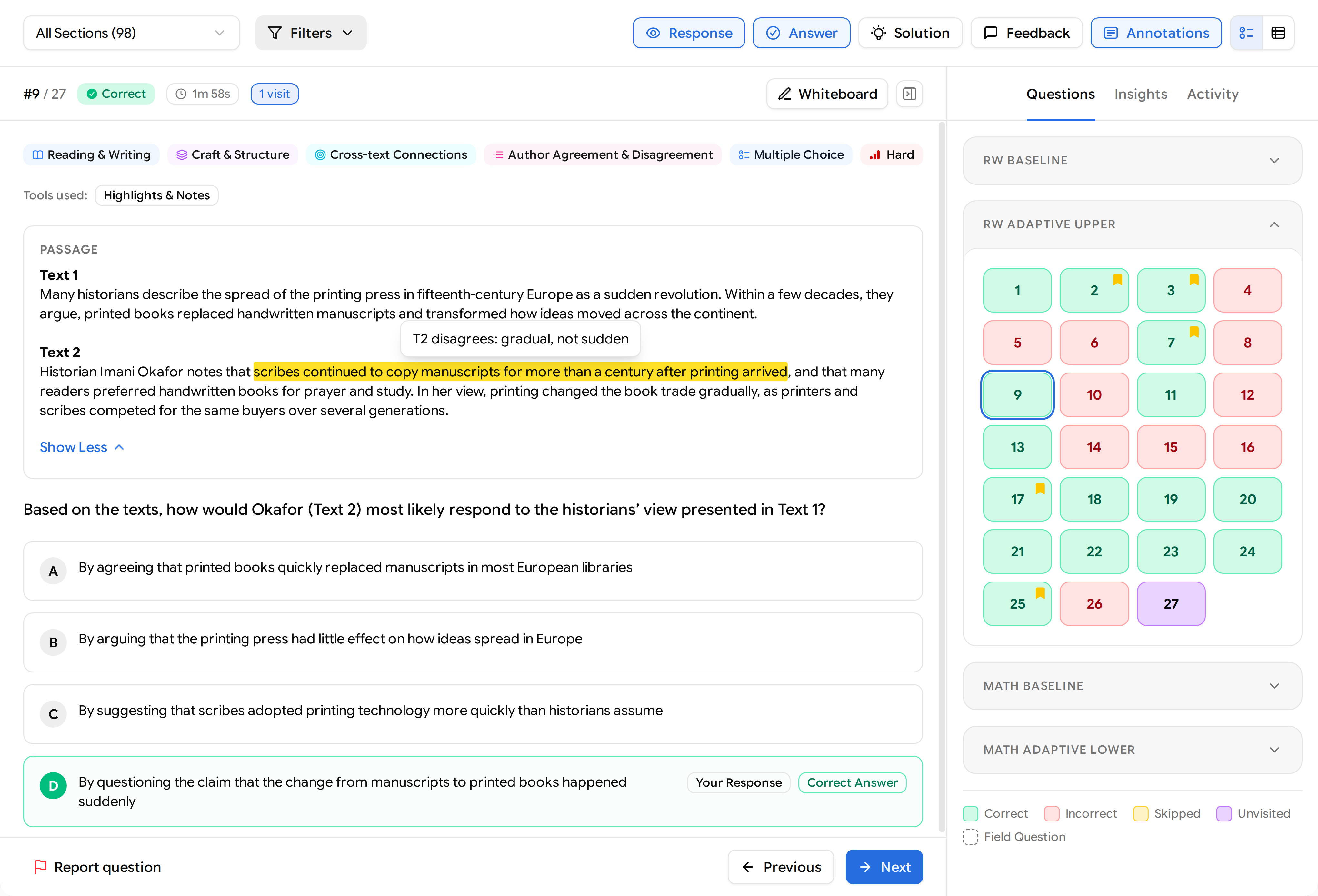
In Reading and Writing, students highlight passages and leave notes. Tutors see both afterward with Annotations turned on; pointing at a highlight opens its note. Math has no highlighting.
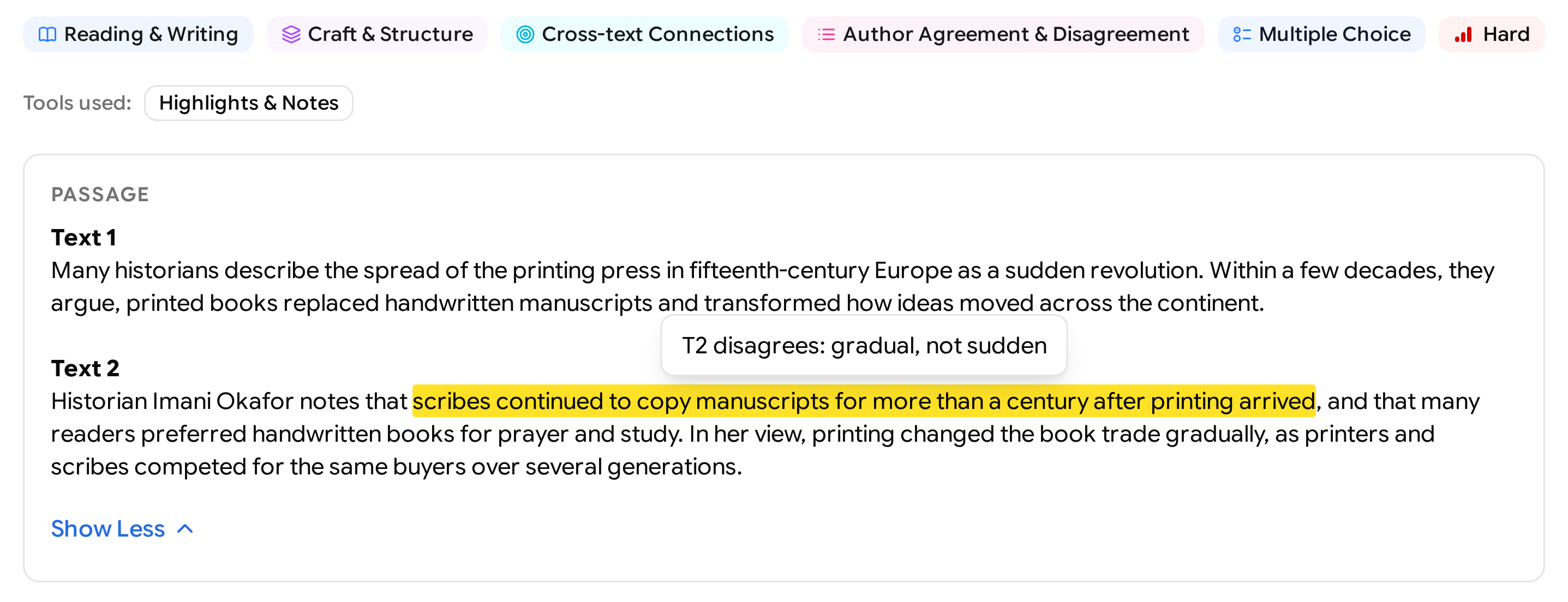
The useful habit is visible: Riley names what the text is doing. Tutors can build on it.
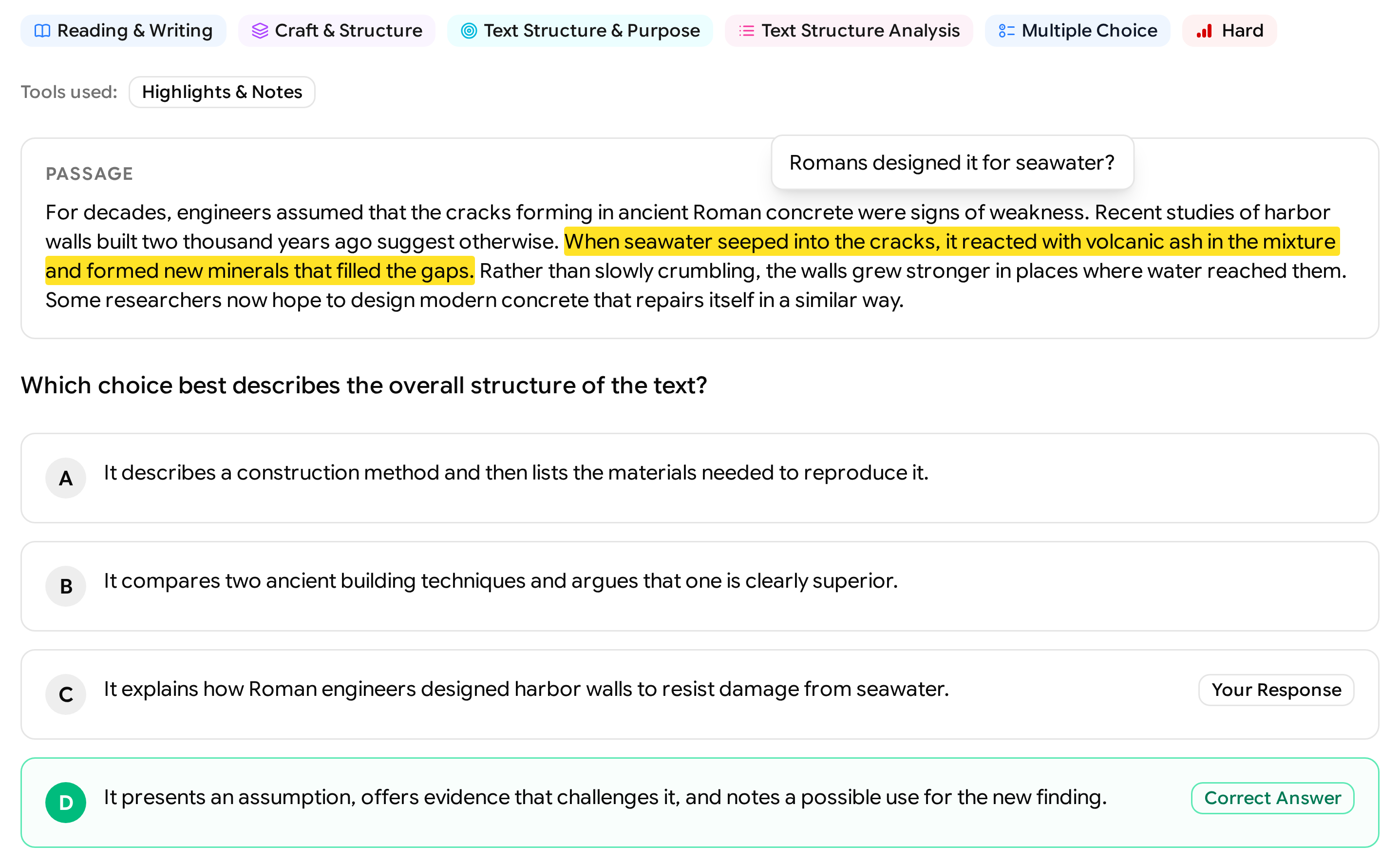
The session can start from Riley’s own question and work back to the passage’s structure.
Some Math questions have no answer choices. Riley types −2; the correct answer is 2. The record shows 4 minutes 6 seconds on one visit, with calculator use.
Check the pair of values in both equations, especially after a minus sign.
Work through the method first, then use the calculator to check it.
What Riley can produce, rather than recognize, helps tutors choose where to start.
See the same question on the whiteboard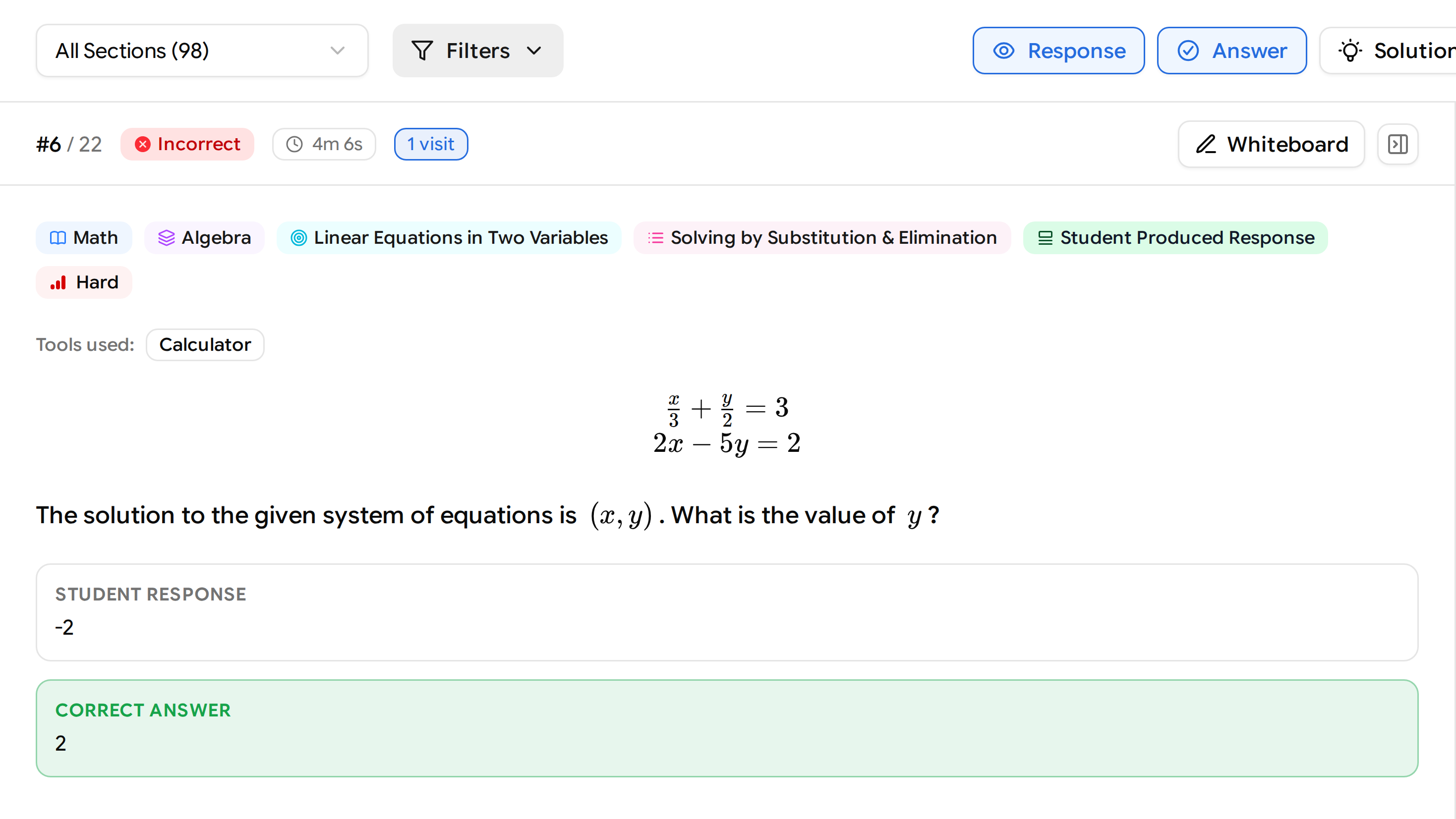
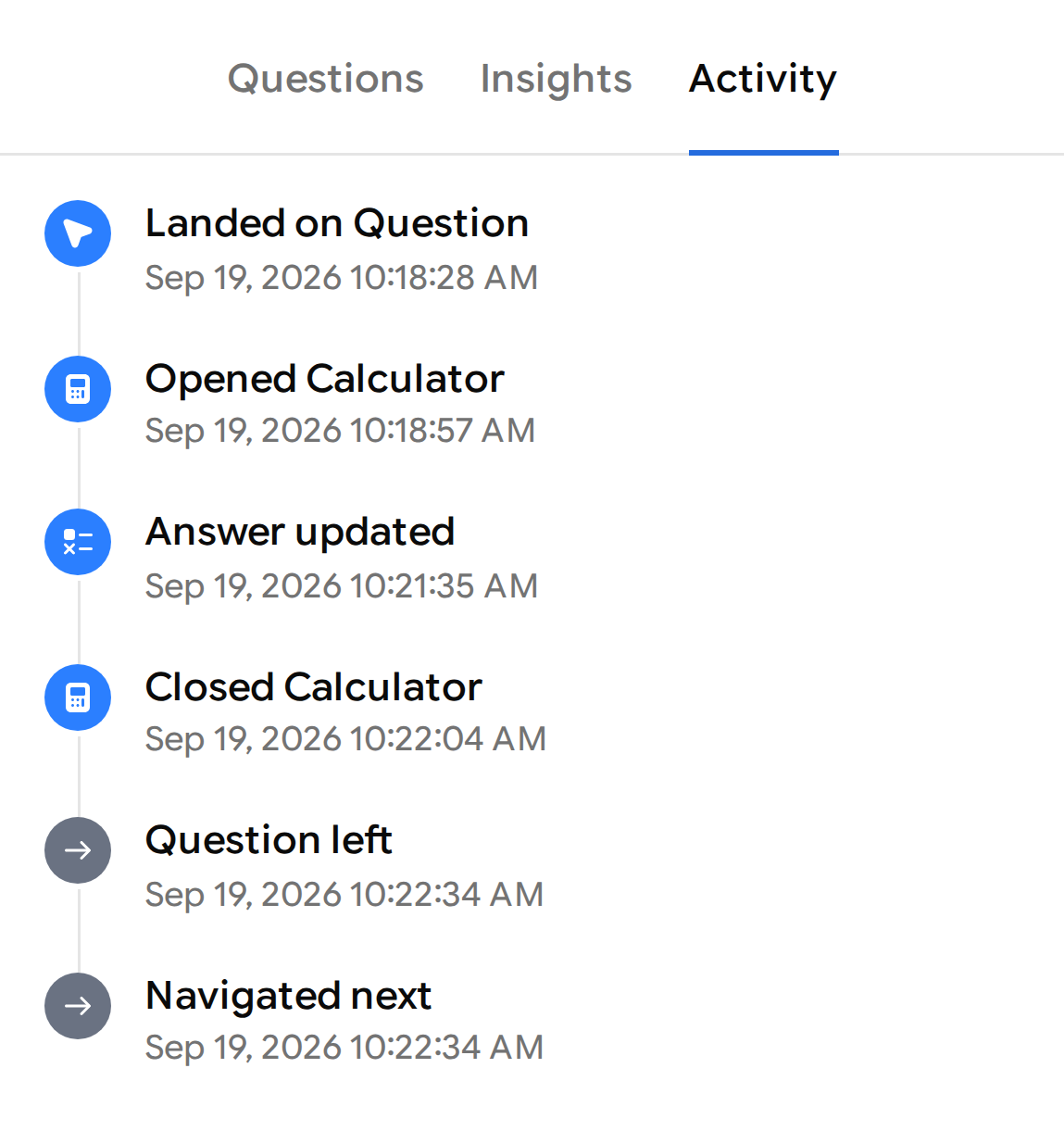
The calculator opens 29 seconds in. Riley enters the answer at 3 minutes 7 seconds, closes the calculator and moves on. The sequence gives tutors more to discuss than the final sign error alone.
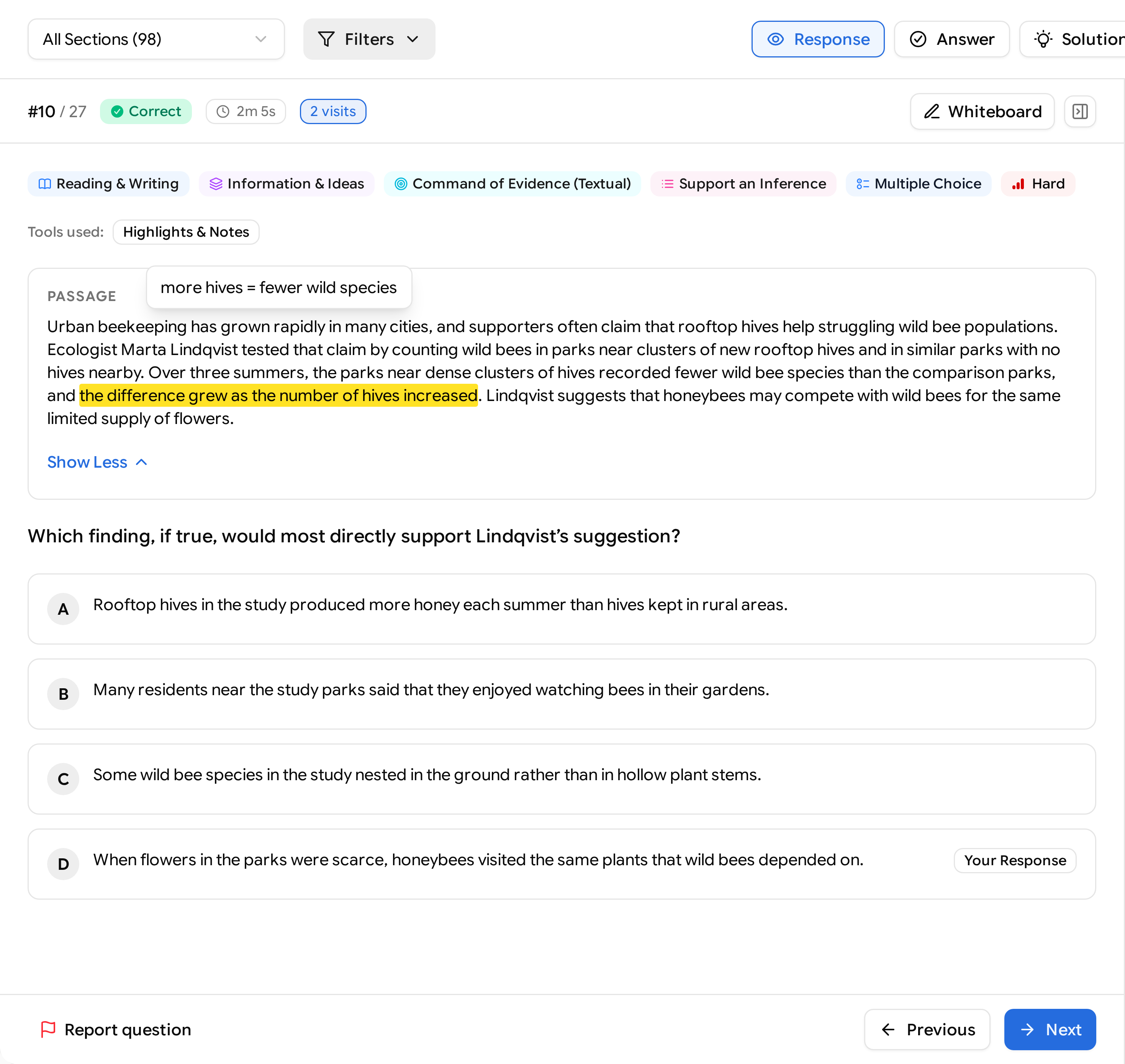
Riley highlights a key sentence and writes “more hives = fewer wild species.” They choose A, flag the question and return about 18 minutes later. Sixteen seconds on the return changes A to D, the correct answer.
The note was right from the start. The answer wasn’t. Tutors can investigate choosing between answers rather than assume the passage itself was misunderstood.
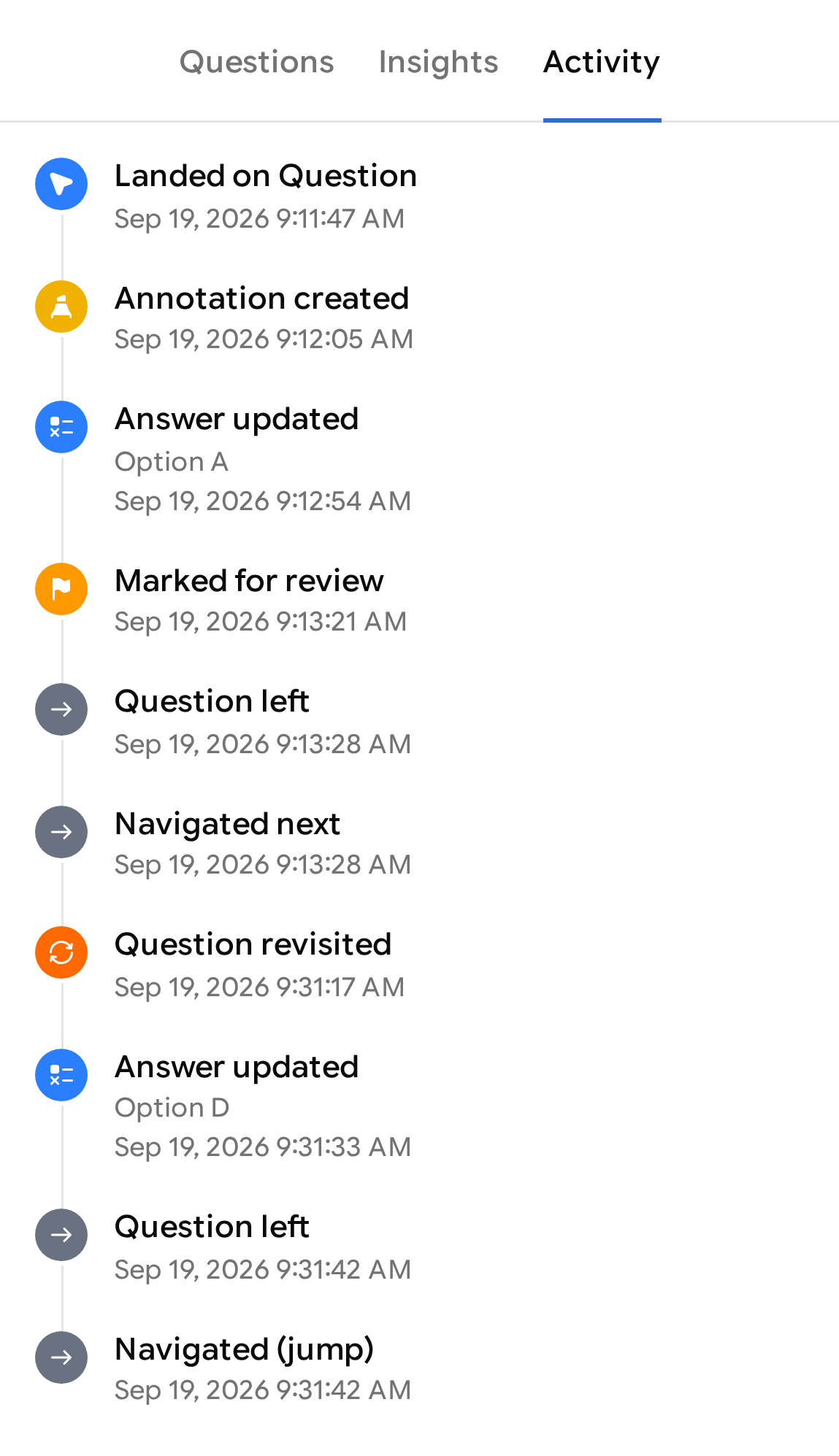
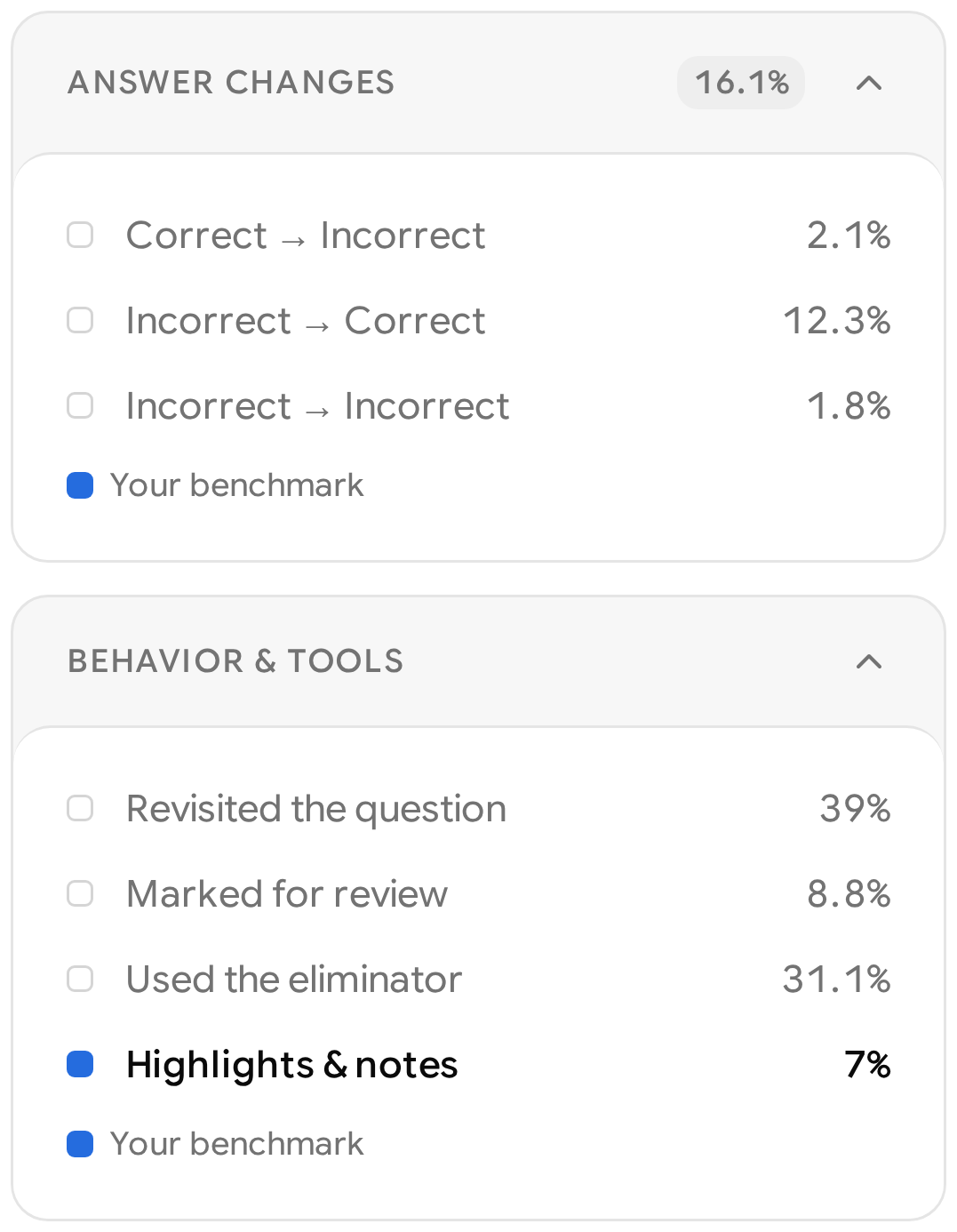
Six changes fix an answer, one breaks a correct answer and one changes a wrong answer to a different wrong answer. The filtered question list connects each change to its module, difficulty, time and tools.

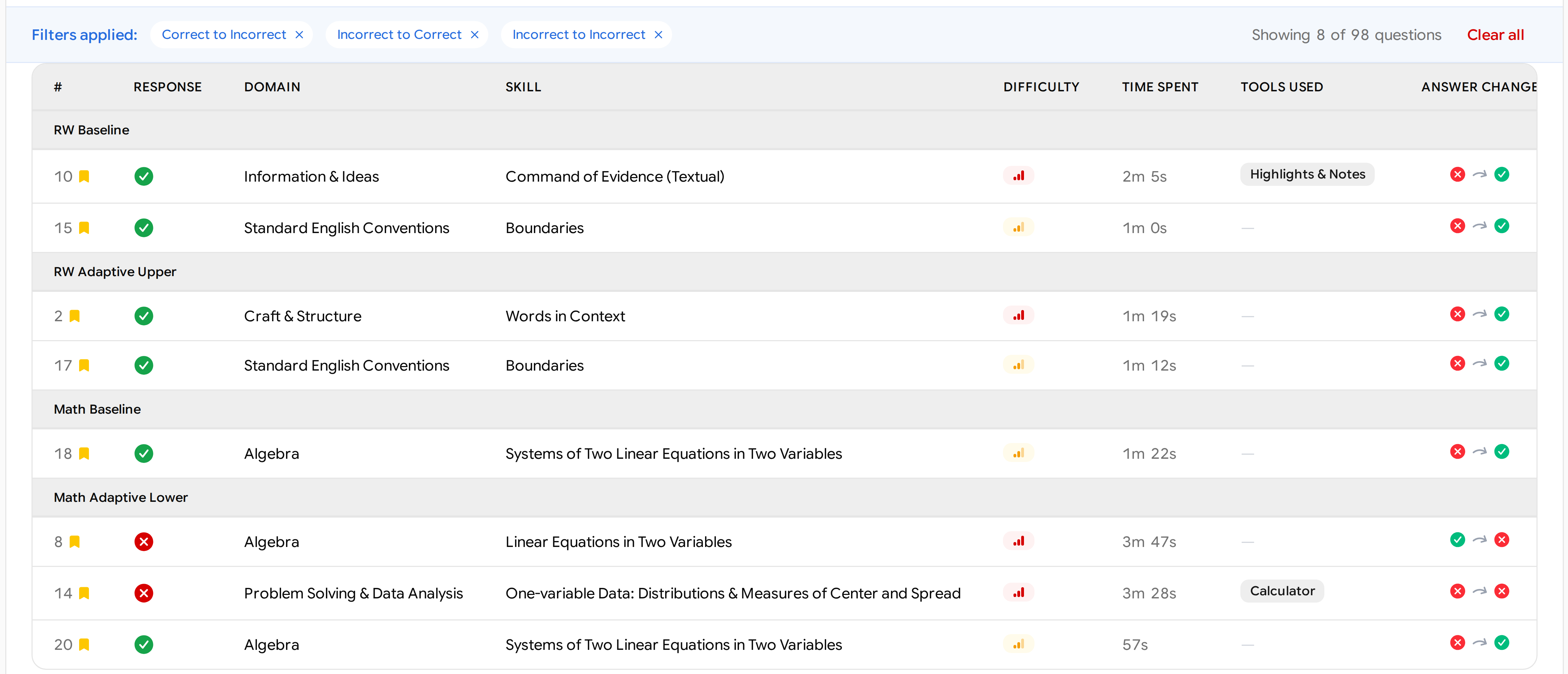
The useful changes argue against a universal rule to trust the first answer.
Before switching, a student can name what is wrong with the first answer. Tutors can review the actual question where a change hurt.
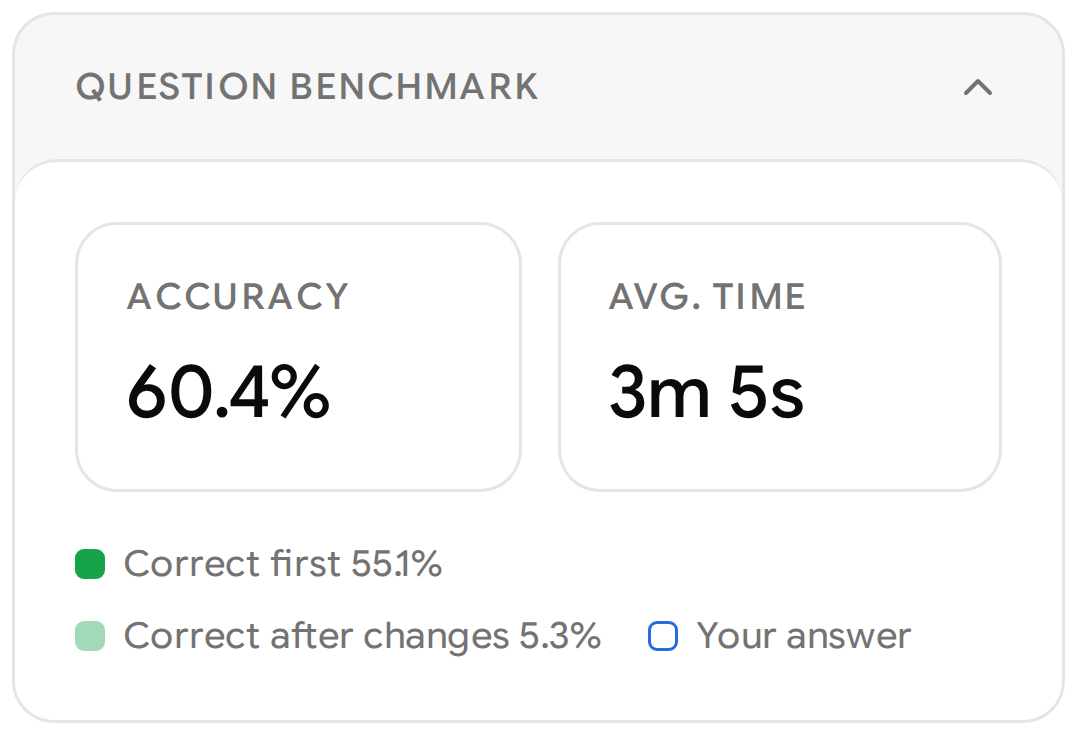
On this question, the example benchmark shows 83.6% correct in about 1 minute 28 seconds. Riley takes 1 minute 36 seconds and chooses C, the choice shown for 5.6% of students.
The similar time and different result suggest a closer look at the reasoning. Riley’s own note, shown in the highlights example, supplies that next clue.
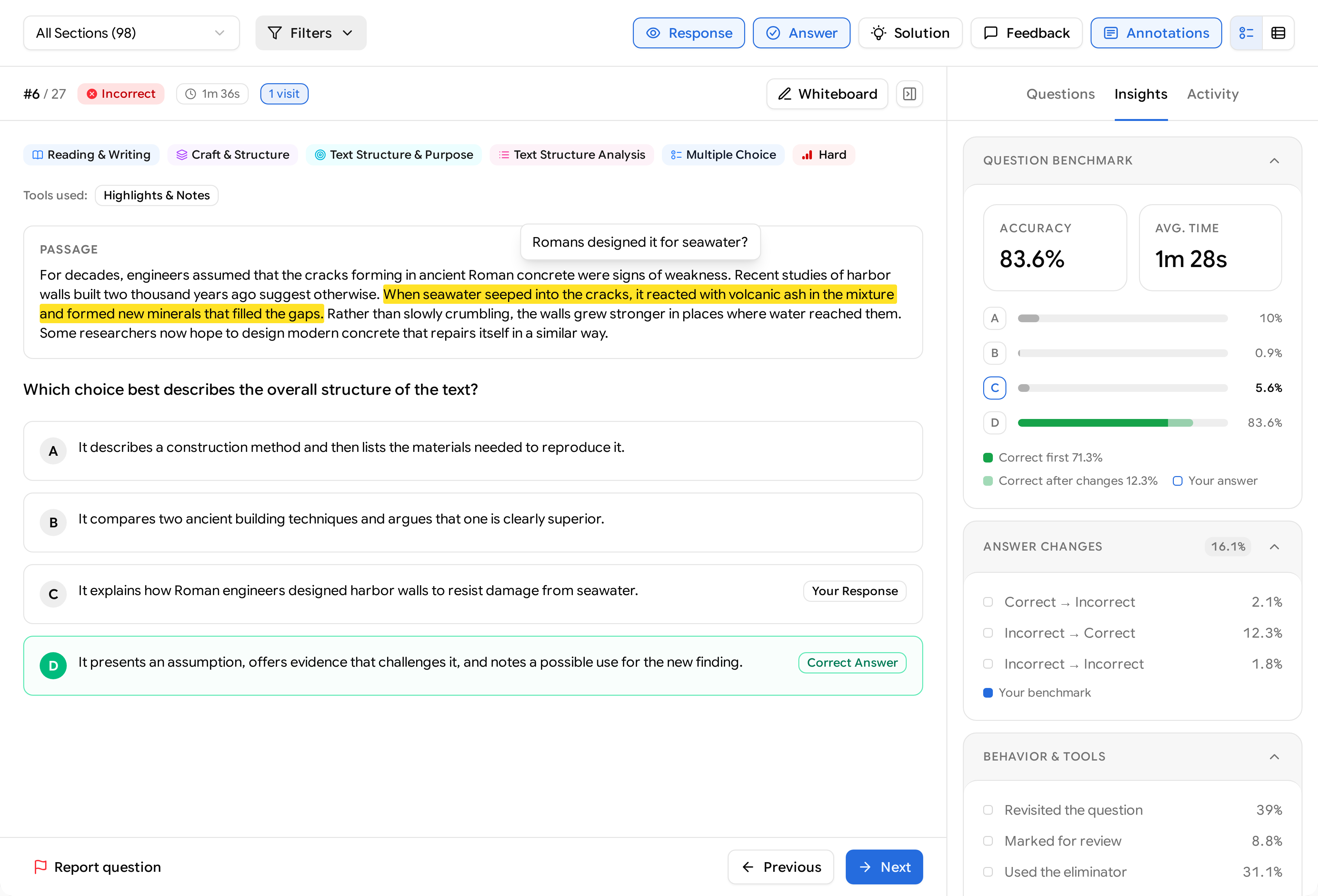
Response, Answer, Solution, Feedback and Annotations can be shown separately, so the student’s thinking can be discussed before revealing the explanation.
Make the reasoning visible
The whiteboard keeps the question and the student’s response in view while tutors circle a slip, write out a method or check an answer. Here, it brings Riley’s typed Math answer back into the conversation.
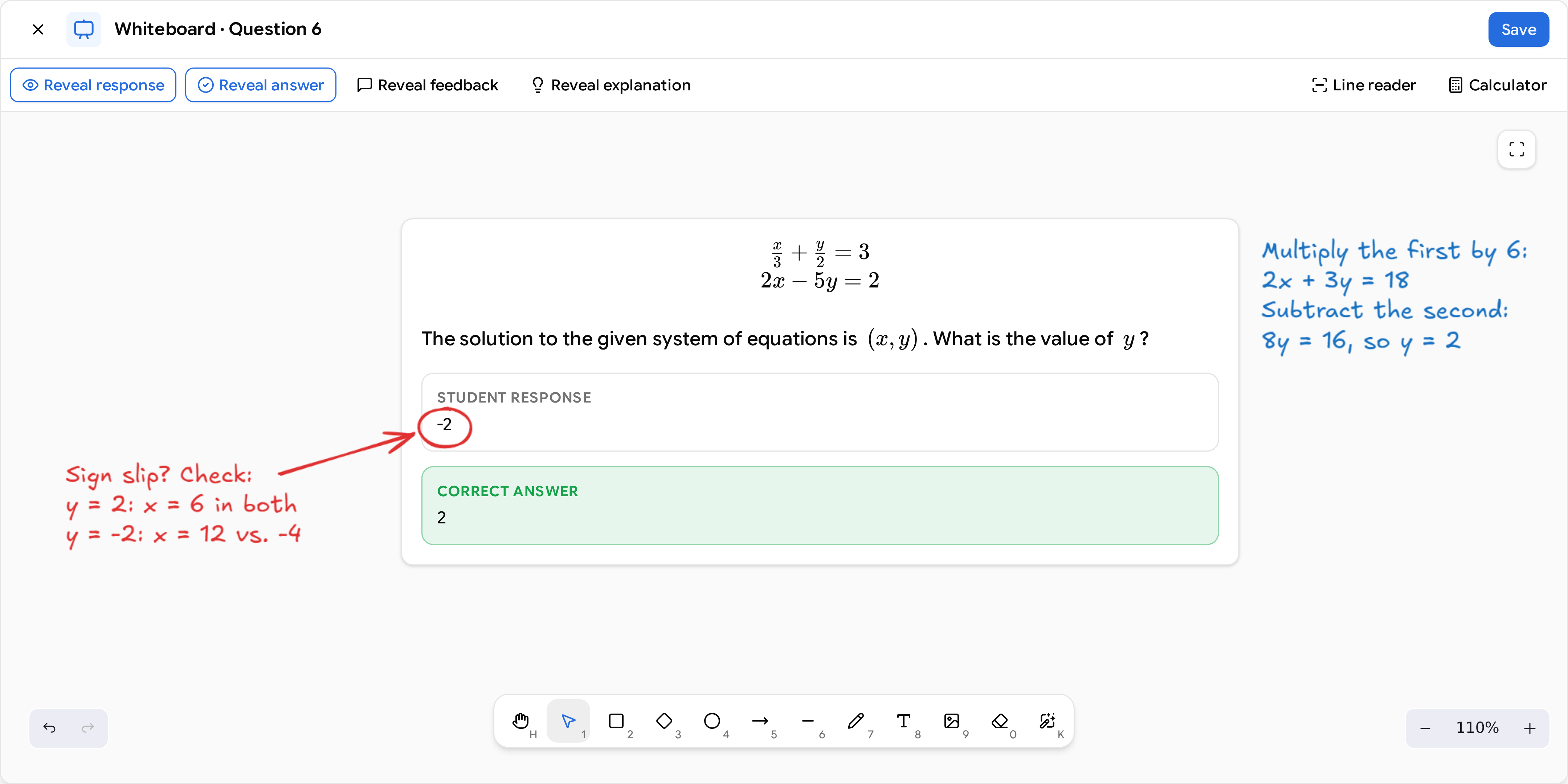
Tutors can prepare the questions worth another look, so session time goes to the thinking.
Tutors and the student can work the question live. The whiteboard is available from review sets too.

Highlights and notes, a line reader and an answer eliminator.
Graphing and scientific calculators, a reference sheet, a line reader and an answer eliminator. There is no Math highlighting.
Across both tests, Riley uses highlights and notes on 28 questions and the calculator on 53 Math questions. The record connects tool use with results; the individual question timeline shows when a tool was opened or closed.
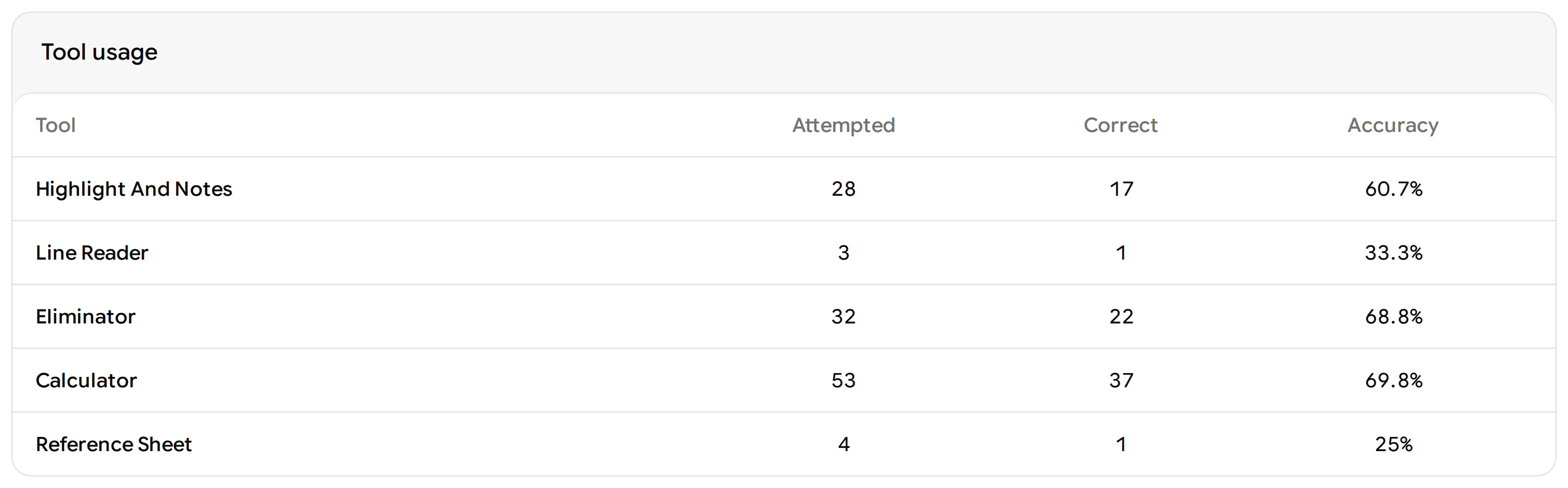
These are our platform’s tools. This page does not claim they reproduce Bluebook™’s tool set exactly. Tool use by itself does not establish whether a tool helped or hurt.
03 · Practice and check again
Review the questions worth revisiting, practice a whole section under time and then check progress with another full test. The student’s earlier attempts remain part of the picture.
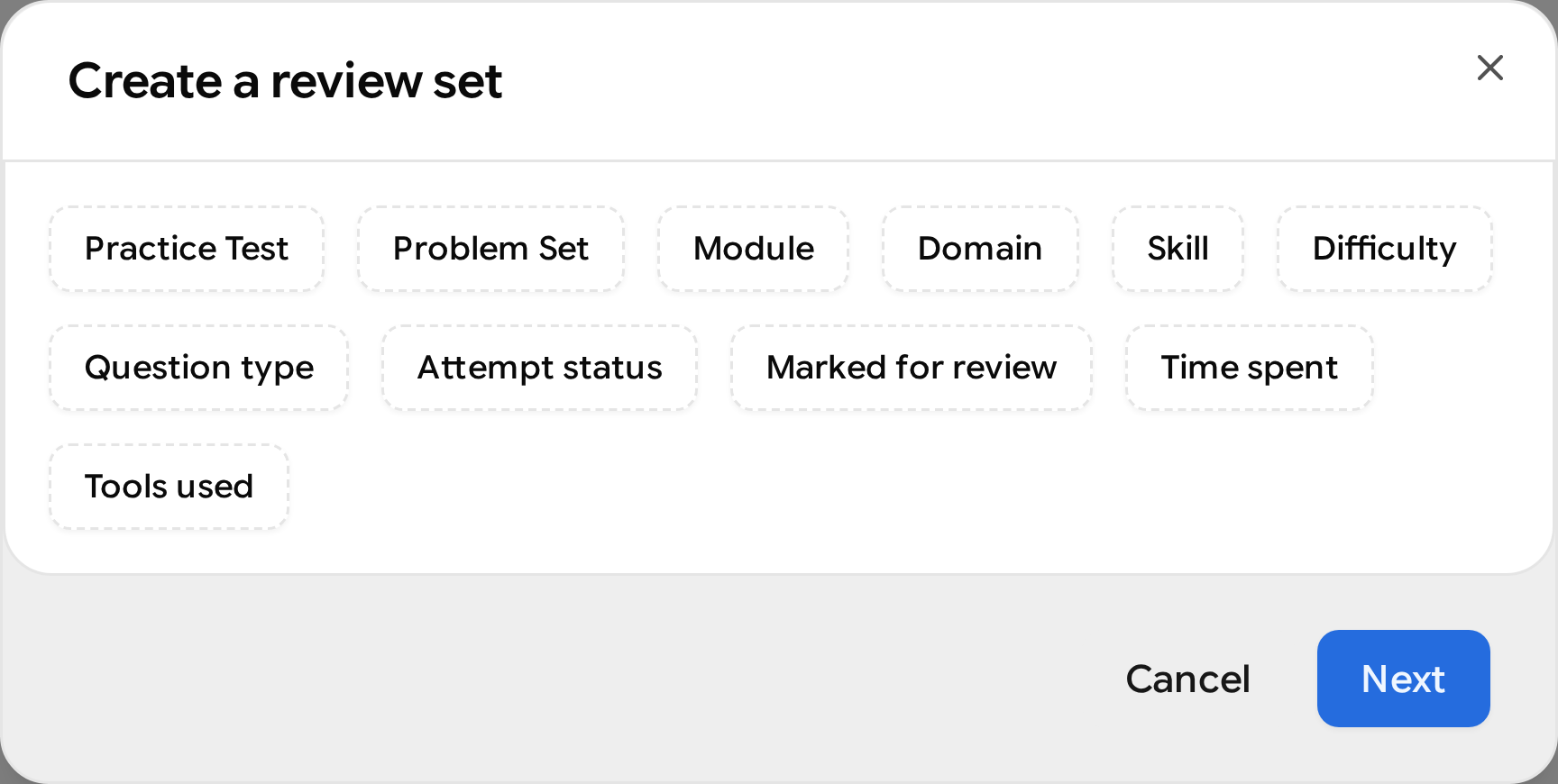
Riley’s tutors can build a set around skills, difficulty, results, flags, time or tools. Students can build their own sets, too, from questions they missed, flagged or found slow.
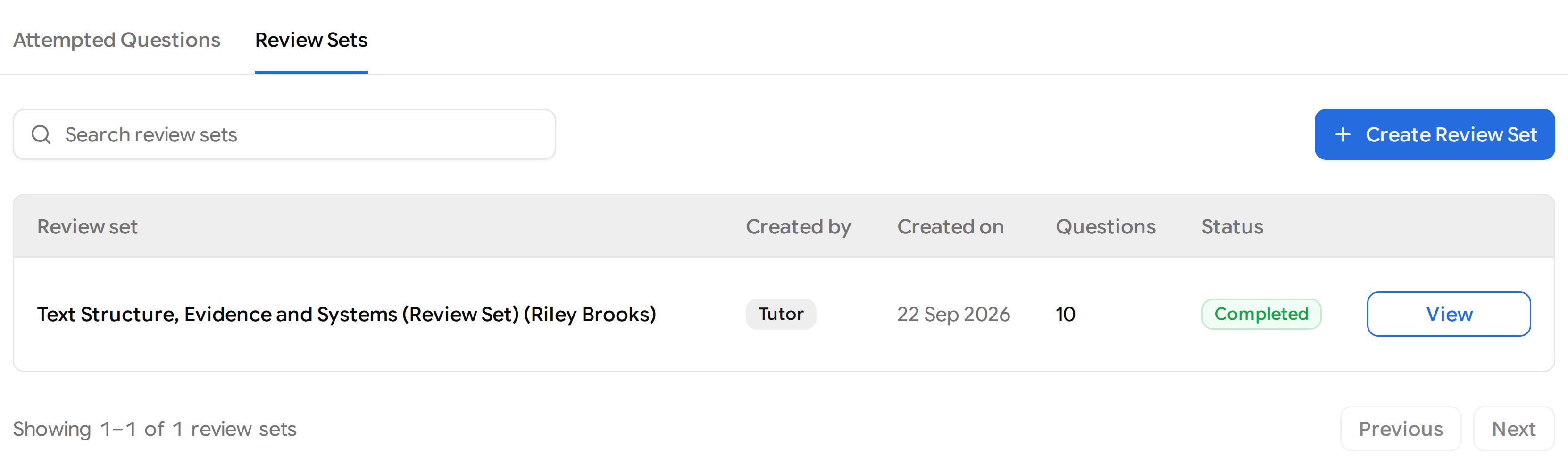
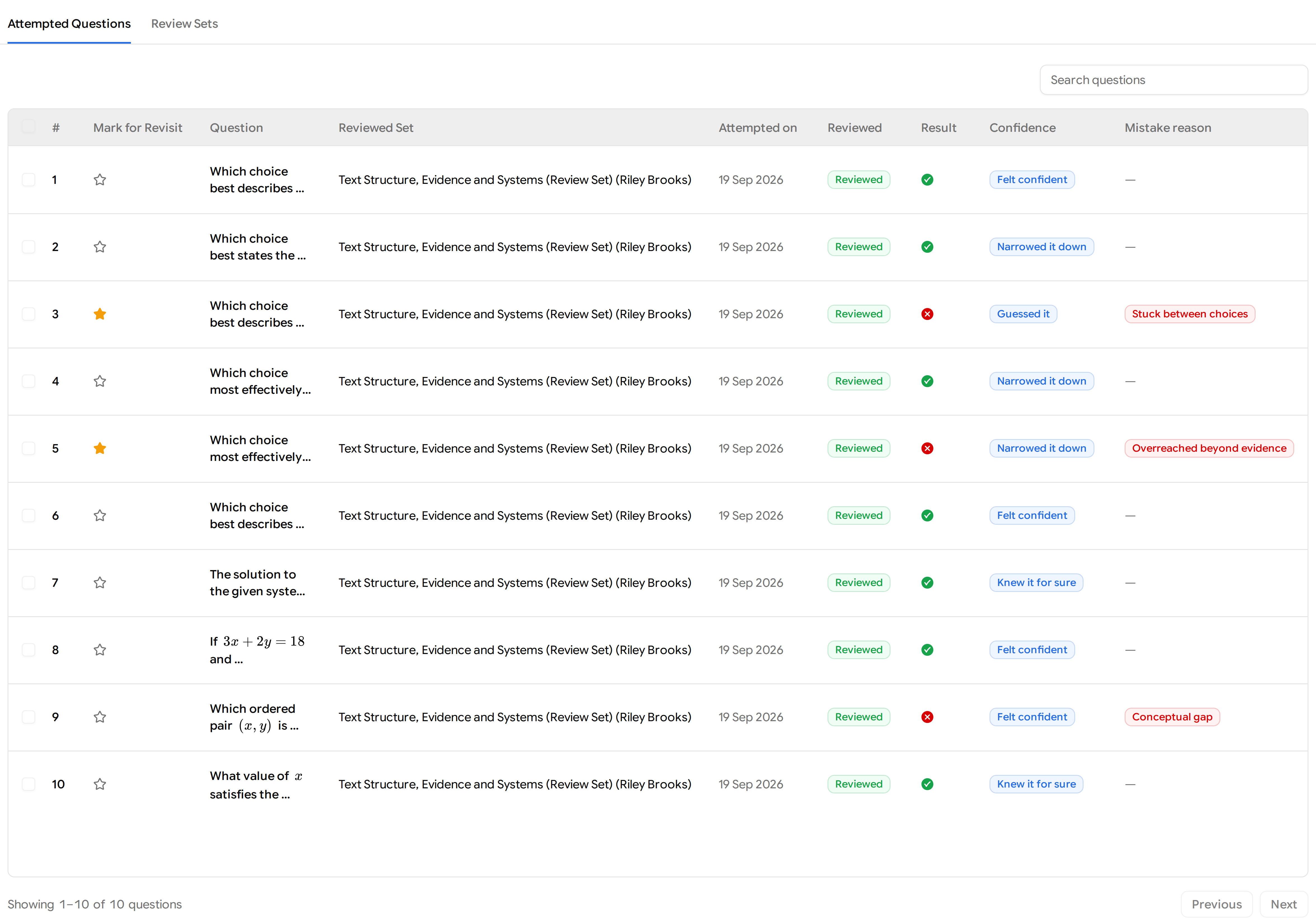
Riley’s example set brings together text structure, quantitative evidence and systems of equations.
A student-created set stays on the profile, with its creator identified.
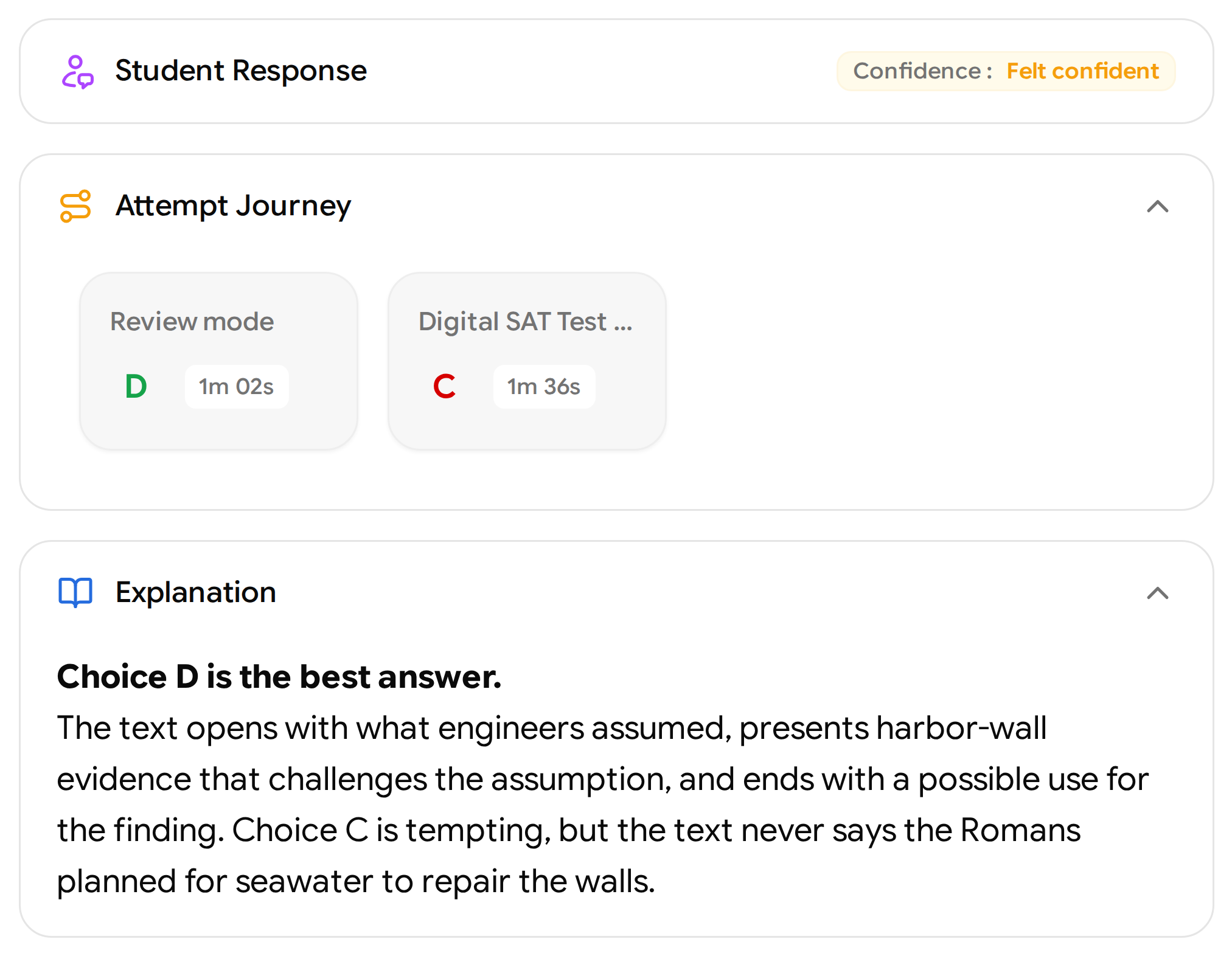
On the baseline exam, Riley chose C in 1 minute 36 seconds. In review, Riley chose the correct D in 1 minute 2 seconds and felt confident. The original attempt and the new attempt stay connected.
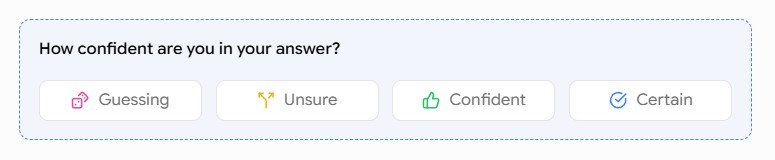
A confident wrong answer may call for reteaching a method. A guessed answer may call for work on eliminating choices. Confidence adds context to correct versus incorrect.
Most homework is a sectional: one full SAT® section, with both modules, timed and adaptive. Each subject’s tutors assign the work that fits the student’s plan. The platform lists sectionals as “Module.”
Two modules, 54 questions, 64 minutes. Practice reading, decisions and pacing across a full section.
Assigned by Riley’s tutorsTwo modules, 44 questions, 70 minutes. The first module determines the second route.
Assigned by Riley’s tutorsShort problem sets can focus on text structure, quantitative evidence or linear equations.
Designed examples, not screenshotsA Program Guide records the plan, which adjusts as the student progresses. Sessions build the skills; homework practices them under test conditions.
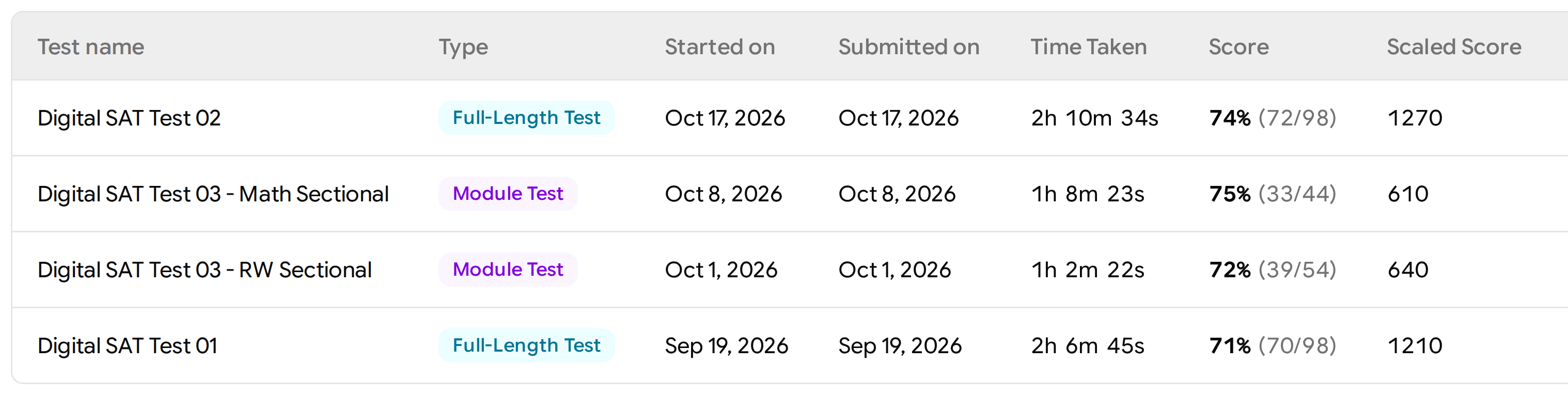
Four weeks later, Riley’s example mock-test estimate is 1270: Reading and Writing 650, Math 620. No question is left unvisited. Tutors can compare the result, route and habits against the baseline exam.
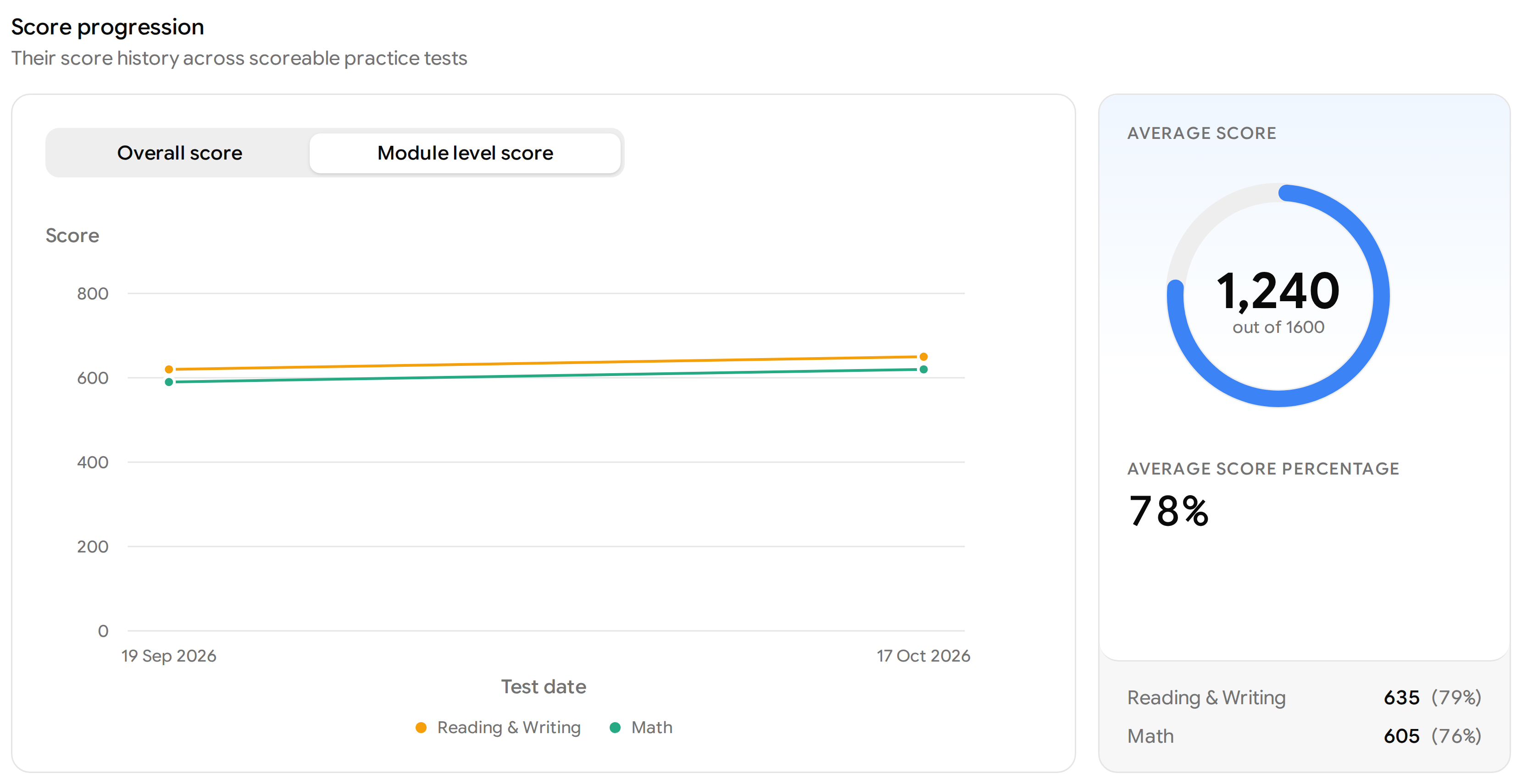
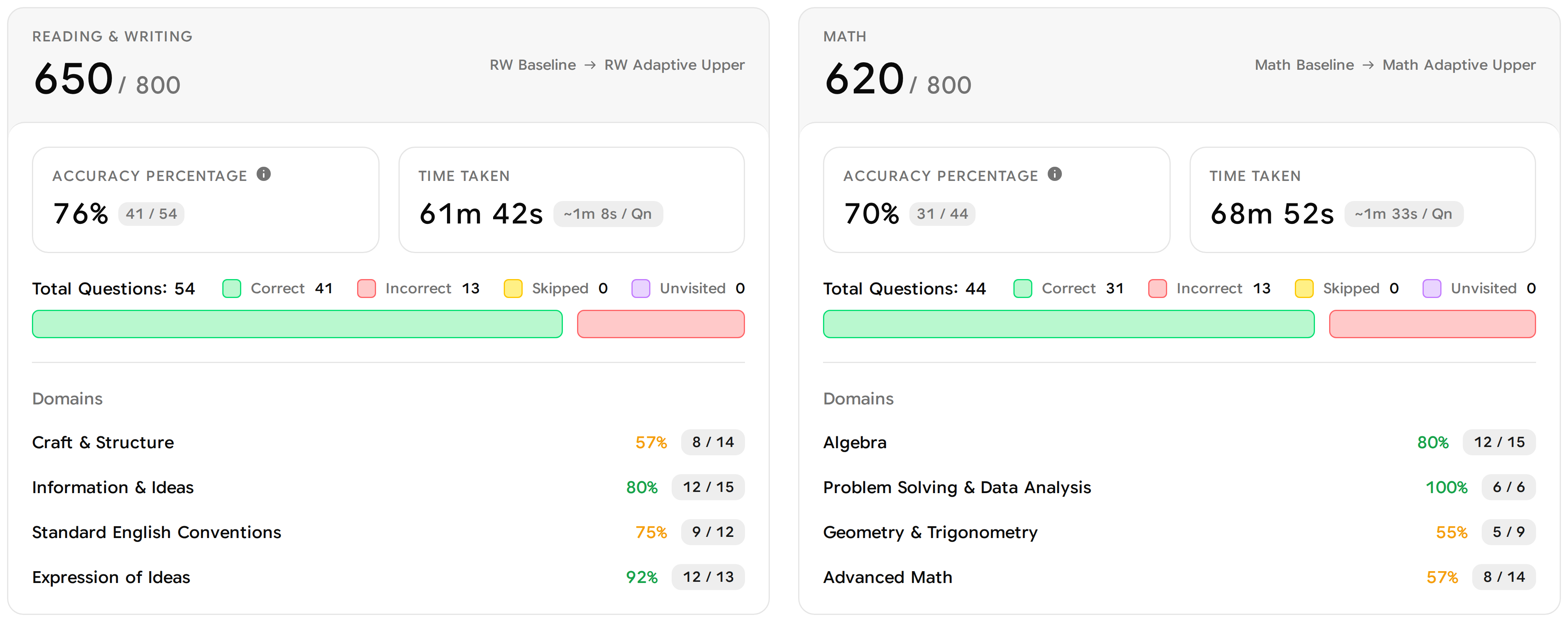
Math’s first module reaches 17 of 22 and routes up. Reading and Writing stays on the harder route. The next round of practice begins with what this test shows.
Revisit why fewer right answers can still mean progressWhat you’ll hear from us
Your student’s tutors use the detail. Families receive the results and have ways to ask questions along the way.
The results for that test and how they compare with every test before it.
Consultations families can schedule if they have questions or concerns.
Answers to your questions by phone, email or text.
Questions families ask
The profile shows the starting point, latest result, best result and target. Trends and skill counts add context to one score.
See the whole pictureYes. A stronger first module can lead to a harder second one. Tutors compare the route as well as the question count before interpreting a change.
Compare Riley’s two Math routesIn Reading and Writing, saved highlights and notes are available in the question review. They can reveal a useful strategy or the point where a reading went off track.
Explore Riley’s notesQuestion timing, difficulty, skills and the actual work need to be read together. A long answer can be careful work or a sign of being stuck.
Compare the time bandsThe session log records events, module timing and breaks. Tutors can investigate differences in conditions before comparing scores.
See the baseline recordLook at the count first. One question is limited evidence. Then check difficulty and actual responses. The same percentage can describe very different situations.
See the skill mapsNo. The figures on this page are illustrative, and the platform’s peer population has not been verified. They are not official national norms.
See how comparisons are usedNo. Our practice scoring is our best estimate of the official score. Our routing rule and score calculation are the platform’s. College Board’s own Bluebook™ practice tests are scored by College Board.
Official Bluebook™ practiceMostly sectionals: a complete timed, adaptive Reading and Writing or Math section, with two modules. Focused problem sets supplement them.
See homework examplesThe same profile, section, skill and question views remain available across tests. After every mock test, the score report includes that test’s results and the comparison with earlier tests.
Follow the next testCollege Board’s benchmarks and scoring explanations are the official references for the SAT®.
Start with your student
Every program begins with a free consultation. Test prep starts with a free baseline exam, so the plan begins with where your student is.