The big picture
Compare test scores and subjects over time.
Inside the digital ACT
A score is a starting point. The questions behind it tell your student's tutors where to go next.
Was a missed question a content gap, a rushed decision or a second guess? Did the clock run out, or did a few hard questions take time away from the rest? We can look at those possibilities together.
A closer look at our digital testing platform. Paper testing has a different workflow.
Illustrative student and results. Select any screen to see the original at full size.
01 / See the whole picture
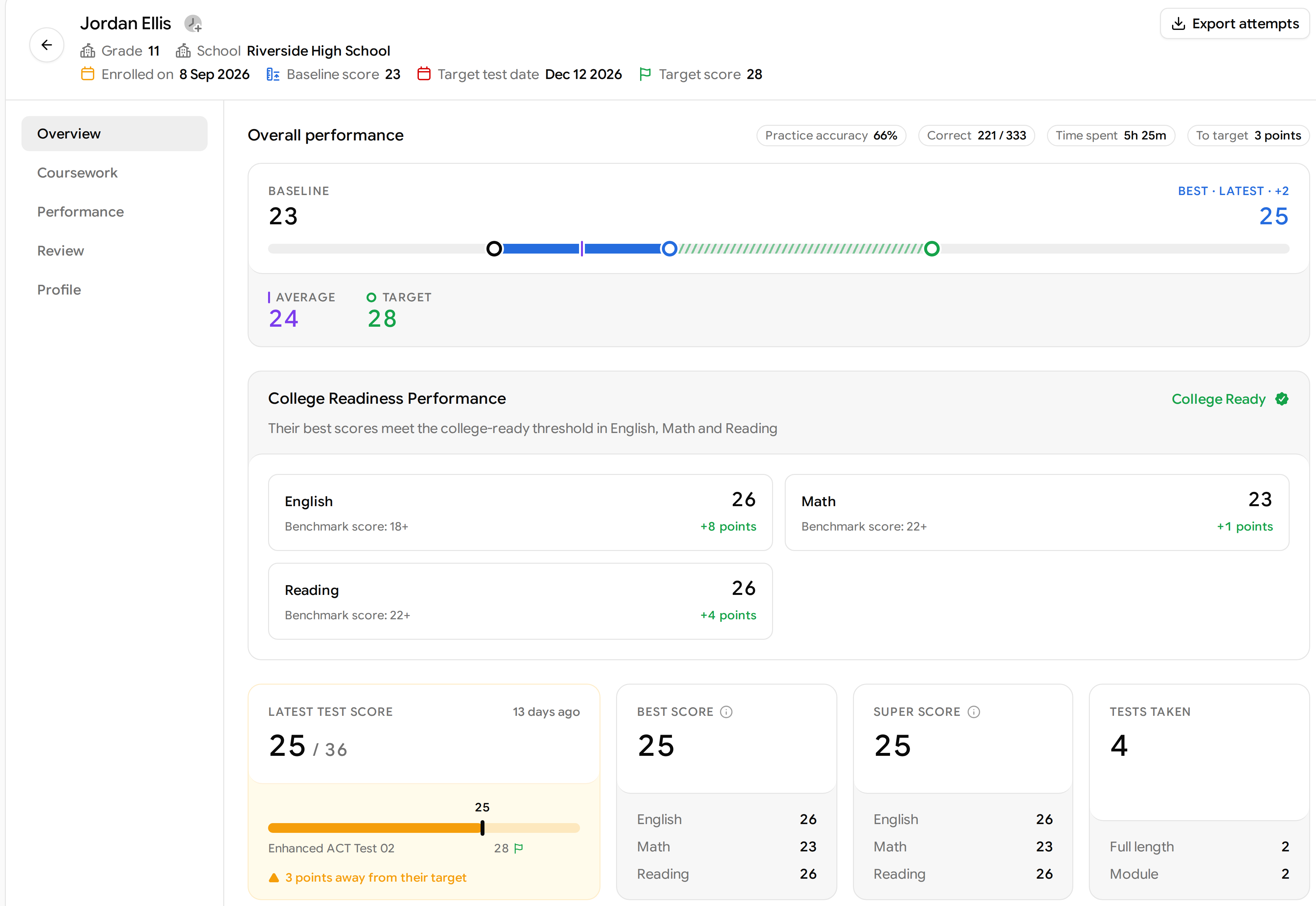
One profile brings together the baseline exam, later mock tests, skills and assigned work. It gives your student's tutors a shared place to follow the story.
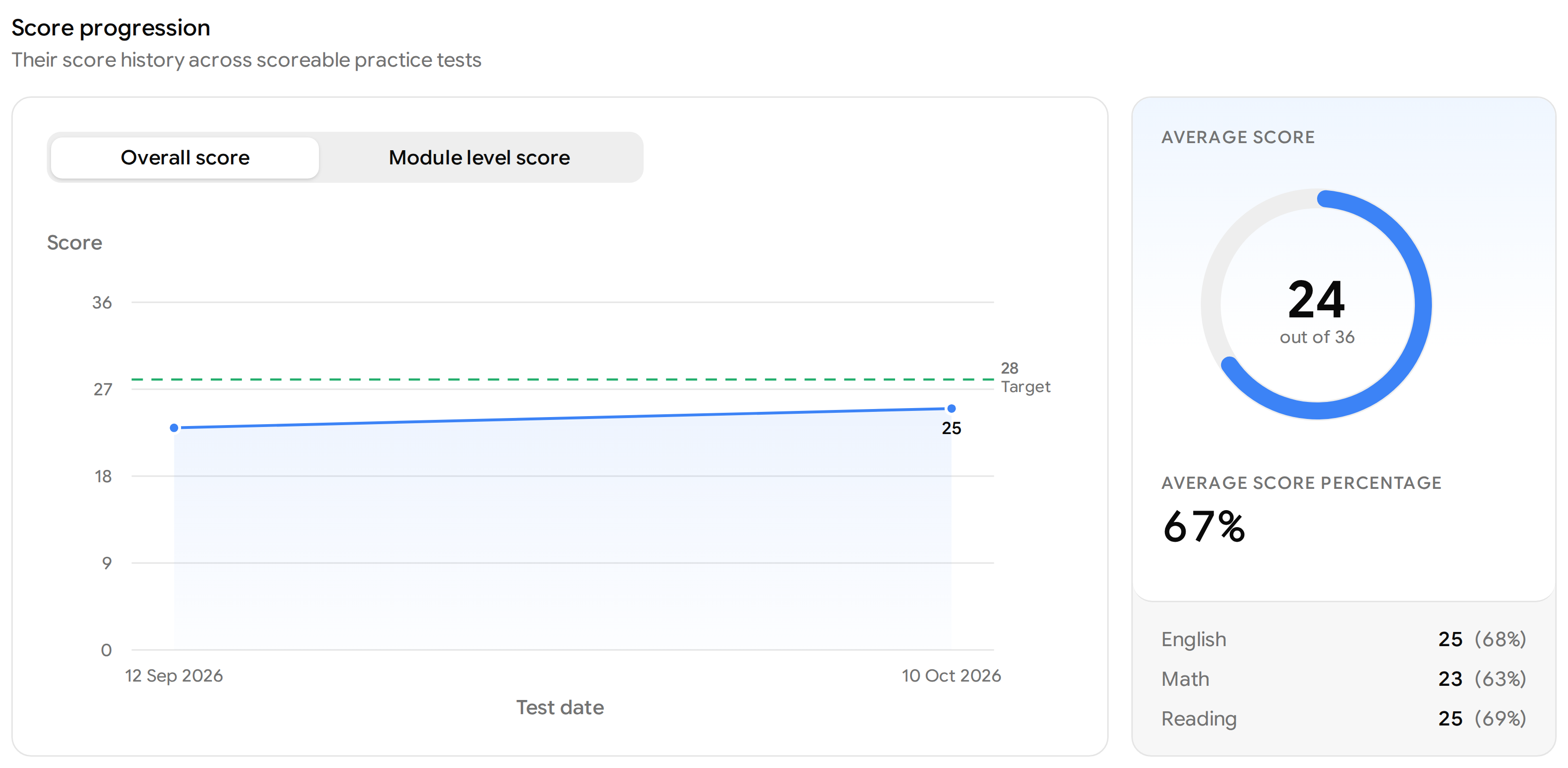
Jordan's baseline composite is 23. Their latest mock test is 25, against a target of 28. Those numbers tell us where the example stands. The subject and skill views help us ask what changed.
Compare test scores and subjects over time.
Check the questions behind each skill, including how many there were.
The change from 23 to 25 is illustrative. It is not a claim about expected gains or the effect of tutoring.
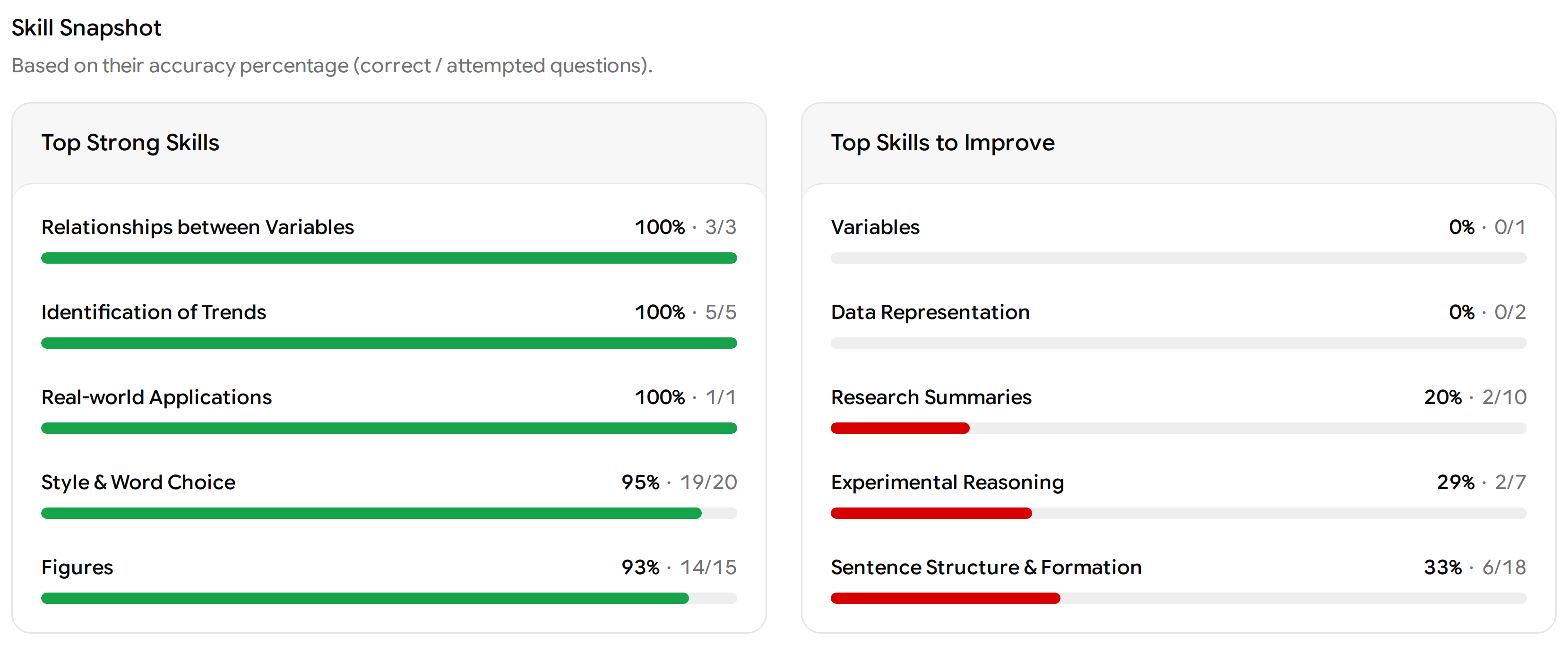
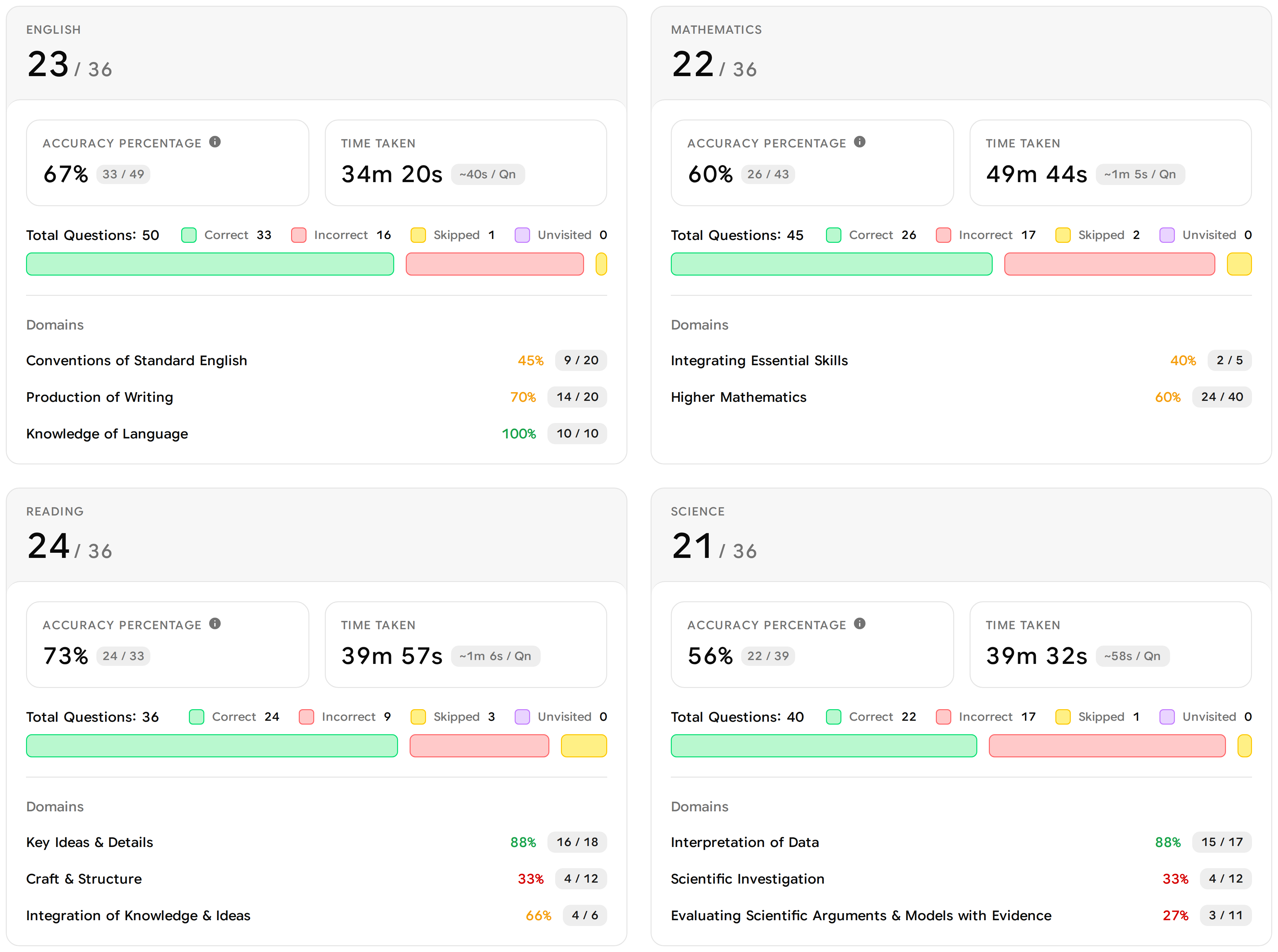
A percentage is more useful when we can see its size. One question can suggest something to check. A repeated pattern can support a more focused choice of practice.
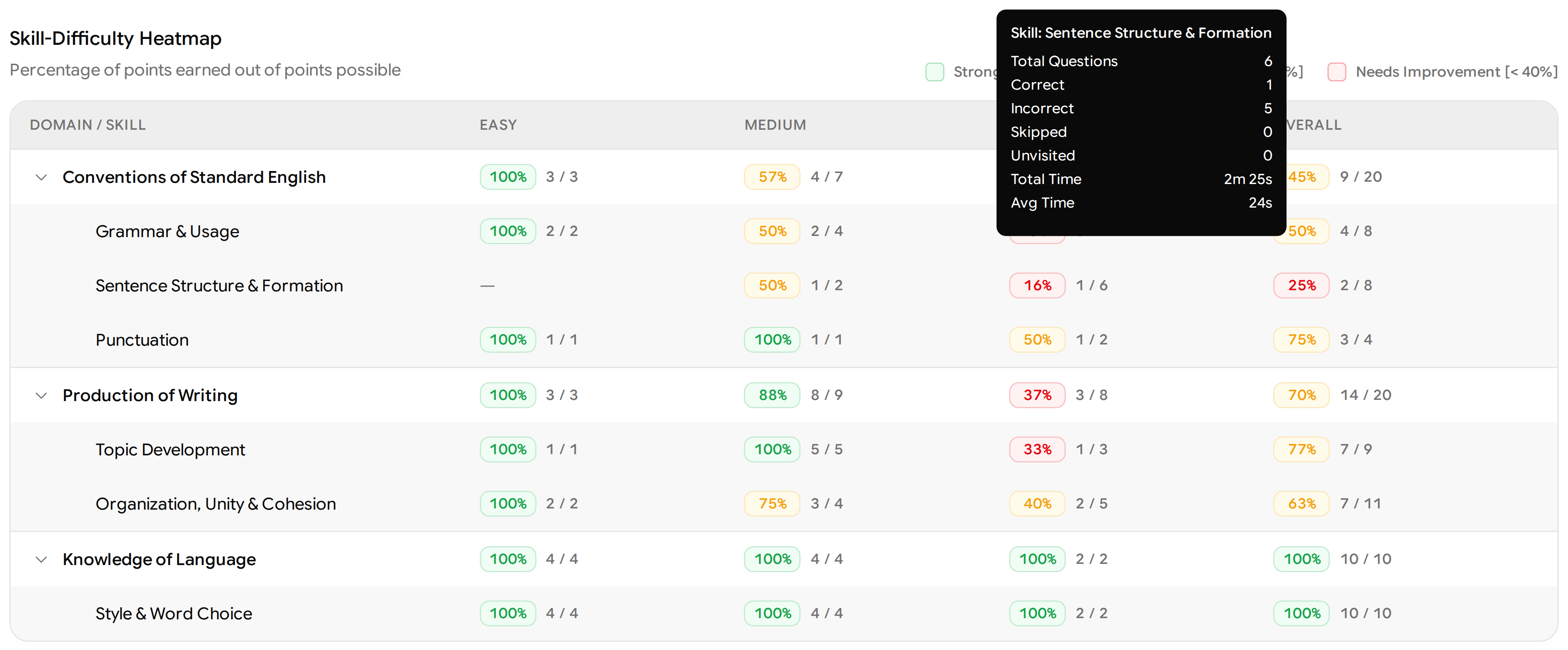
The composite doesn't tell the whole story. The same report crosses subject, domain, skill, difficulty and timing.
Jordan gets 10 of 10 in Knowledge of Language, but 9 of 20 in Conventions of Standard English.
Easy and medium Algebra are strong. The harder questions tell a different story.
Three questions were opened and left blank. None were unvisited.
Interpreting data is a strength. Experiments and arguments need a closer look.
The report keeps the score alongside how many questions were answered, answered-only accuracy, pace and session activity. Those are different measures, and they answer different questions.

02 / Find what matters
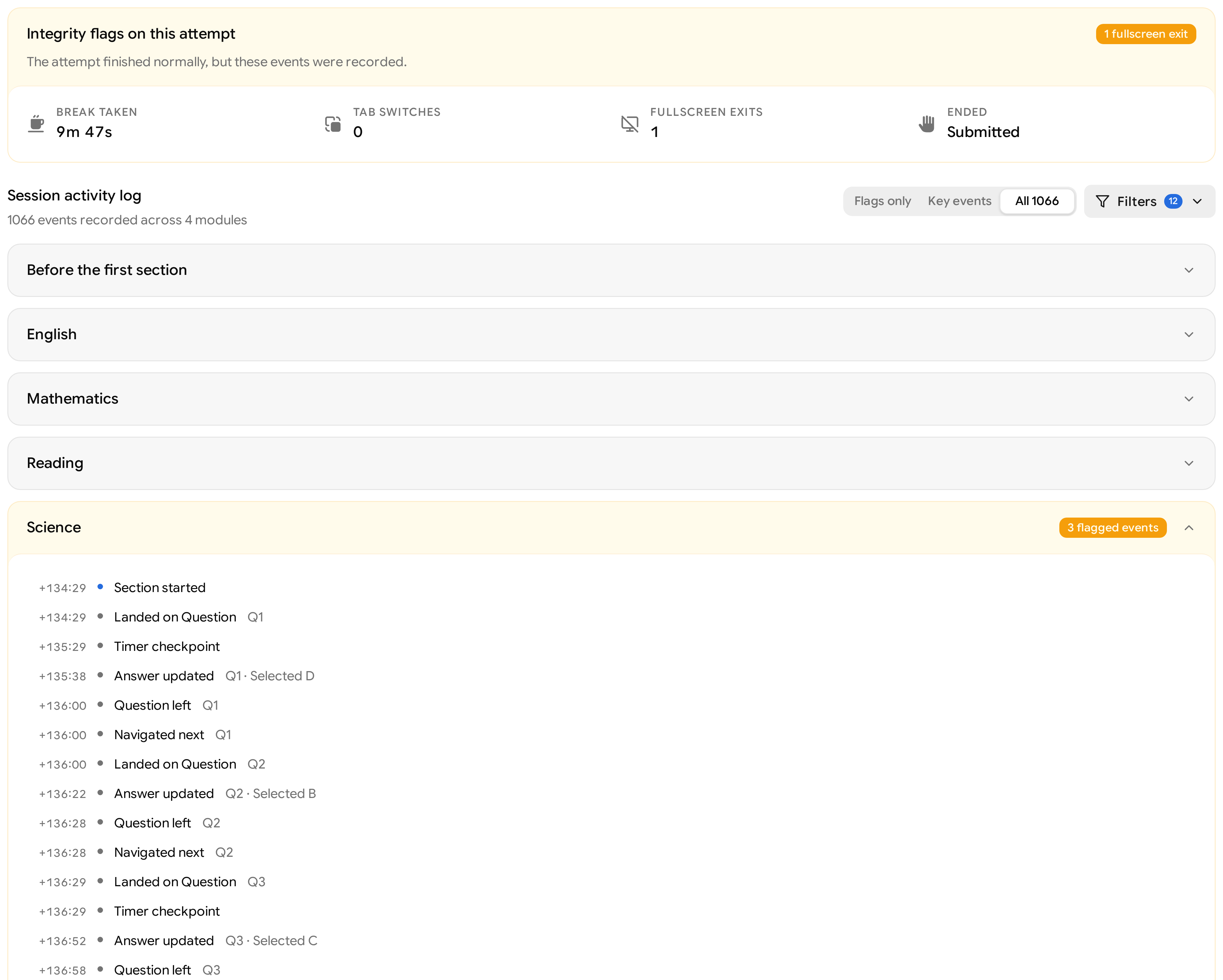
A hard question answered quickly tells a different story from a hard question that took three minutes. A wrong answer that becomes right tells a different story from a correct answer changed at the end.
Review the skill and work through the reasoning on another question.
Look at timing, return visits and answer changes before choosing what to practice.
In Sentence Structure, Jordan gets 2 of 8 right. Six hard questions take just 2 minutes 25 seconds altogether, about 24 seconds each.
That combination suggests two possibilities worth checking: rushing through difficult grammar, or not yet recognizing which rule to use. A focused review can help distinguish them.
Meanwhile, Knowledge of Language is 10 of 10. We can keep a strength in view while choosing a priority.
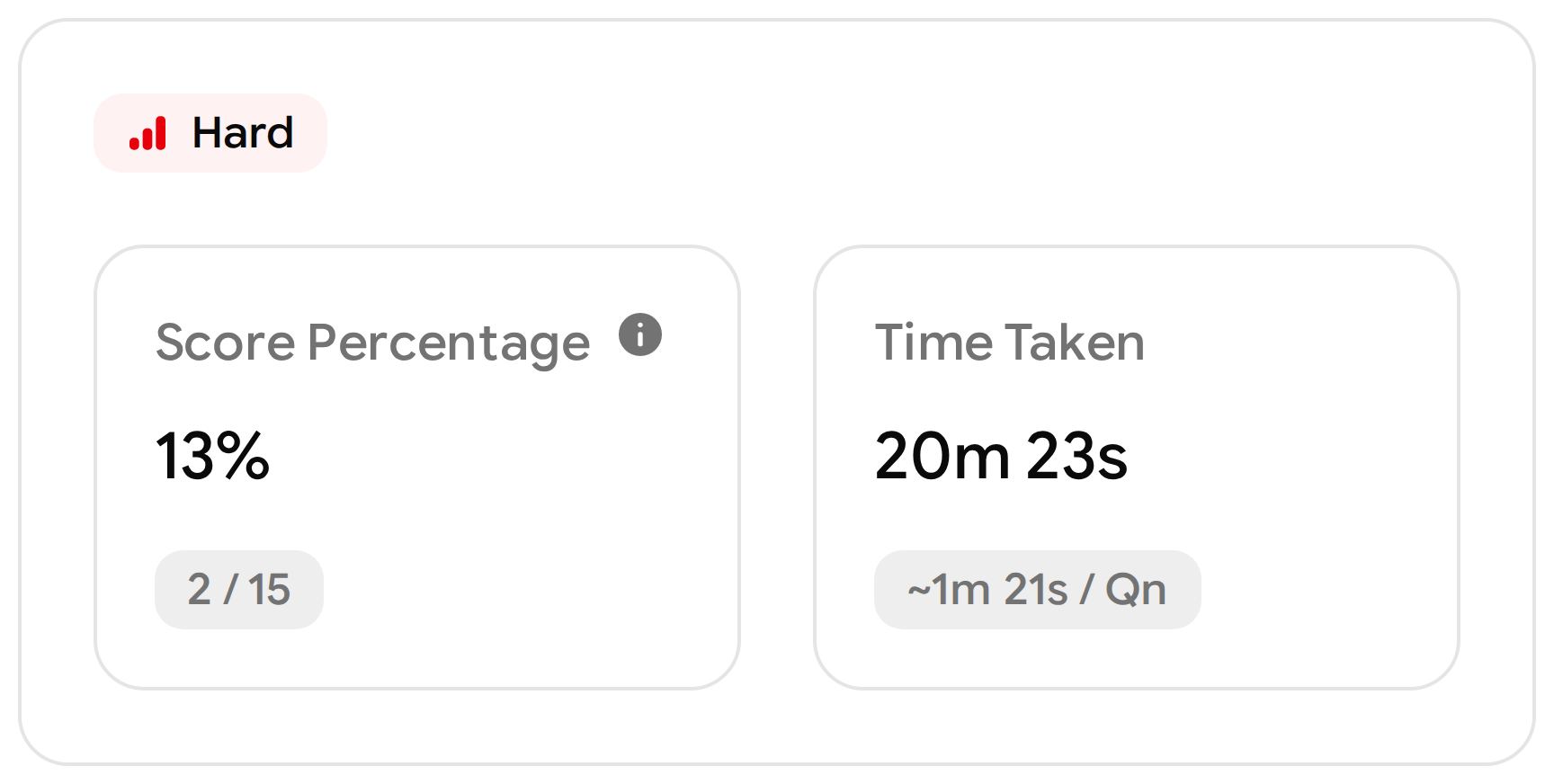
Jordan gets all 13 easy and medium Algebra questions right, then 1 of 4 hard Algebra questions. Across Math, the hard questions take more than 20 minutes, with 2 of 15 right.
That points toward checking the harder applications of familiar skills, alongside the time spent on them. It doesn't mean starting Algebra over.
See the hard-question score and time together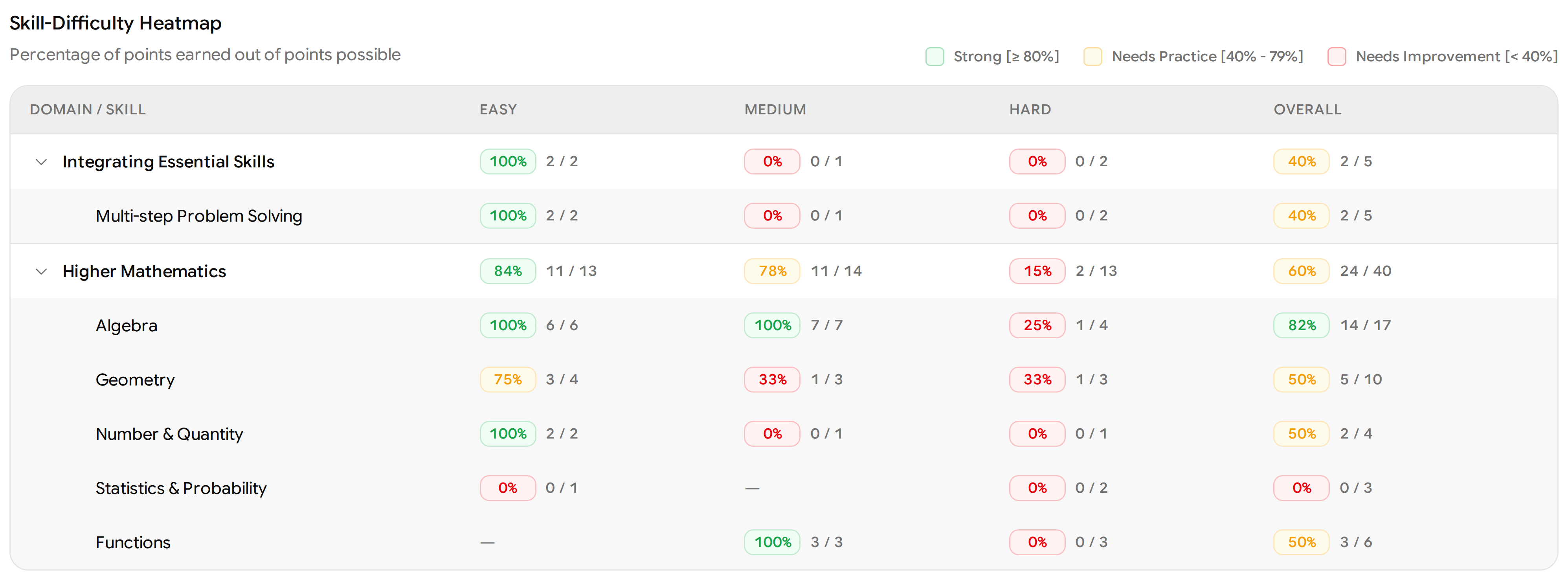
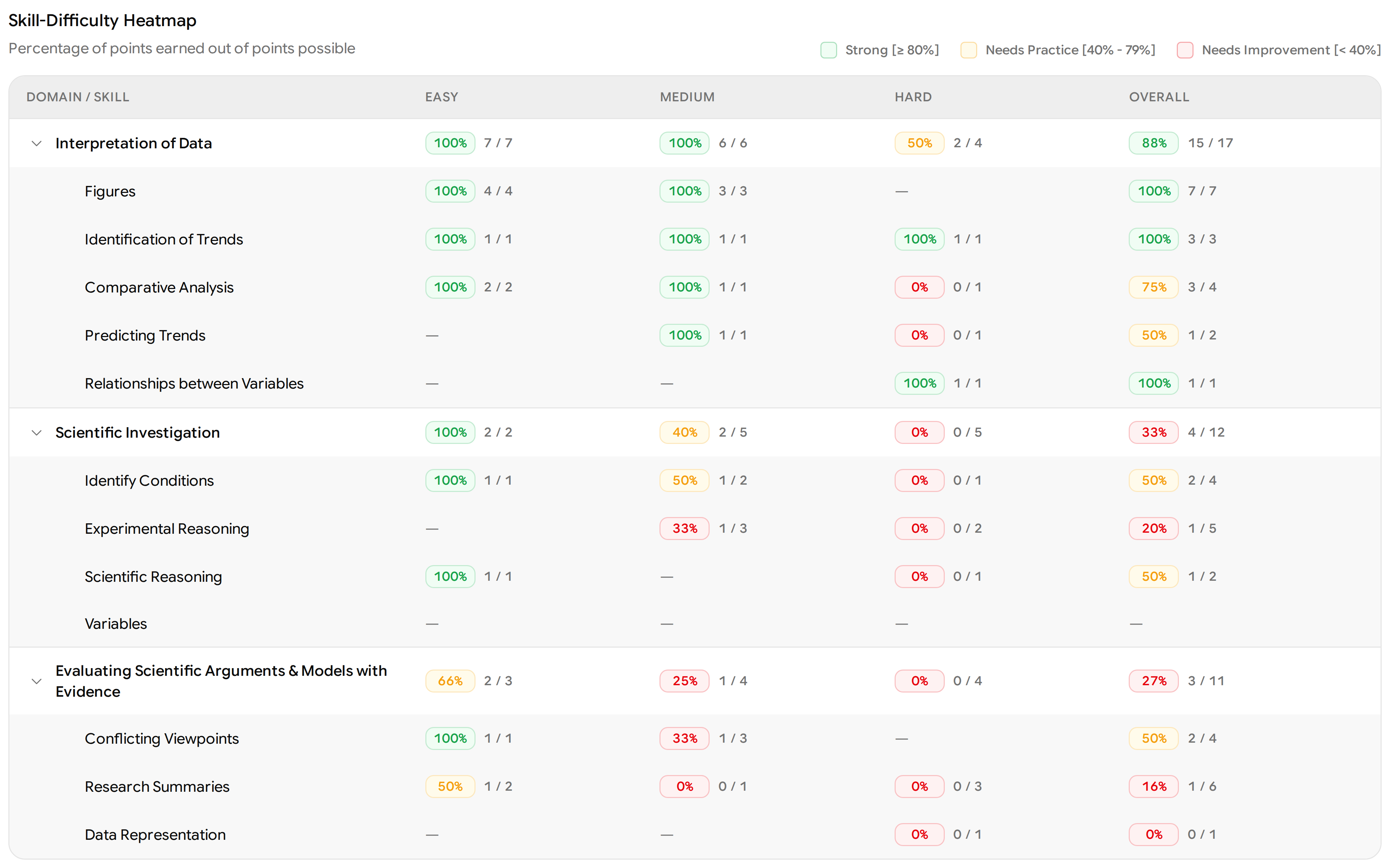
Jordan gets all 15 easy and medium Interpretation of Data questions right, and 15 of 17 in that domain overall. Hard Scientific Investigation is 0 of 5.
The broader experiments-and-arguments result is 7 of 23. That is a more useful direction for practice than treating every Science question alike.
The one Variables question was skipped. The blank-question mark in the heatmap and the 0 of 1 in the skill snapshot describe the same event.
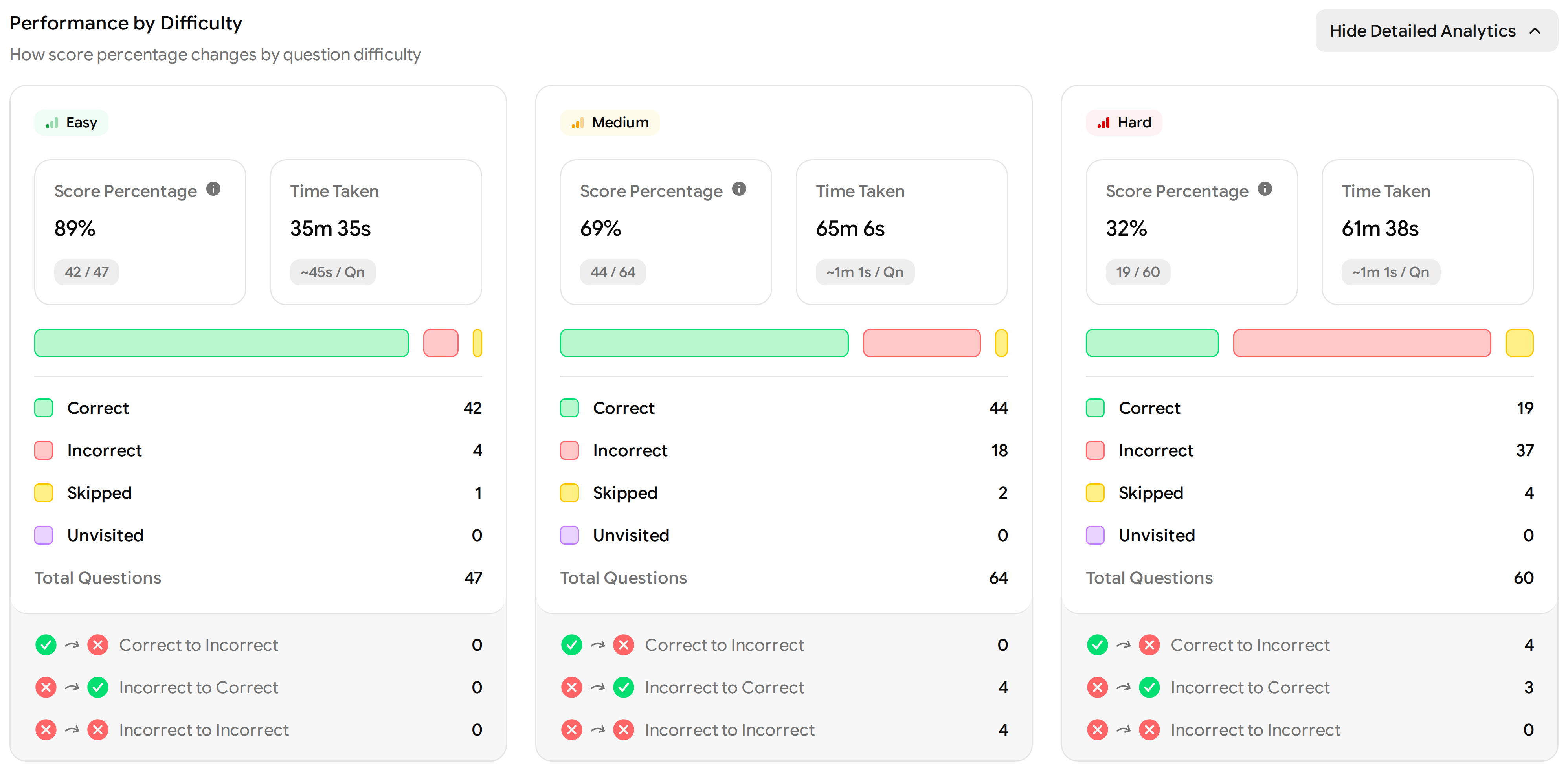
Of the 66 questions Jordan doesn't earn, 41 are hard, 20 medium and 5 easy. The hard total includes 37 wrong answers and 4 skipped questions.
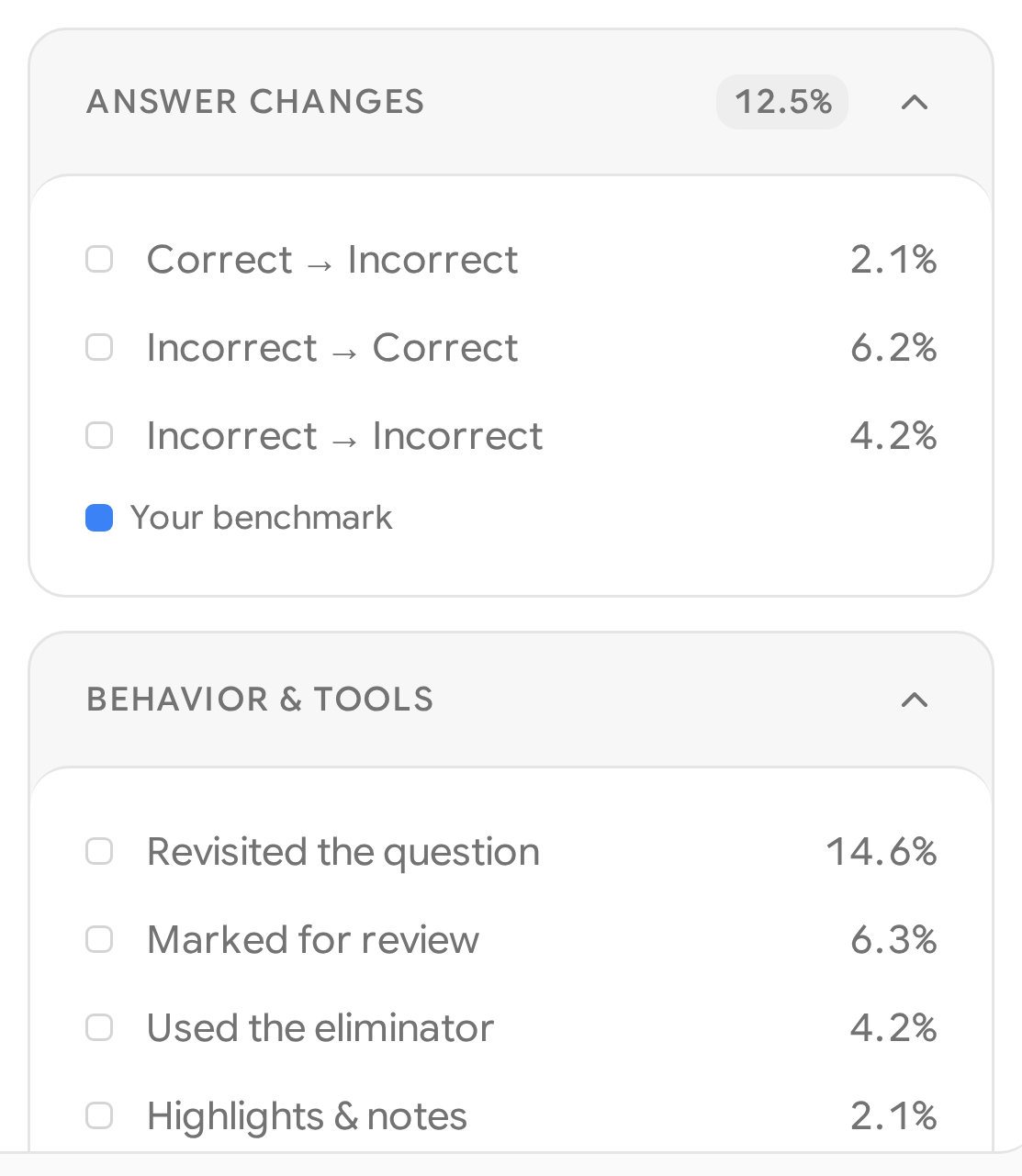
The answer-change pattern differs by difficulty, too. Medium changes fix four answers and break none. Hard changes fix three and break four.
We can ask where time and review are helping, rather than applying one rule to every question.
Follow the clock
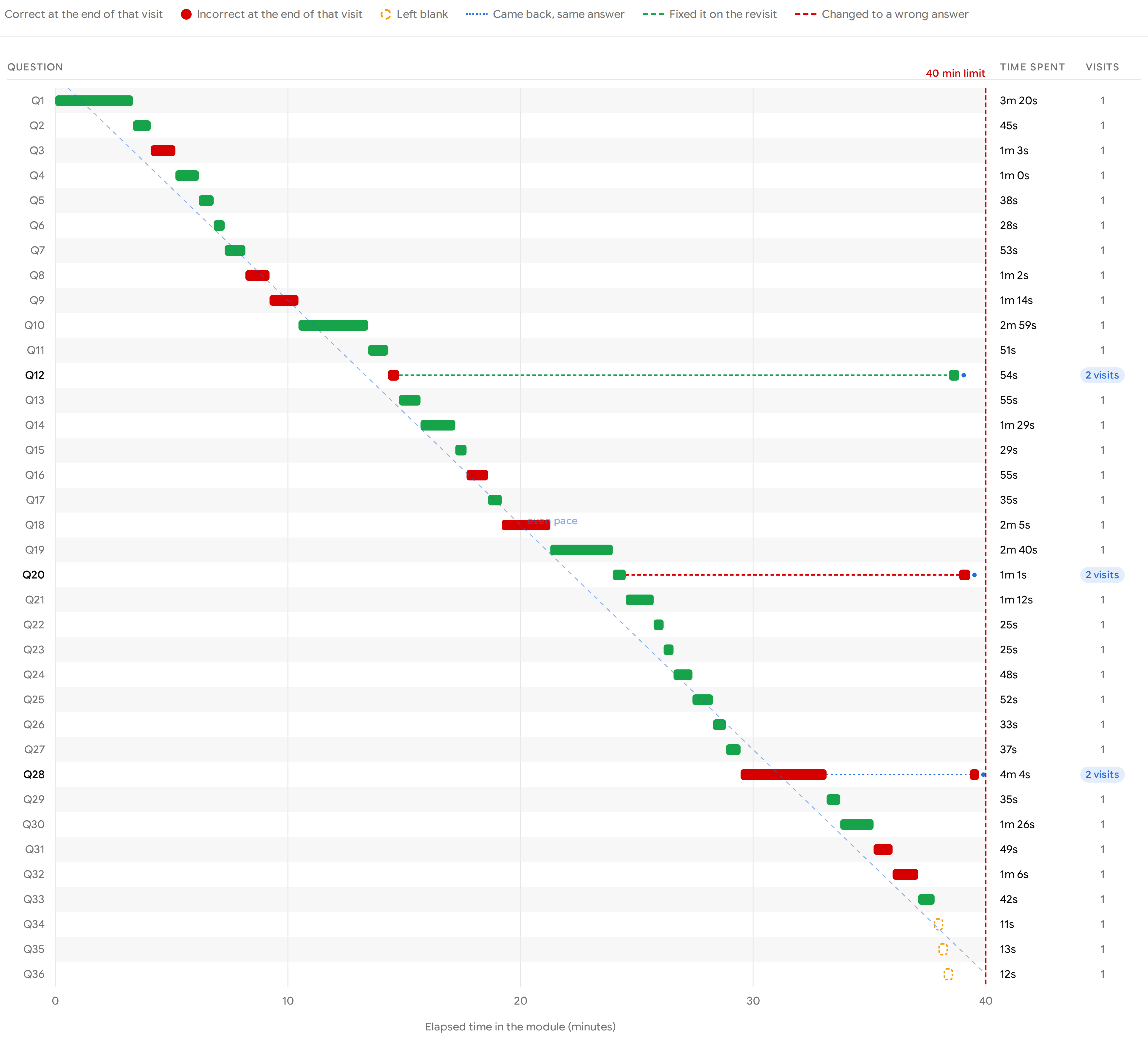
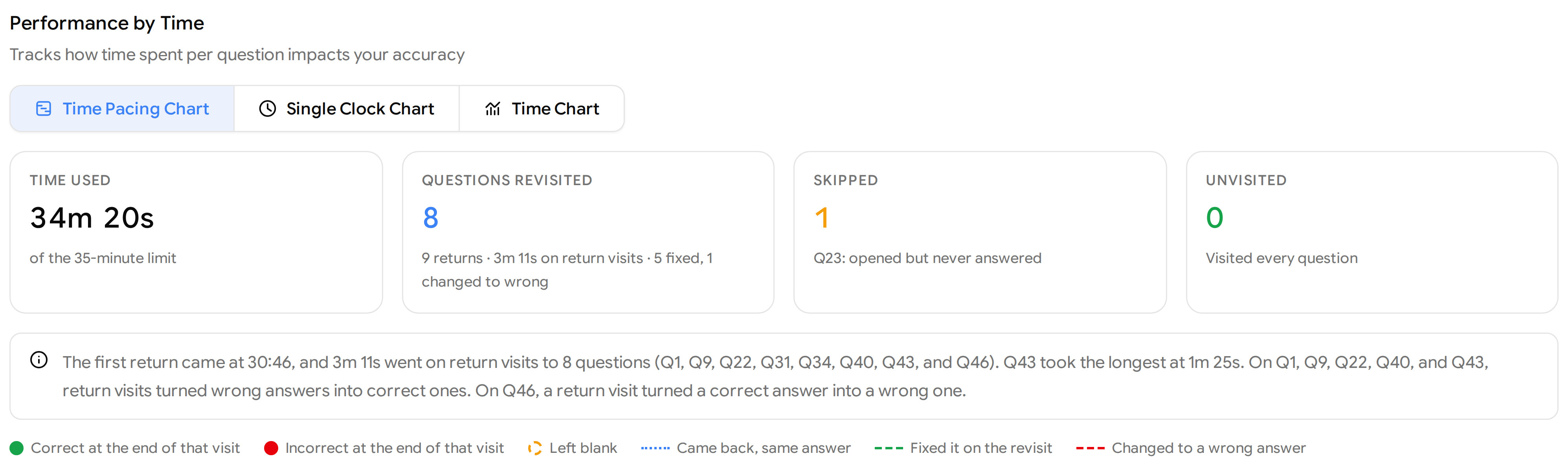
This chart follows all 36 questions in the order Jordan reached them. It shows the first pass, returns and how each visit ended. The full legend stays with the chart.
Four moments worth a closer look
Skipped: opened, then left blank.
Unvisited: never reached.
Jordan's last three Reading questions were skipped. That is different from running out of time before seeing them.
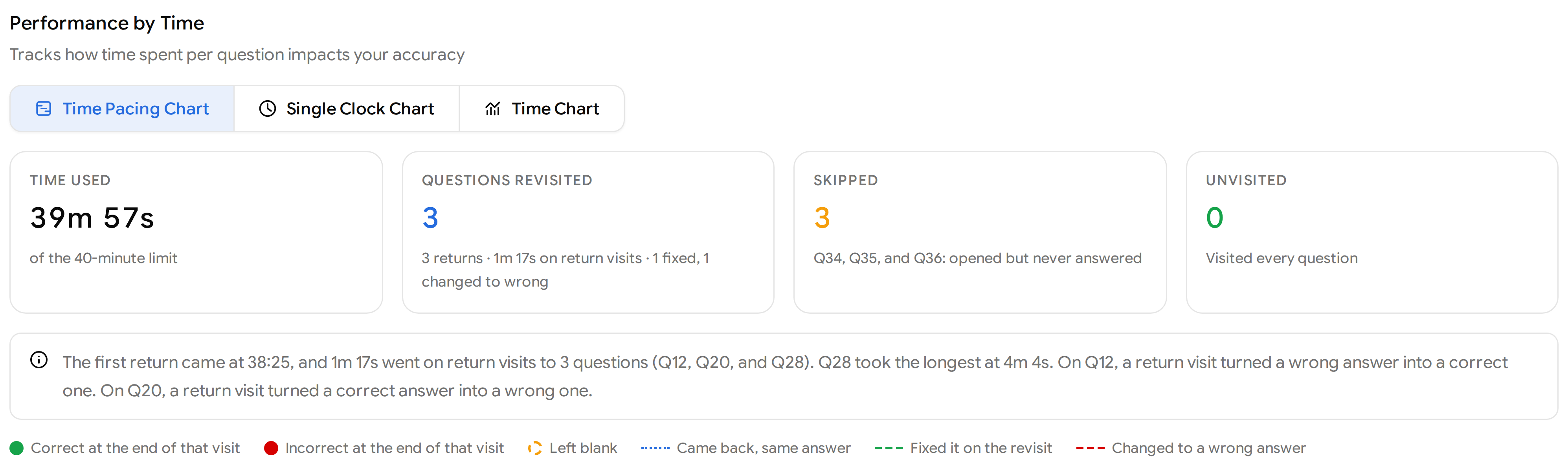

The question for the next attempt is concrete: how should Jordan decide between returning to a flagged question and completing the remaining questions?
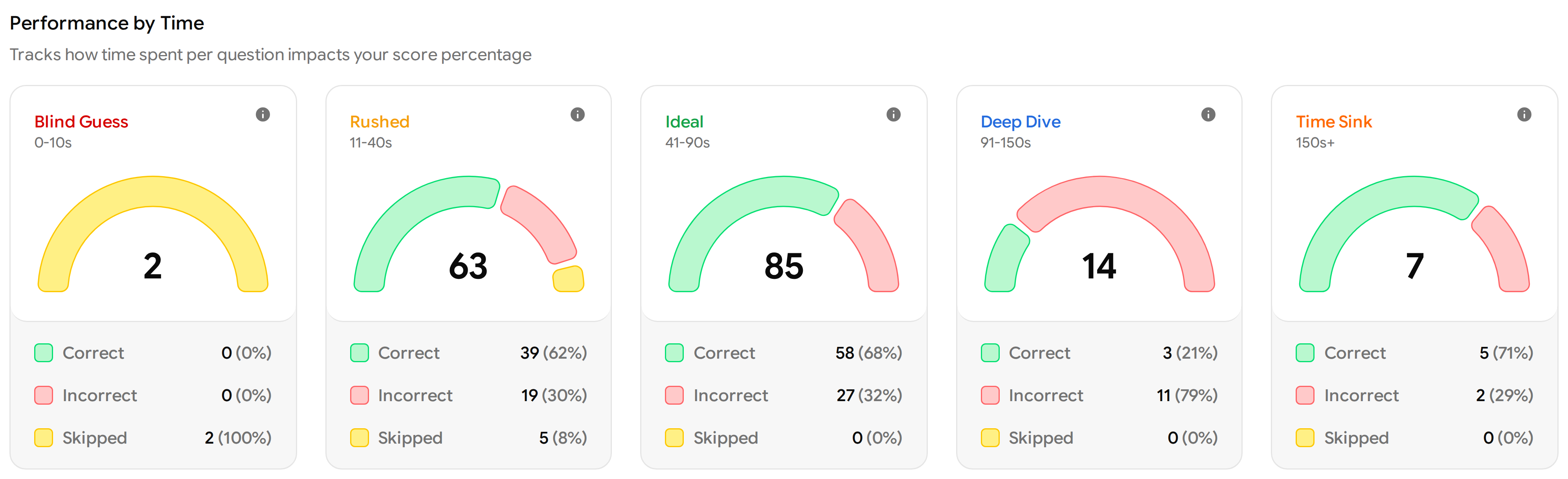
On questions taking 91 to 150 seconds, Jordan gets 3 of 14 right. But on questions taking more than 150 seconds, they get 5 of 7 right.
A single time cutoff would hide that difference. Tutors can combine time with the skill, difficulty and question itself.
A possible chance to make a sound method more efficient.
A possible sign to revisit the approach or recognize when to move on.
Jordan finishes the first English pass with about four minutes left. Eight returns take 3 minutes 11 seconds and fix five answers, while one previously correct answer becomes wrong. The overall benefit doesn't make every return useful.
From a pattern to a particular question
A result becomes more useful when your student's tutors can inspect the answer, the explanation, the sequence of visits and the tools used, all around the same question.
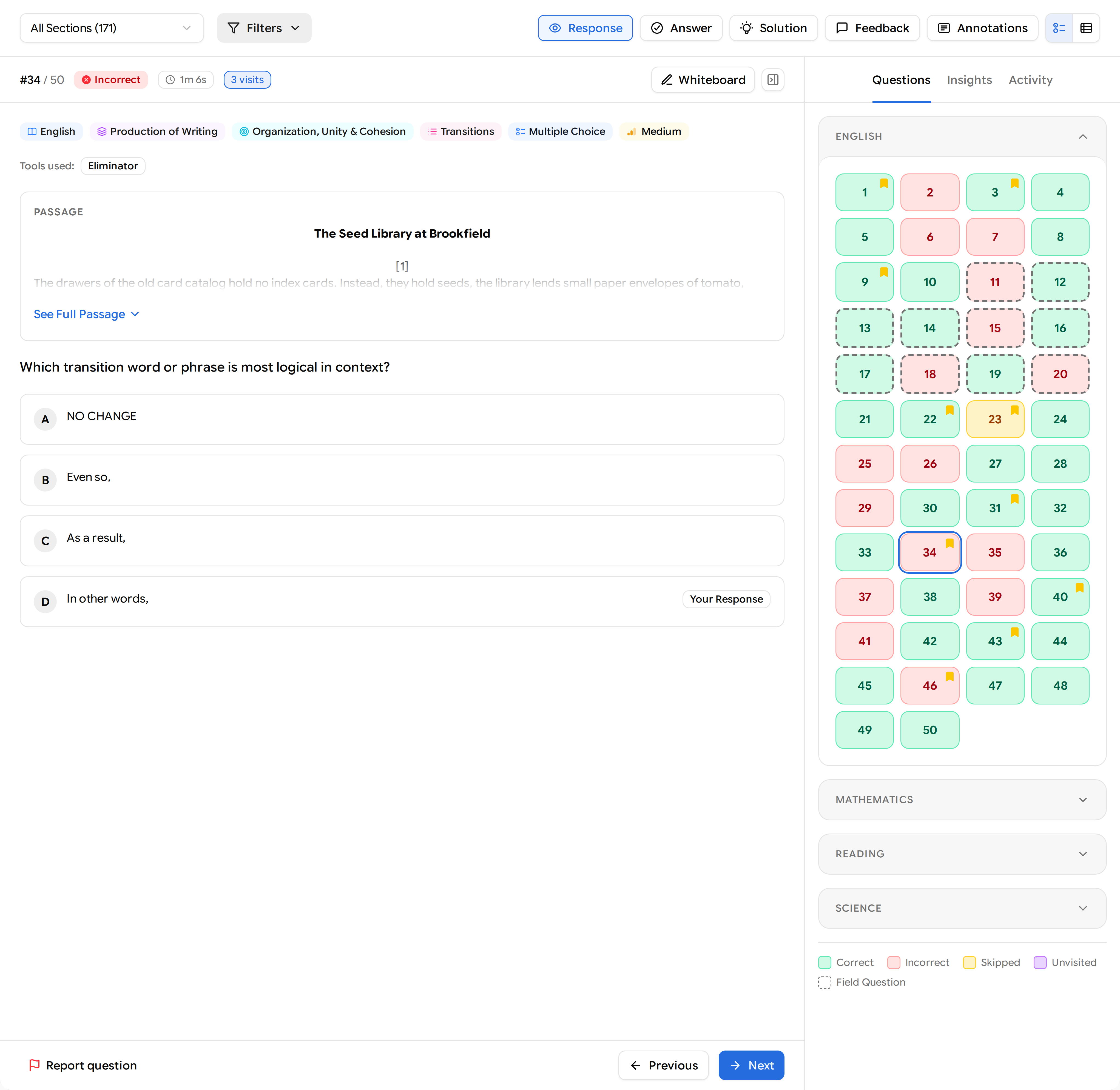
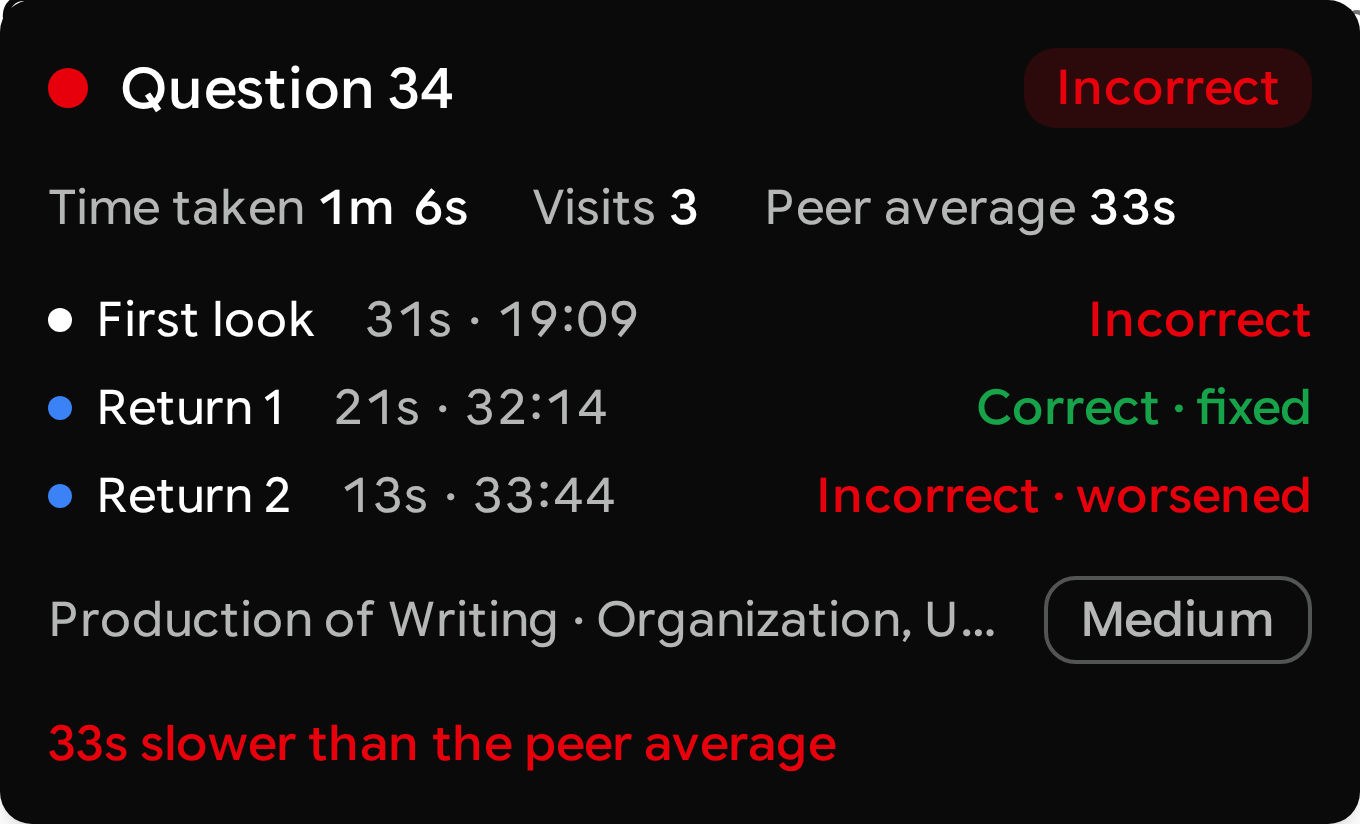
Jordan first chooses A and flags Question 34. On a return they choose B, the correct answer. On the last visit they change to D.
The activity record shows that Jordan had eliminated D before ultimately choosing it. That gives a tutor something specific to ask about, rather than assuming the final answer reflects everything the student knew.
Response, Answer, Solution, Feedback and Annotations can be shown separately. A tutor and student can revisit the thinking before revealing the explanation.
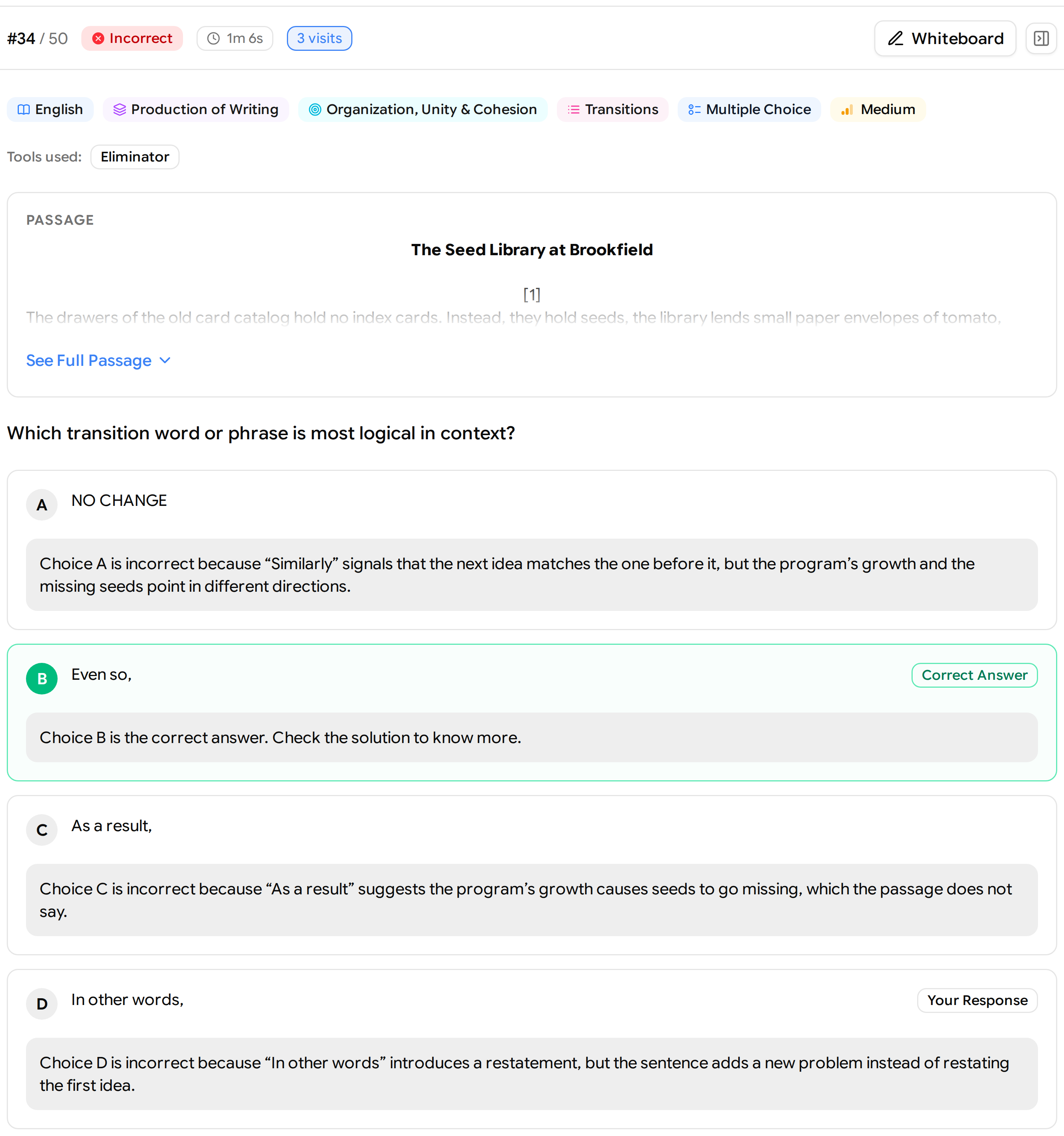
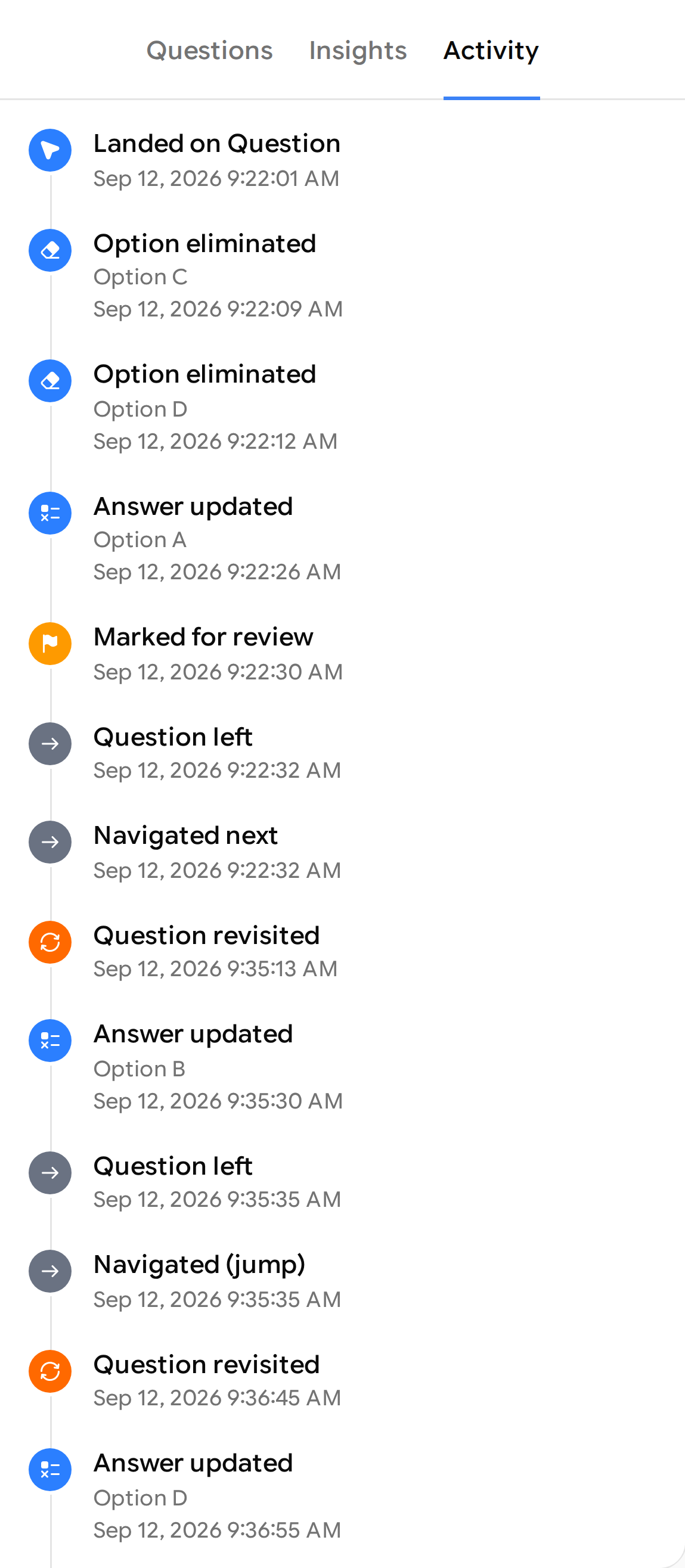
The Insights panel places the attempt beside the platform's question-level comparisons: the share answering correctly, time and answer-choice distribution.
In this example, 58% of students answer Question 26 correctly, in about 41 seconds on average. Jordan answers incorrectly in 14 seconds on one visit.
See the Behavior & tools detail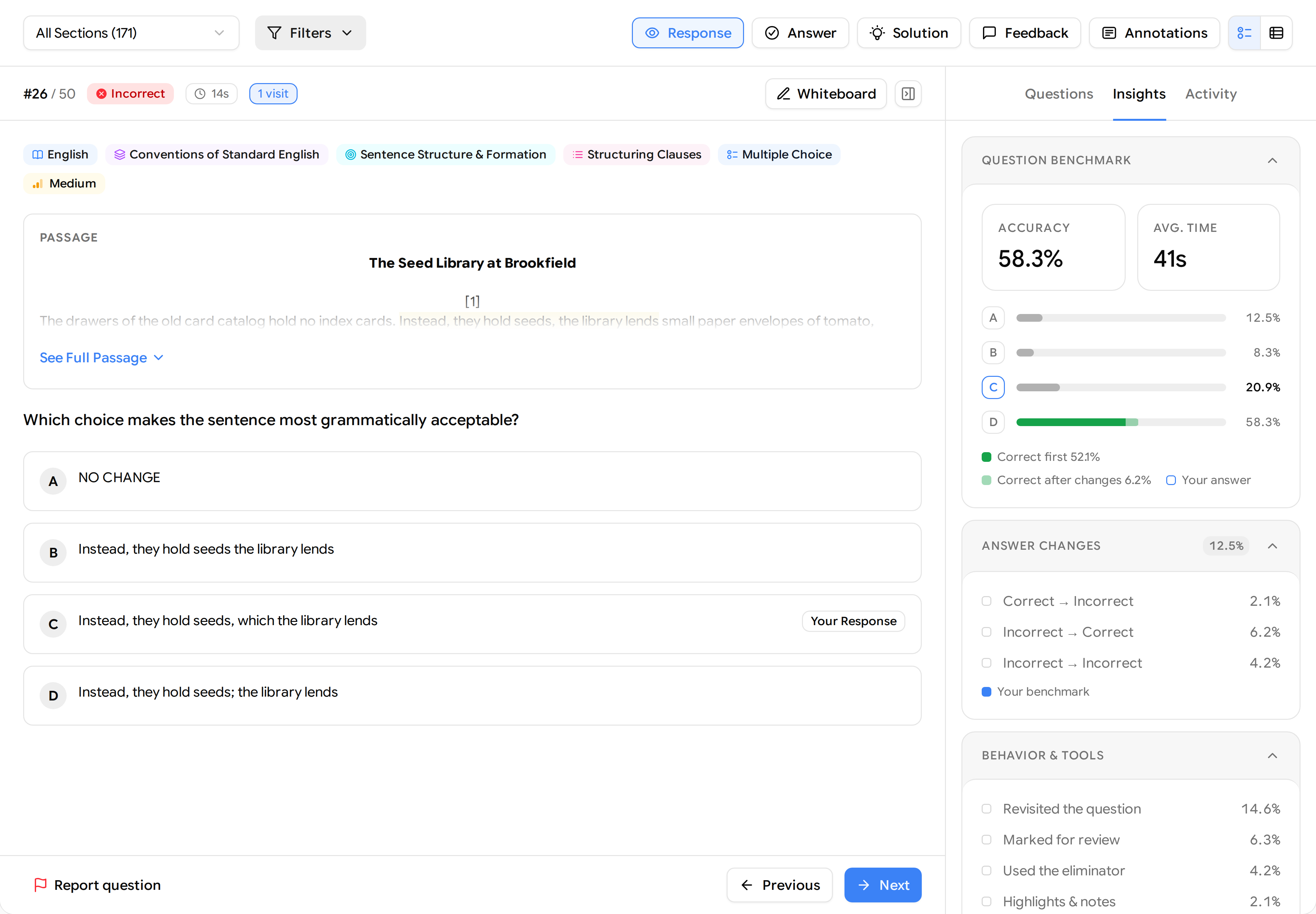
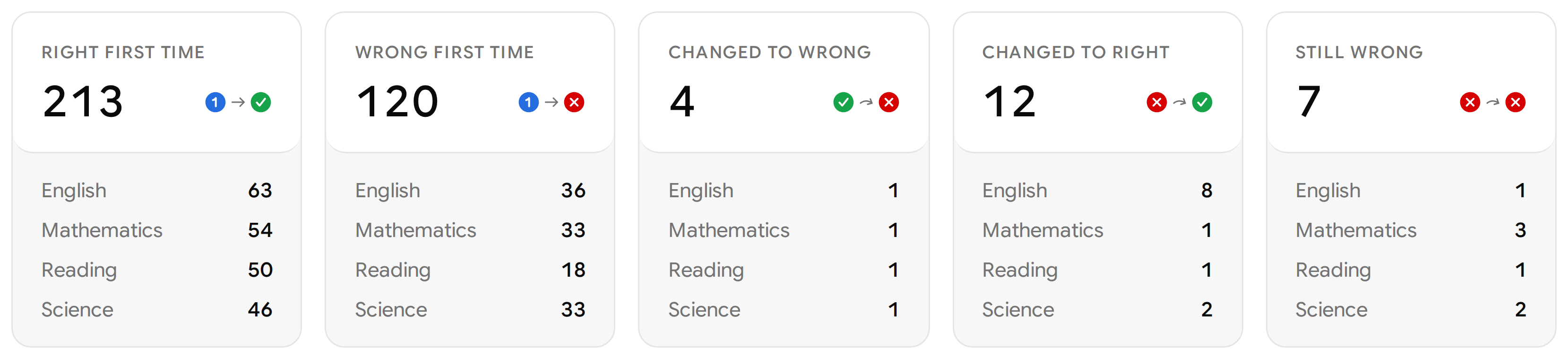
The list connects each change with the question, difficulty, time and tools. In Jordan's baseline, all four right-to-wrong changes are on hard questions, one in each subject.
A blanket instruction to always trust the first answer would miss the seven useful changes. A blanket instruction to revisit everything would miss the cost of the four harmful ones.
See the three-category summary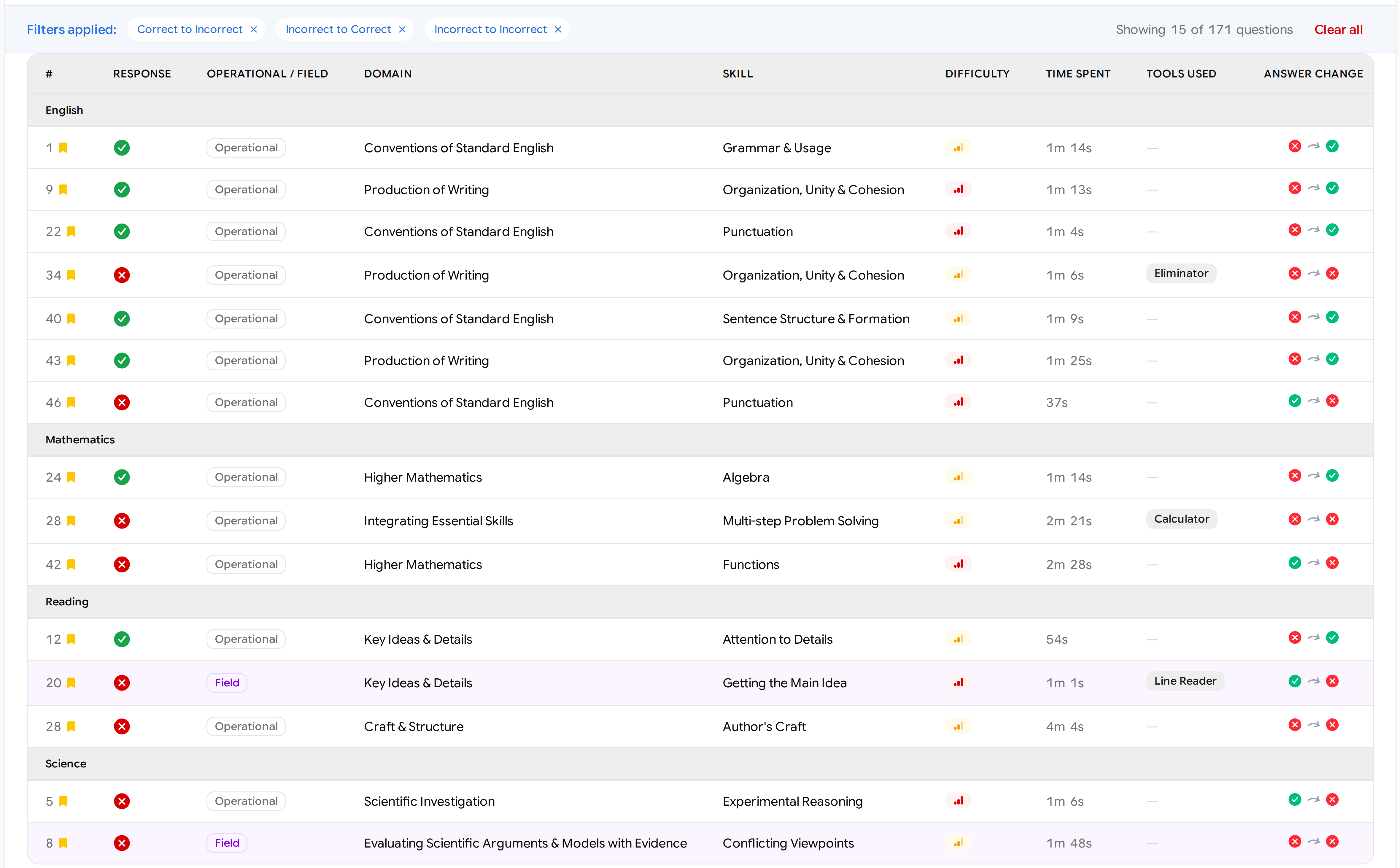
Work on the question itself
The whiteboard gives tutors and students a place to circle the clue, connect ideas and write the rule beside the question. It is available in review sets, too.
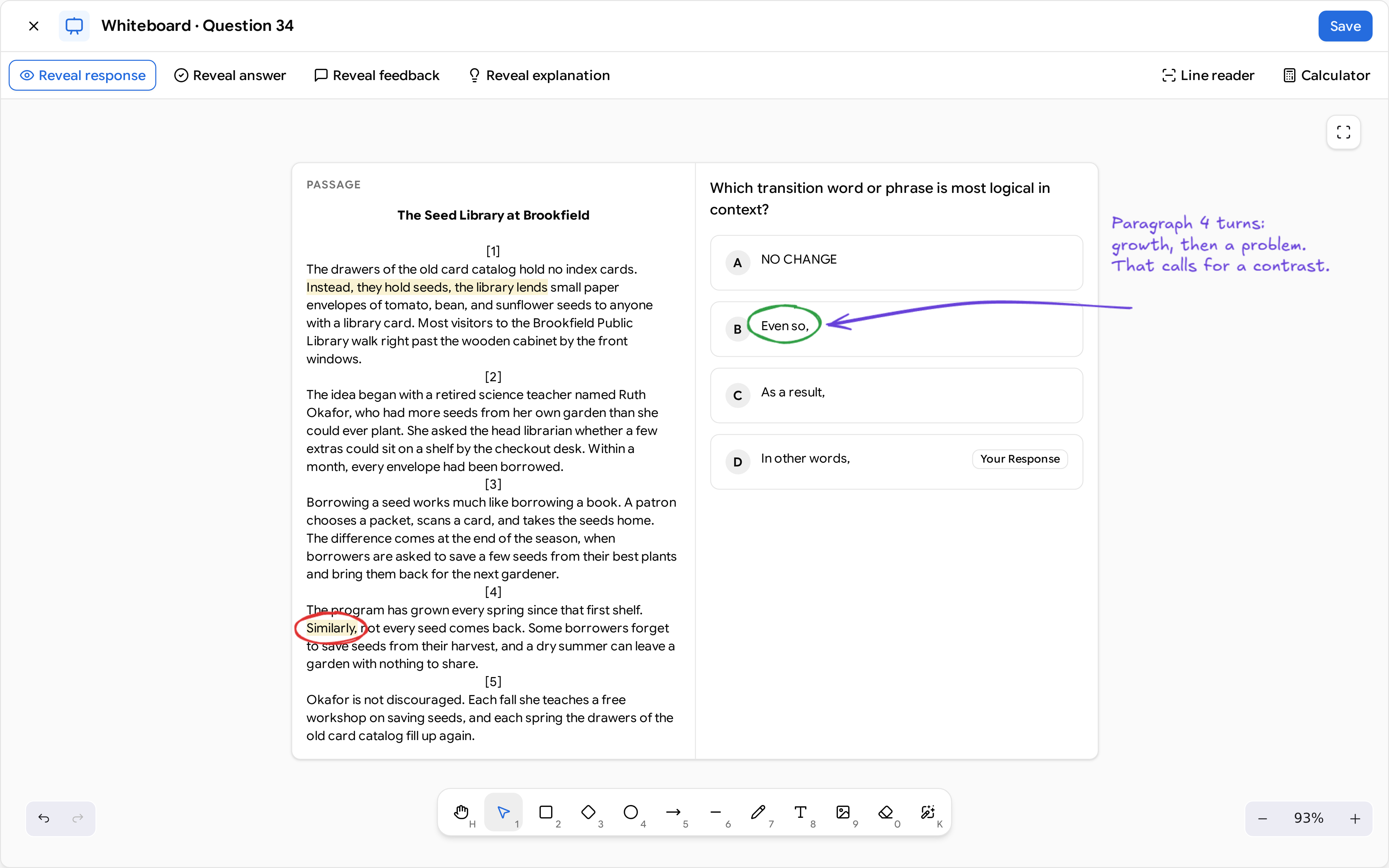
Tutors can mark up missed questions so the work is ready to discuss.
Pens, arrows, shapes, text and a laser pointer help show the reasoning as it happens.
Saved drawings remain with the question. A student's saved review-set whiteboard can also be viewed by staff.
Jordan uses the calculator on 42 Math questions and gets 21 right, below their own Math average. Highlights and notes appear on 21 Reading questions, with 14 right, a little below their Reading average.
Those observations don't show that the tools caused the result. Tutors can open particular questions to examine how the tool was used.
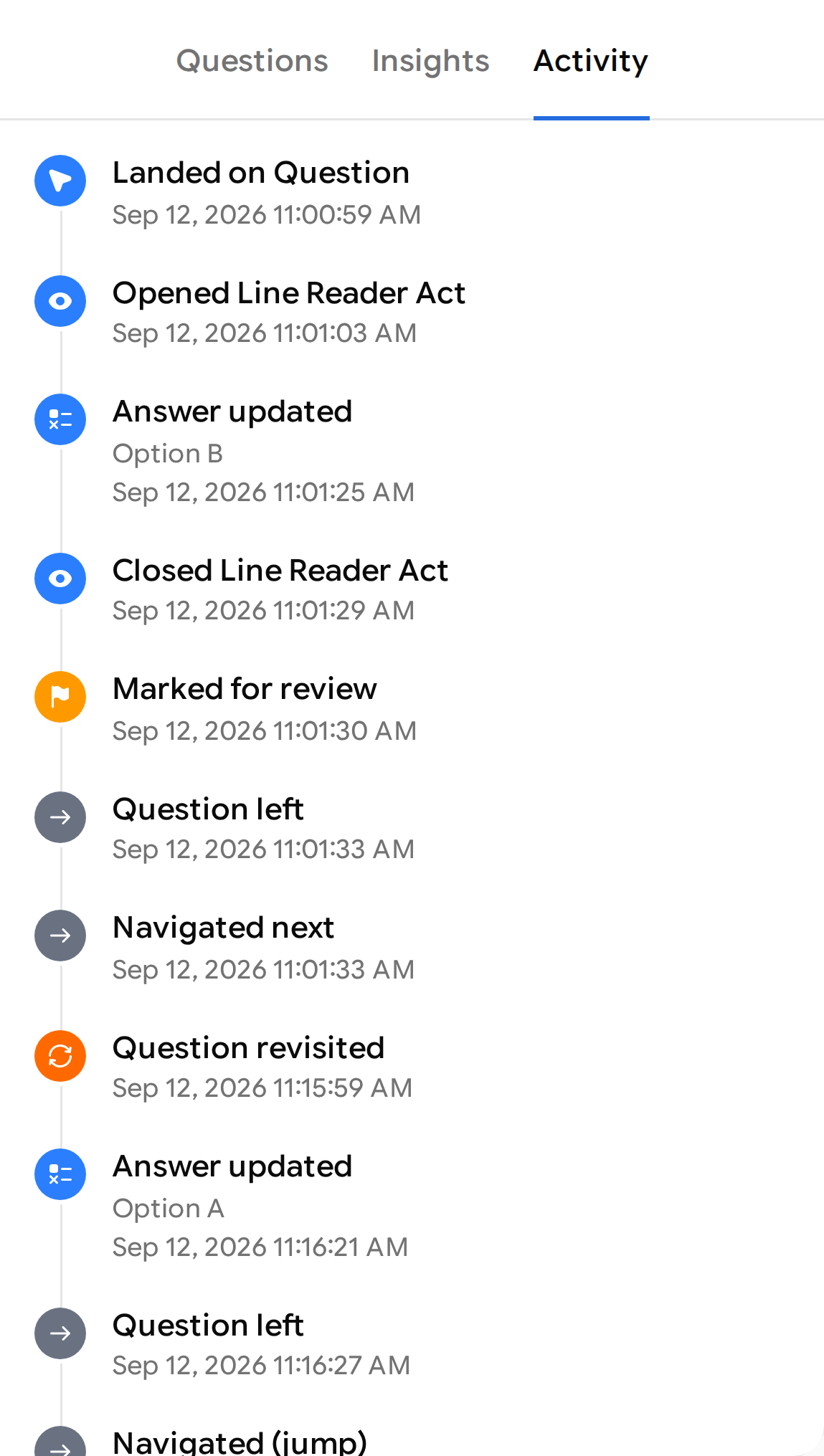
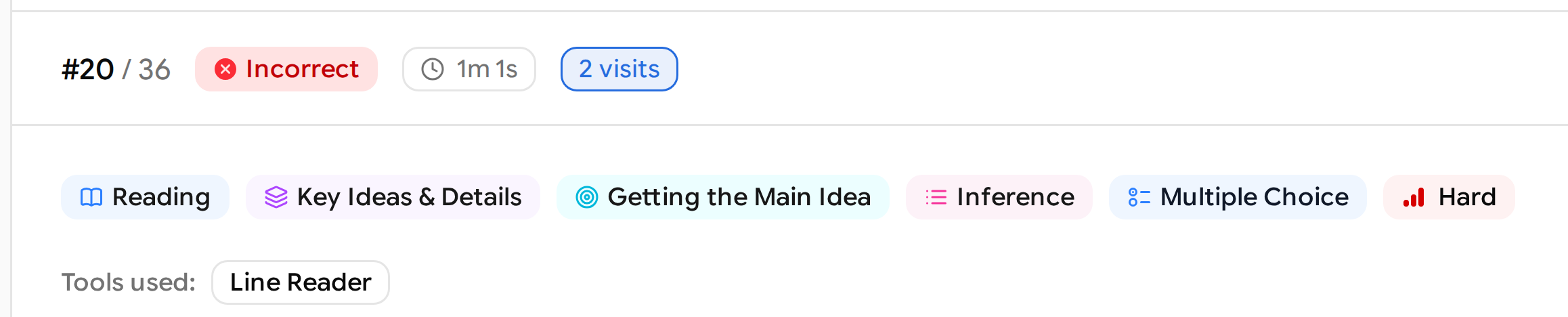
Reading Question 20 is one example: Jordan uses the line reader for four seconds, chooses B and flags the question. Fourteen minutes later, they return and change to A, the wrong answer.
Follow Question 20's activity timeline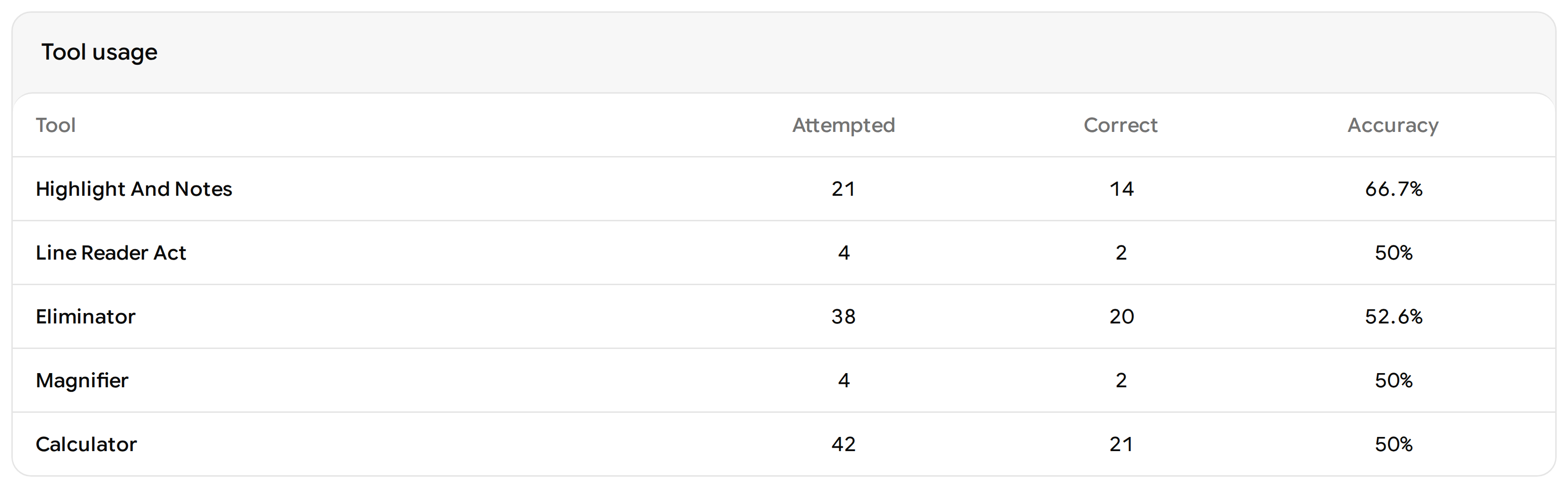
03 / Practice and check again
A report is most useful when it leads to purposeful work. Review sets revisit the thinking. Modules give students a full section under the clock. Later mock tests let tutors look for changes.
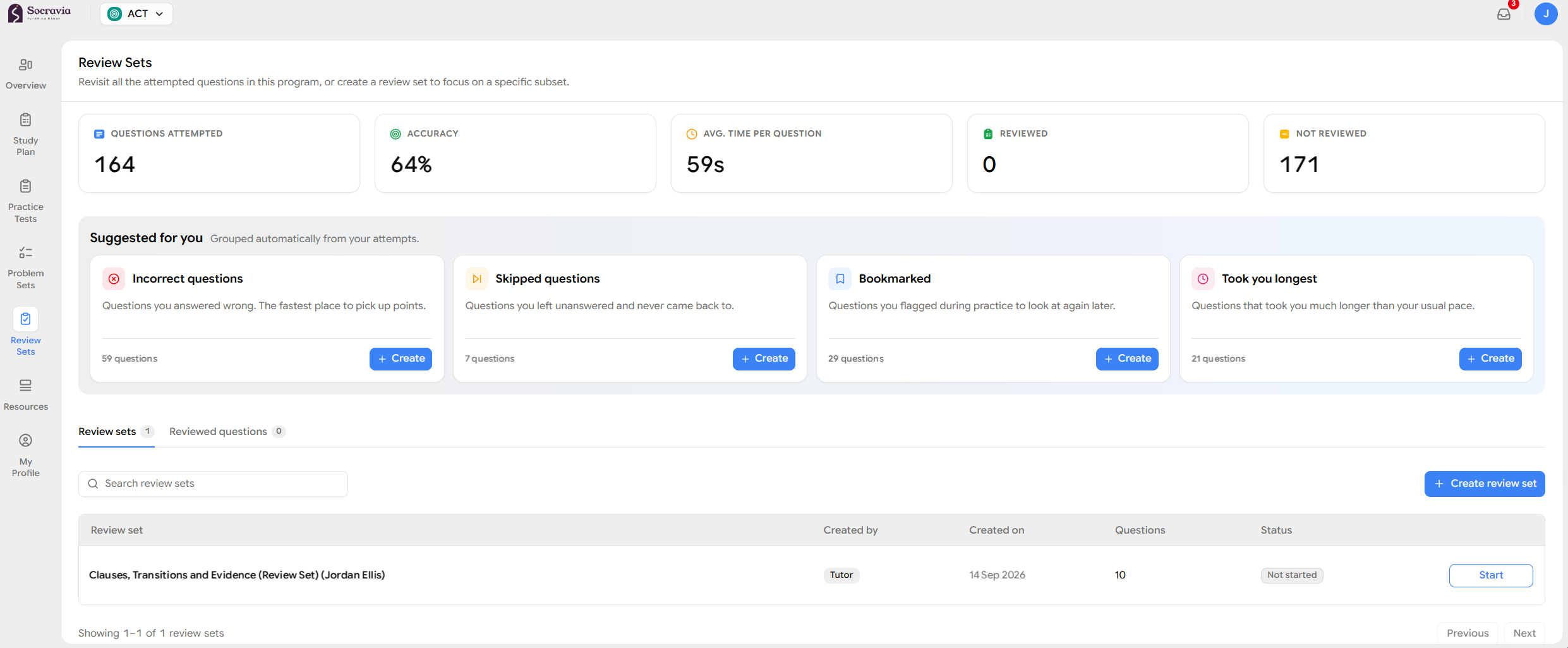
Tutors can assign a set from the questions a student needs to revisit. Students can also build their own, bringing missed, skipped, flagged or slower questions back into focus.
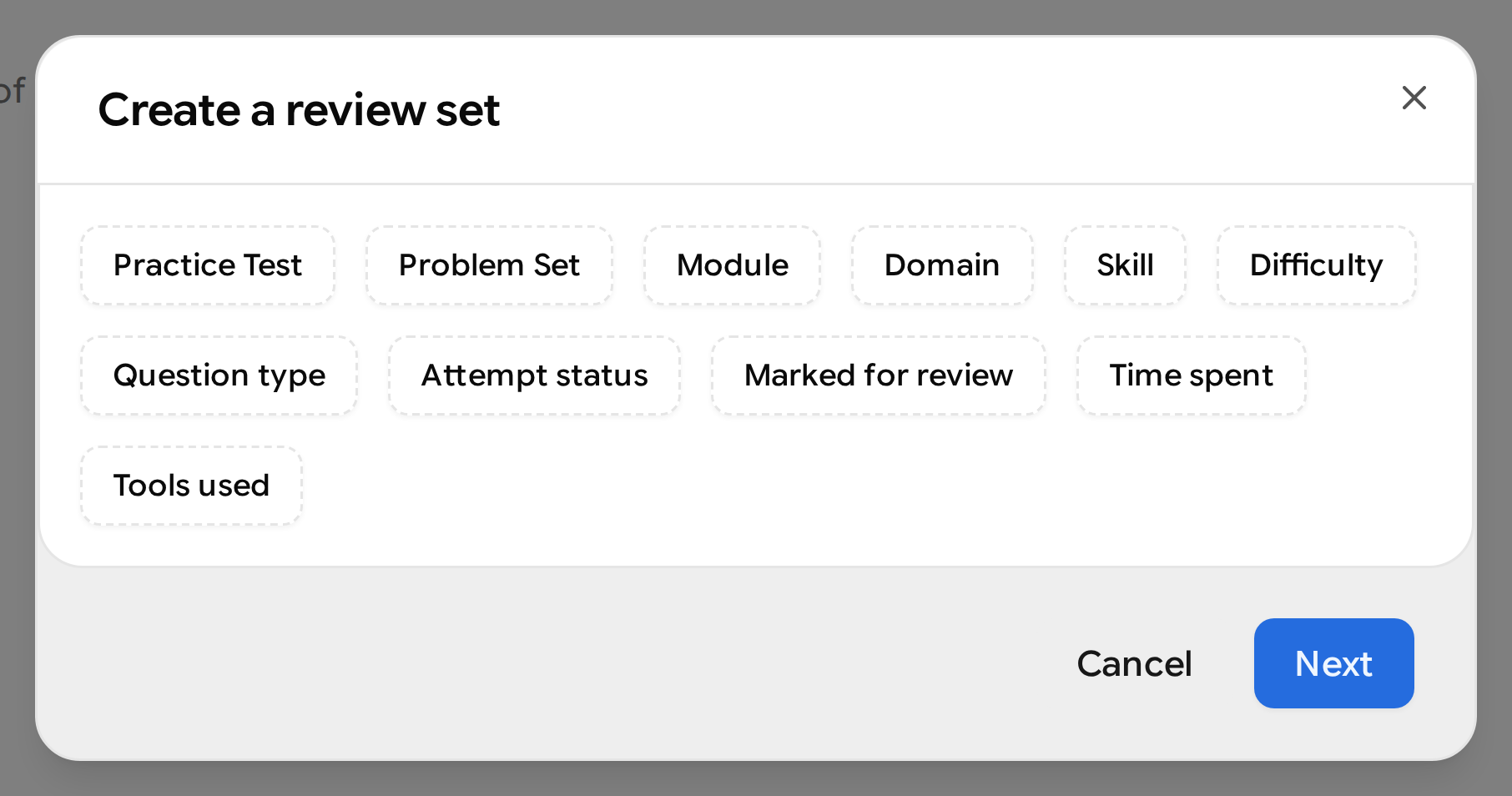
Choose questions by subject, skill, difficulty, result, timing and more.
Turn a test's missed or uncertain questions into another opportunity to work.
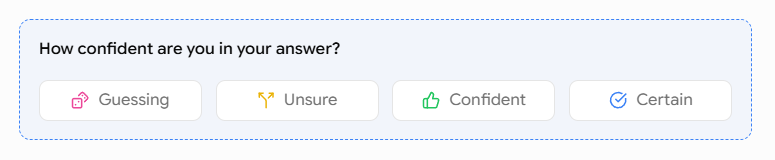
The whiteboard is available in these sets, and the student's drawings can be saved. Confidence prompts add another question: did the student understand the answer, or were they guessing?
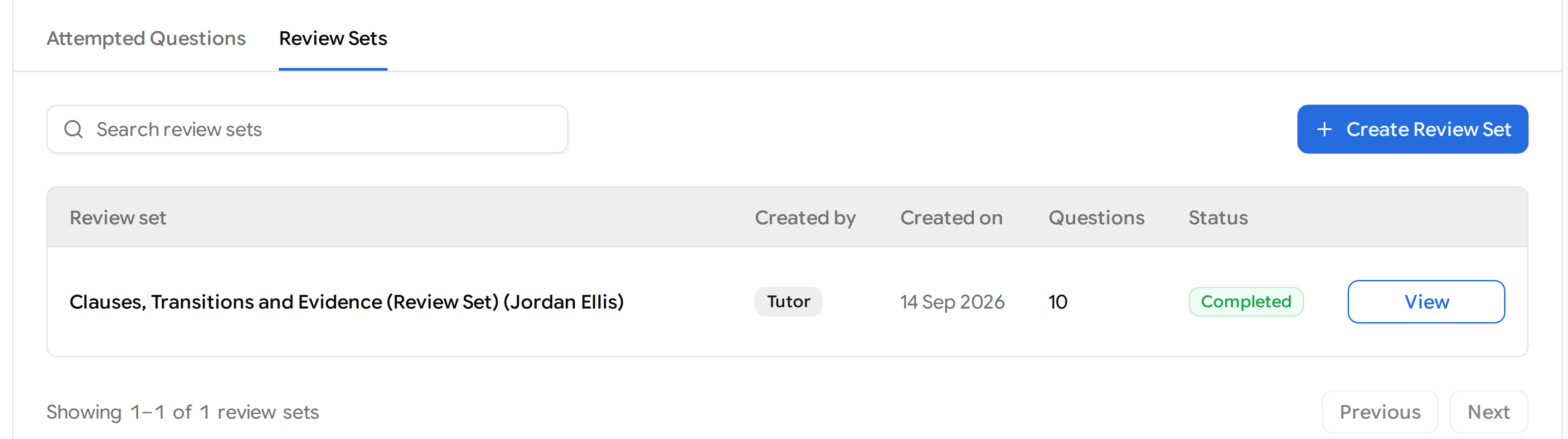
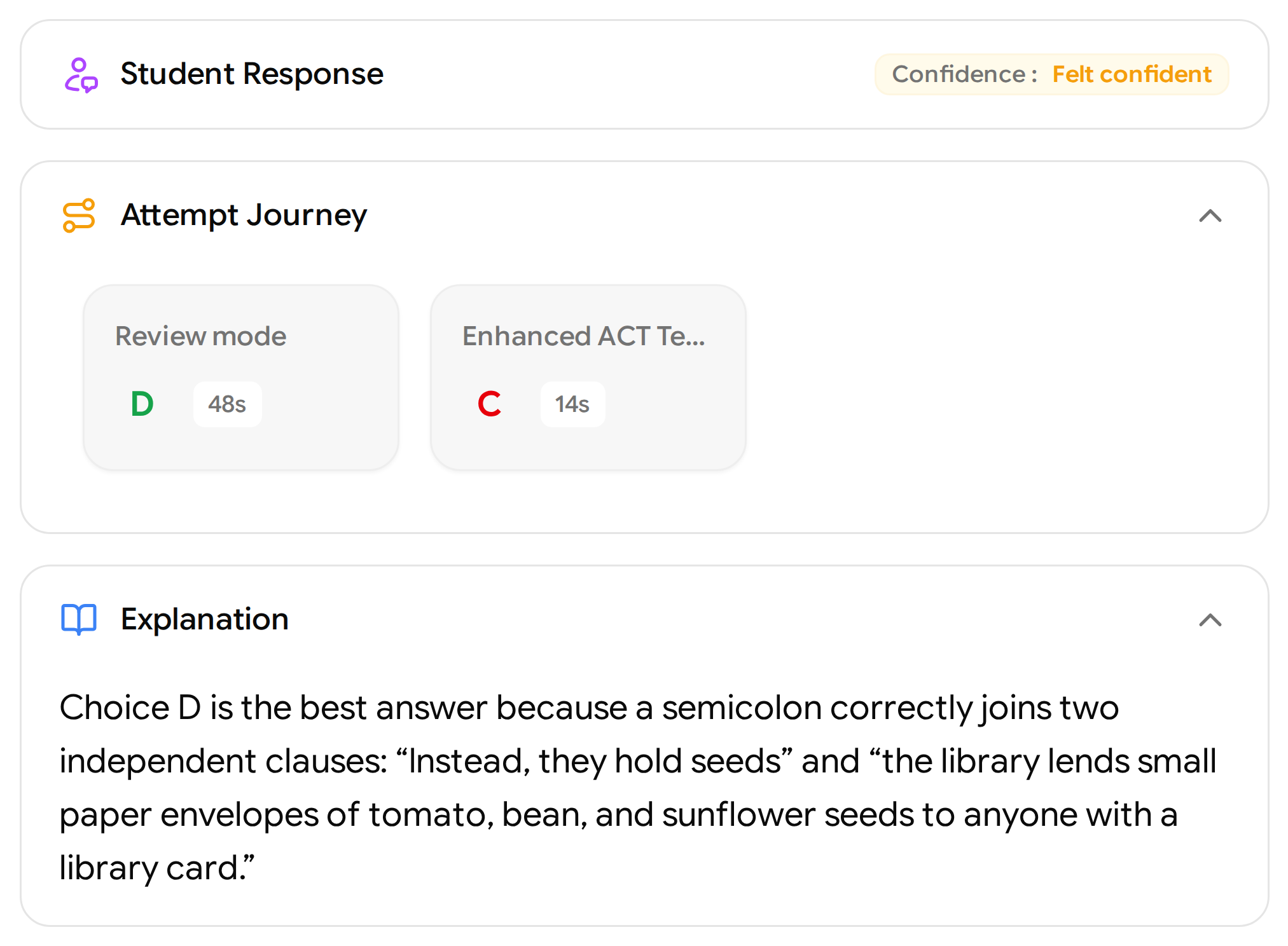
On the baseline exam, Jordan answers Question 26 with C in 14 seconds. In review, they choose D in 48 seconds and feel confident.
Across the set, Jordan gets 7 of 10 right. A wrong answer despite confidence, or a correct answer made as a guess, gives a tutor a different starting point.
See the confidence prompt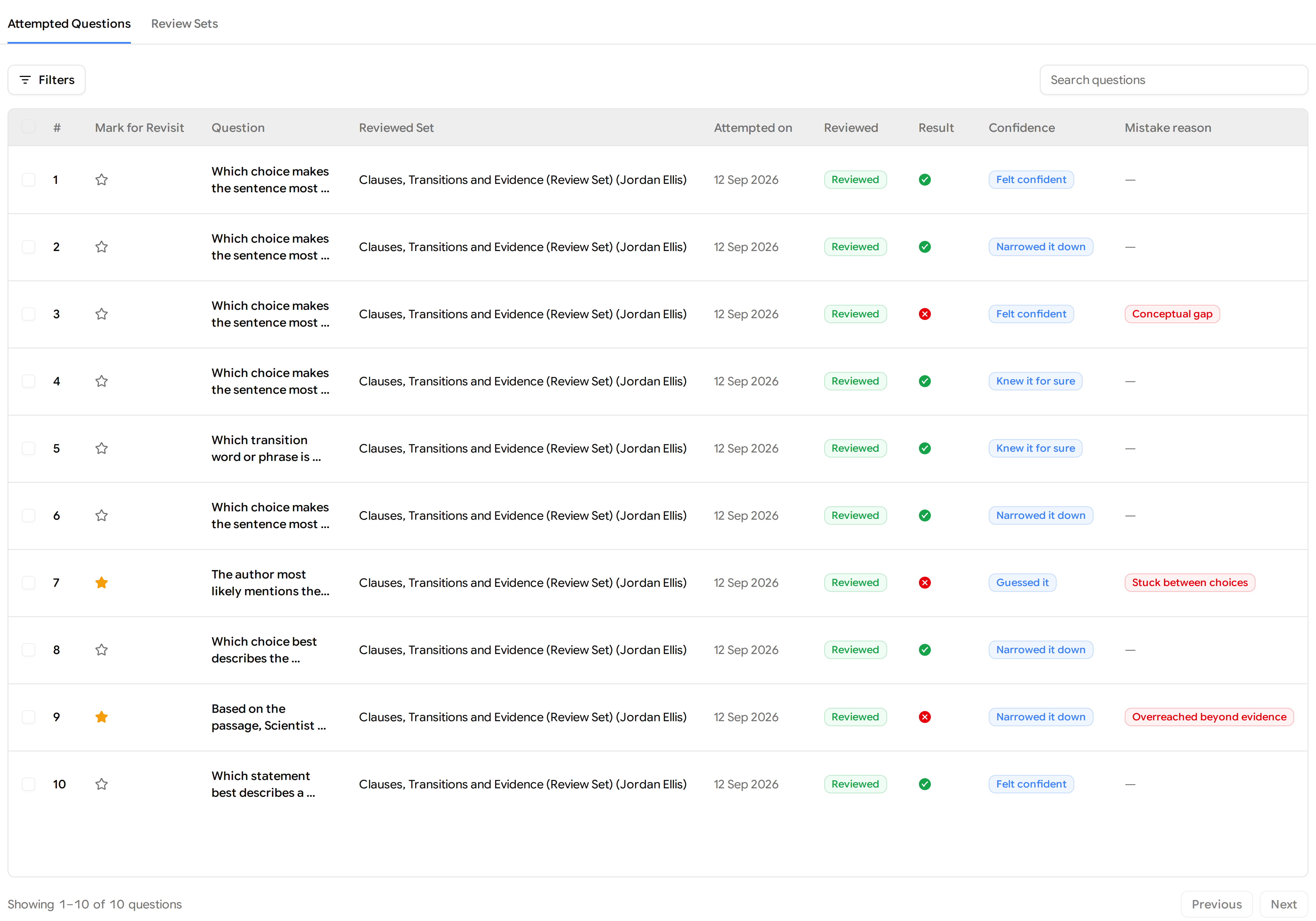
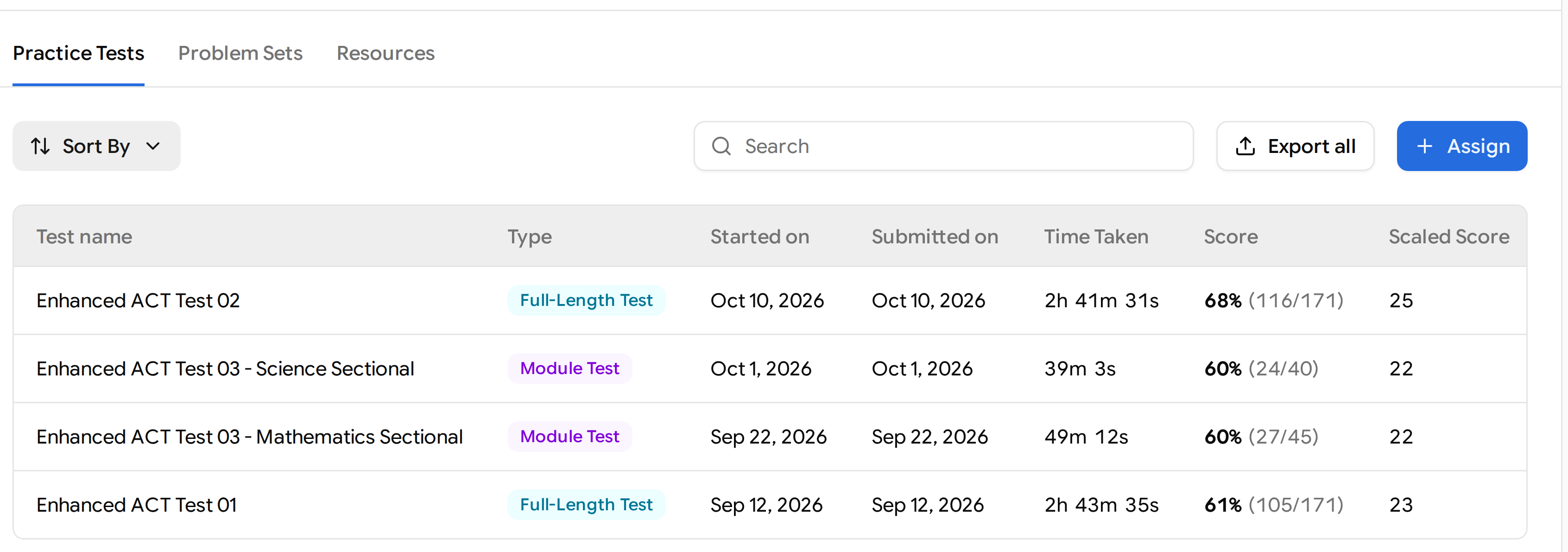
Homework is mostly modules: a full ACT section, timed like the real test, assigned by that subject's tutor. The purpose includes endurance, stamina, timing and pacing. Problem sets provide supplemental practice.
A full 45-question section with a 50-minute limit.
Assigned by the Math tutorA full 40-question section with a 40-minute limit.
Assigned by the Science tutorA smaller set for a particular area the tutor wants to revisit.
Supplemental to module workThese assignment cards are designed examples, not platform screenshots.
Then check again
Four weeks later, Jordan's example mock test composite is 25, compared with 23 on the baseline exam. English is up three points, Reading two and Math one. Science is reported separately and is up two.
The behavior changes matter alongside the scores. The mock test has five wrong-to-right changes and no right-to-wrong changes, compared with four harmful changes on the baseline exam.
These example changes illustrate a comparison the platform can show. They are not a prediction, a typical result or evidence of a tutor's effect.
Keeping families informed
You don't have to read all these screens. Your student's tutors do. Here is what families can count on.
The results for that test, and how they compare with every test before it.
Consultations you can schedule if you have questions or concerns.
Answers to your questions by phone, email or text.
Questions families ask
Yes. The profile brings baseline and later mock test results together. Subject and skill views add detail behind the overall change.
See Jordan's profileIt can. The four subject cards show scores, pace, accuracy and domains separately, so tutors can look for different needs in each subject.
See the four subject storiesNo. The count matters. One missed question is a different amount of evidence from repeated misses across many questions. The skill views keep those counts visible.
See the counts behind the percentagesWe look at the skill, difficulty and time together, then open individual attempts or revisit them in a review set. The data helps frame the question; a number by itself doesn't establish the cause.
Explore the crossed viewsThe report distinguishes questions opened and left blank from questions never reached. The pacing chart shows the visits and returns leading up to those blanks.
Follow the Reading clockSometimes. In Jordan's example, the longest time band is more accurate than the band just below it. Tutors can examine the actual questions instead of applying a single cutoff.
See the timing examplesSome changes help and some hurt. The report separates wrong-to-right, right-to-wrong and wrong-to-different-wrong changes. It also connects them with difficulty and time.
Explore answer changesYes. The question review includes visits, answer changes, flags, tool use and the activity timeline, alongside the response and explanation controls.
Tour the question reviewThey show question-level comparisons available in the platform. In this showcase they are illustrative, and the peer population is not verified. They are not ACT national ranks.
See the question-level comparisonsYes. The whiteboard supports marks, text and other drawing tools. It is also available in review sets. Saved student drawings can be viewed by staff.
See the whiteboardYes. Both students and tutors can create review sets. The original attempt and the later review give tutors two views of the student's thinking.
See both routesMostly modules: one full ACT section under its time limit, assigned by that subject's tutor. Problem sets supplement the module work.
See assignment examplesAfter every mock test, a score report with the results and comparison with every prior test. Families can schedule program consultations and ask questions by phone, email or text.
See the family updatesEvery program starts with a free consultation. Test prep starts with a free baseline exam, so the plan begins with where your student is.
Book a free consultationFor official score interpretation and test information, start with ACT's own resources. These are separate from the illustrative peer comparisons shown above.
Many colleges consider superscores. Each college sets its own rules.
A useful place to begin
Start with a free consultation. Test prep starts with a free baseline exam.